
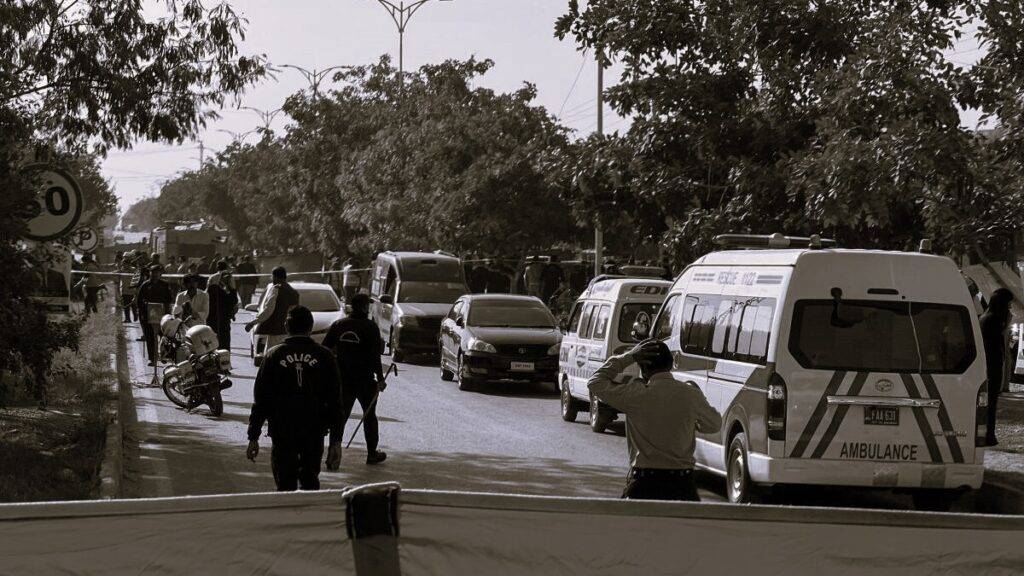
#12 killed, 36 Injured in Suicide blast
A deadly suicide attack rocked Pakistan’s capital, Islamabad, on Tuesday, leaving 12 people dead and 36 injured in a blast outside the district court in the G-11 area. The explosion, which occurred at approximately 12:39 pm, targeted a police vehicle parked near the courthouse and sent shockwaves across the city. The attacker, who attempted to enter the court premises but failed, detonated his explosives outside, causing massive destruction and chaos.
The Attack and Immediate Aftermath
Eyewitnesses described scenes of horror as the blast ripped through the busy area, sending debris flying and filling the air with thick smoke. The force of the explosion was so powerful that its echo could be heard within a six-kilometer radius, and the smoke cloud spread across the surrounding neighborhoods. Security forces quickly cordoned off the area, while ambulances rushed the injured to PIMS hospital. Lawyers, court staff, and passersby were among those caught in the blast, with many seen sitting dazed and bloodied on the road.
Home Minister Mohsin Naqvi visited the site shortly after the incident and confirmed that the attacker had waited for 10 to 15 minutes before detonating the device. CCTV footage showed the bomber lingering near the entrance, attempting to gain access to the court complex. When unable to enter, he targeted a police vehicle, resulting in the tragic loss of life.
#islamabad court#Suicide blast/sbkinews.in
Investigation and Responsibility
The investigation is ongoing, with authorities working to identify the attacker and determine the motives behind the attack. The Human Rights Commission of Pakistan (HRCP) has expressed deep concern over the deteriorating security situation, especially in regions like Khyber Pakhtunkhwa and Balochistan, where militant activity has been on the rise in recent years.
A breakaway faction of the Pakistani Taliban, Jamaat-ul-Ahrar, initially claimed responsibility for the blast, but conflicting statements from the group’s leadership have created confusion. Pakistani officials have also alleged that the attack was carried out by Indian-backed elements and Afghan Taliban proxies, though both India and Afghanistan have denied these claims. The government has vowed to bring those responsible to justice and has heightened security measures across the capital.
Impact and Reactions
The attack has sparked widespread condemnation from the international community, with leaders and organizations expressing solidarity with Pakistan and calling for an end to such acts of violence. The incident has also raised alarms about the vulnerability of public spaces, especially judicial complexes, to militant attacks.
Security Measures and Public Response
In the wake of the blast, security forces have increased patrols and checkpoints around key government buildings and public areas. The government has also urged citizens to remain vigilant and report any suspicious activity. The incident has reignited debates about the need for improved security protocols and the importance of community cooperation in preventing such tragedies.
The victims of the blast included both civilians and law enforcement personnel, highlighting the indiscriminate nature of the attack. Families of the deceased are mourning their loved ones, while the injured continue to receive medical treatment. The emotional toll on the community is evident, with many expressing fear and uncertainty about the future.
Conclusion
The Islamabad court blast serves as a stark reminder of the ongoing threat posed by militant groups and the need for robust security measures to protect public spaces. As investigations continue, the focus remains on bringing the perpetrators to justice and ensuring the safety of citizens. The incident has left a deep scar on the city, but it has also galvanized efforts to strengthen security and prevent future attacks.
For more updates on global incidents and security developments, visit our World News Section.