
Gaza peace strategy news/sbkinews.in
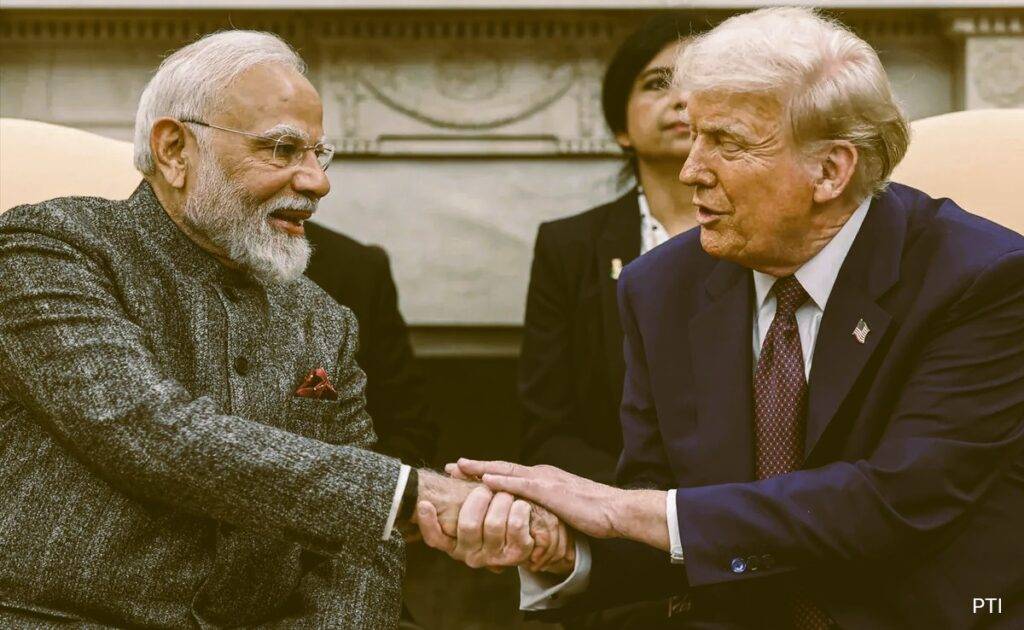
India’s Prime Minister Narendra Modi has expressed strong support for former US President Donald Trump’s renewed leadership role in the Gaza peace initiative, praising his “decisive approach” to ending years of bloodshed in the region. Modi’s statement came as a global response builds around Trump’s ultimatum to Hamas to finalize a peace deal with Israel or face severe repercussions. The ongoing diplomatic storm marks one of the most dramatic turns in Middle Eastern politics since the 2023 Gaza conflict reignited international concern.
Trump’s Ultimatum to Hamas
The latest development began when Donald Trump, posting on his Truth Social platform, issued a sharp warning to the Palestinian group Hamas. He urged them “to move quickly” on a final peace settlement, declaring that delays or renewed threats from Gaza would not be tolerated. His post read: “Hamas must move quickly, or else all bets will be off. I will not tolerate delay, which many think will happen, or any outcome where Gaza poses a threat again. Let’s get this done, FAST.”
Trump’s statement came after reports confirmed a temporary halt in Israeli airstrikes to enable negotiations on hostages and humanitarian access. While Israel paused major operations, Gaza’s civil defence agency noted dozens of overnight attacks in Gaza City, highlighting the fragility of the ceasefire. This precarious situation underscores the urgent tone of Trump’s message: fast progress or renewed devastation.
Gaza peace strategy news/sbkinews.in
Modi’s Strategic Support for Trump’s Leadership
In a rare show of solidarity, Indian Prime Minister Narendra Modi extended his support to Trump’s peace move, calling it a “bold and timely leadership effort.” Sources close to India’s Ministry of External Affairs said Modi appreciated the renewed engagement by Washington under Trump’s initiative, particularly the focus on a humanitarian framework.
Modi reportedly told senior officials that “a just and lasting peace in Gaza requires resolve, not rhetoric,” echoing Trump’s impatience with prolonged negotiations. His endorsement reflects India’s consistent stand for peace through dialogue, while maintaining global partnerships with both the US and Israel.
The Indian leadership views Trump’s plan as a potential stabilizing force that could reduce extremism and enable development in Gaza, a region long scarred by cycles of violence. Modi’s stance also signals growing Indian involvement in international mediation conversations — a role India has carefully expanded through its G20 presidency and global diplomatic outreach.
Kushner and Witkoff Dispatch to Egypt
To advance the process, Trump sent two trusted envoys to Egypt — Jared Kushner, his son-in-law and former White House adviser, and Steve Witkoff, a senior Middle East envoy. Their task: finalize the framework for the release of hostages held by Hamas since October 2023, and oversee technical negotiations on Trump’s 20-point peace plan.
According to White House briefings, both envoys are conducting urgent discussions with Egyptian intelligence and Qatari representatives to secure immediate progress. Their mission marks a critical diplomatic moment, as Cairo’s role has historically been pivotal in mediating between Hamas and Israel.
Analysts say Trump’s decision to directly involve Kushner mirrors his 2020 Abraham Accords strategy, which normalized ties between Israel and several Arab nations. This continuity suggests Trump is leveraging his past diplomatic success to rebuild momentum toward a broader Middle East peace framework.
Gaza peace strategy news/sbkinews.in
Inside Trump’s 20-Point Peace Plan
At the core of Trump’s approach lies a structured roadmap designed to address humanitarian, territorial, and governance challenges in Gaza. The proposed framework includes:
Immediate ceasefire: Both sides would commit to halting hostilities under international supervision.
Hostage and prisoner exchange: Hamas would release 20 living Israeli hostages and return the remains of others, in exchange for hundreds of detained Palestinians.
Humanitarian aid access: Following the exchanges, major relief organizations would receive unrestricted passage into Gaza.
Phased Israeli withdrawal: Israel would begin a monitored removal of ground troops from the Gaza Strip.
Transitional governing body: A temporary administrative board for Gaza would be established, chaired by Trump with participation from UN and regional leaders.
This model, though ambitious, emphasizes order and phased trust-building, with clear accountability measures designed to prevent future escalations.
Gaza peace strategy news/sbkinews.in
Mixed Global Reaction and Hamas’s Response
The plan’s unveiling has drawn mixed reactions from global powers. While the European Union and the United Kingdom cautiously welcomed the initiative, some Middle Eastern nations have expressed skepticism about its viability. Critics argue that Trump’s direct approach could marginalize Palestinian self-determination by imposing an external leadership structure.
Hamas, in its initial reaction, accused the US of “political coercion,” stating that Gaza’s sovereignty “cannot be determined under threat.” However, internal sources within Gaza indicate that the group is deeply divided — with moderates pushing to accept negotiations in exchange for lifting blockades, and hardliners opposing any deal perceived as submission.
The pressure from Washington, combined with Gaza’s dire humanitarian situation, makes Hamas’s eventual decision critical. Delaying overly long could risk losing international sympathy and invite harsher military or economic penalties.
Gaza peace strategy news/sbkinews.in
Israel’s Calculated Silence and Regional Tensions
Israeli Prime Minister Benjamin Netanyahu has publicly welcomed the renewed hostage discussions, calling them “a hopeful step.” Yet Israel’s security apparatus continues limited strikes on what it describes as “terror infrastructure,” raising questions about the durability of the ceasefire.
Netanyahu faces domestic pressure — families of hostages are demanding rapid action, while right-wing political factions insist on military dominance. In such a divided environment, acceptance of Trump’s peace roadmap could either stabilize his position or inflame political divisions further.
Meanwhile, Egypt, Jordan, and Qatar remain active as mediators. All three nations are balancing diplomatic patience with mounting international calls for accountability over civilian casualties and humanitarian access.
Modi’s Vision for Global Peace Cooperation
Indian Prime Minister Modi’s support extends beyond symbolic diplomacy. India has repeatedly advocated for a multilateral coalition to promote reconstruction, education, and healthcare initiatives once peace holds in Gaza.
Indian diplomats suggest that Modi’s alignment with Trump’s direction could open doors for India to contribute to post-conflict rebuilding through UN mechanisms or direct aid partnerships. India’s strong ties with both Israel and Palestine give it a unique, credible position in advocating balanced outcomes.
In a statement to the media, India’s Ministry of External Affairs emphasized that “dialogue, not domination, will define the next era of peace in Gaza.” This aligns with Modi’s broader foreign policy theme of “global stability through cooperation,” a cornerstone of India’s G20 diplomatic achievements.
Gaza peace strategy news/sbkinews.in
A Moment of High Stakes for Global Leadership
The intersection of Trump’s assertive diplomacy and Modi’s strategic endorsement signifies a potential turning point in geopolitics. Both leaders, known for decisive postures, emphasize time-bound solutions over prolonged talk. Their cooperation hints at a growing axis of pragmatic leadership eager to use negotiation leverage, not just military deterrence, to reshape outcomes.
Yet beneath the optimism lies uncertainty. The fragile ceasefire, persistent distrust between Hamas and Israel, and the volatility of global politics all threaten the roadmap’s success. Should Hamas resist or Israel escalate, Trump’s warning that “all bets will be off” could foreshadow renewed violence.
Prime Minister Narendra Modi’s endorsement of Trump’s Gaza Peace Strategy has drawn global attention for its decisive tone and humanitarian outlook. According to The Hindu, India welcomed the renewed US engagement in the Middle East peace process, emphasizing the need for swift diplomatic action. Read full report on The Hindu.
For more global updates and in-depth coverage of international affairs, visit our World News section