
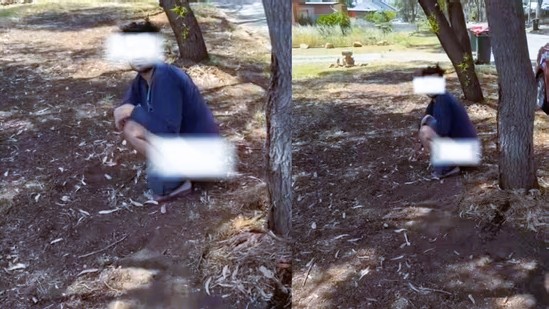
A viral incident in Adelaide’s Para Hills suburb has ignited widespread anger and debate after a local resident was caught squatting on a suburban street, allegedly defecating in public. The event, captured on video and shared widely on social media, has brought attention to Australia’s public sanitation laws and community standards.
The Incident
Trent Carter, a Para Hills resident, confronted the man, who was crouched on a patch of land near a house. In the footage, Carter asked, “Brother, what are you doing?” The man quickly pulled up his pants and replied, “What do you mean?” Carter responded, “This is Australia. Don’t sh*t on the ground you pig.” The man insisted he was “just peeing,” but Carter argued, “Peeing on the ground? What is wrong with you? You’re squatting, that’s not how you pee.”
Carter called the man a “f**king dog” and kicked dirt at his feet. He later uploaded the clip with the caption, “Has this become the norm?” The video quickly spread across Facebook and other platforms, prompting heated discussion about public decency and law enforcement.
Legal Context
In Australia, urinating or defecating in public places is generally illegal, with specific penalties varying by state. In South Australia, where the Para Hills incident occurred, the Summary Offences Act 1953 explicitly prohibits urination or defecation in any public place unless it is a designated toilet area. The maximum penalty is a fine of about $250, and expiation notices, usually lower fines, may also be issued.
Most Australian jurisdictions treat the act as part of broader “public nuisance,” “offensive conduct,” or “indecent behaviour” laws. Police typically issue on-the-spot fines, and repeat offenders may face more severe consequences. The law recognizes that such acts are not only unsanitary but also disrespectful to the community.
Community Reaction
The incident has sparked a strong reaction from the public, with many expressing disgust and frustration over what they see as a decline in public standards. Social media comments ranged from calls for stricter enforcement to demands for increased public toilet availability.
Community leaders have called for greater awareness and education about the legal and health implications of public defecation. Local authorities are also considering initiatives to improve public restroom facilities and increase enforcement in high-traffic areas.
Public Health and Sanitation
Public defecation poses significant health risks, including the spread of disease and contamination of public spaces. Health experts emphasize the importance of accessible and well-maintained public toilets to prevent such incidents.
Efforts to address the issue include expanding restroom availability, improving maintenance, and promoting responsible behavior. Community organizations are partnering with local authorities to develop effective prevention strategies and support those who may struggle with access to sanitation facilities.
Legal Defenses
While public defecation is generally prohibited, some jurisdictions recognize exceptions for sudden or extraordinary emergencies. For example, if an individual can demonstrate that urinating or defecating in public was the only reasonable response to an urgent situation, they may have a valid defense. However, this does not apply to routine or avoidable circumstances.
Social Media, Law, and Community Standards
The incident has also sparked a broader conversation about the role of social media in shaping public discourse and influencing law enforcement priorities. The rapid spread of the video has amplified calls for both stricter penalties and increased public awareness about sanitation and community standards. While some argue that viral exposure can deter similar behavior, others warn that it can lead to stigmatization and racial tensions, especially when incidents are framed through a cultural or national lens.
Community leaders and legal experts are urging balanced responses that uphold public health and safety while ensuring fairness and respect for all individuals, regardless of background. As cities like Adelaide grapple with these challenges, the incident serves as a reminder that maintaining public order requires not only legal enforcement but also empathy, education, and inclusive dialogue.
Looking Ahead
The Para Hills incident serves as a stark reminder of the challenges facing urban communities in maintaining public order and sanitation. As cities grow and public spaces become more crowded, the need for effective solutions becomes increasingly urgent.
For more updates on public health and legal issues in Australia, visit our dedicated world news section.