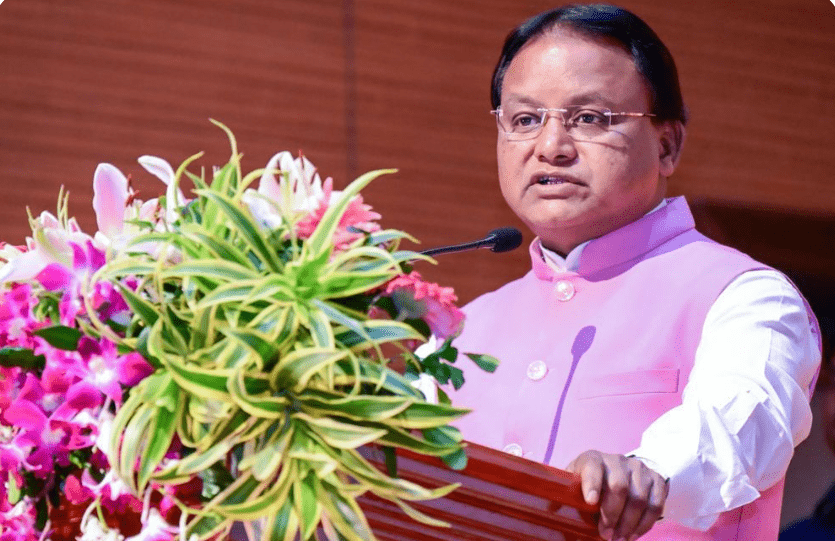
Odisha Chief Minister Mohan Charan Majhi has granted Indian citizenship certificates to 35 Hindu migrants from Bangladesh under the Citizenship (Amendment) Act, 2019, calling the legislation a “sacred law” and a source of hope for persecuted minorities. The beneficiaries, many of whom had fled religious violence and discrimination decades ago, received their documents at a formal ceremony in Bhubaneswar, marking a significant milestone in the state’s implementation of CAA. Authorities said that with this batch, a total of 51 people have now been granted citizenship in Odisha, while around 1,100 more applications remain under process.
35 Bangladeshi Hindus get citizenship under CAA
According to the state government, all 35 recipients in the latest list are Hindu migrants who had crossed over from Bangladesh to India after facing persecution and insecurity in their home regions. Most of them have been living in southern Odisha districts such as Malkangiri and Nabarangpur for years, working as daily wage labourers, small traders and farmers. For these families, the citizenship certificate provides formal recognition of their status, enabling access to government schemes, land ownership rights, better education and banking facilities.
Data shared by officials indicates that this is the second group of CAA beneficiaries in Odisha; 16 people had earlier received citizenship following scrutiny by district‑ and state‑level committees. Altogether, 51 people have now completed the process, while over a thousand applications are at various stages of document verification, security checks and scrutiny by the Directorate of Census and the Home Department. Authorities emphasise that each file requires rigorous examination of residency records, religion, period of migration and evidence of persecution before approval.
Stories of displacement and long wait for recognition
Narratives emerging from the ceremony highlight the trauma many families endured before reaching India. One beneficiary, Paritosh Sarkar, recounted how Hindu neighbourhoods in Bangladesh were forced to change their religion and how those who resisted were subjected to threats and violence, particularly in the turbulent period following the Babri Masjid demolition in 1992. He described a climate of fear in which protesters were targeted and women faced sexual assault, leaving families with little choice but to flee across the border.
After migrating, Sarkar and his siblings eventually settled in Umarkote in Nabarangpur district via Kolkata, joining other Hindu Bengali emigrants who had earlier been resettled in the Dandakaranya region spanning parts of present‑day Chhattisgarh and Odisha. Their story mirrors that of thousands of Hindu Bengalis who had entered India from erstwhile East Pakistan in the 1950s and later decades, often being resettled in sparsely populated areas through central government schemes. For many such families, the new citizenship certificate formally completes a journey that has lasted generations.
Historical context: Malkangiri and Nabarangpur as safe havens
Southern Odisha districts such as Malkangiri and Nabarangpur have long served as “ready addresses” for Hindu Bengali refugees from Bangladesh. In the 1950s and 1960s, when large numbers of people fled discrimination and communal tension in East Pakistan, West Bengal struggled to absorb the influx due to land and employment constraints. The Union government then selected parts of Dandakaranya to rehabilitate these migrants, setting up nearly 280 villages for resettlement in Malkangiri and Nabarangpur.
Since then, whenever fresh waves of unrest occurred in Bangladesh, affected families often turned to relatives already settled in these Odisha districts, gradually building a network of Bengali‑speaking communities. Over time, many migrants integrated economically and socially but continued to lack formal citizenship documentation, limiting their access to stable livelihoods and property rights. The CAA‑based process now underway seeks to regularise the status of such long‑term residents who meet the legal criteria.
CAA 2019: framework for persecuted minorities
The Citizenship (Amendment) Act, 2019 provides a pathway to Indian citizenship for members of six minority communities—Hindu, Sikh, Buddhist, Jain, Parsi and Christian—from Pakistan, Bangladesh and Afghanistan who entered India on or before December 31, 2014, after facing religious persecution. The law relaxes residency requirements and certain documentation norms for eligible applicants, though they must still clear security vetting and produce evidence of their claims. While the Act has sparked nationwide political debate and protests, the Odisha government has repeatedly defended it as a humanitarian measure.
At the distribution event, Chief Minister Mohan Charan Majhi reiterated that the CAA is intended to give persecuted minorities a dignified life and a sense of belonging in India. He described the certificates as symbols of both safety and responsibility, urging recipients to contribute positively to the state’s development and social harmony. Officials stressed that the process remains open to other eligible applicants and that additional camps and awareness drives will be organised to help families complete paperwork.
Challenges and pending applications
Despite the progress, many families continue to struggle with documentation gaps. Some applicants, like the relatives of beneficiary Kiran Mandal, have had their cases held up because they could not fully satisfy district and state scrutiny committees on identity and migration details. Authorities say such files are being examined carefully, and applicants may be given opportunities to furnish additional proof or affidavits. For in-depth report read here.
Civil society groups working in the region note that illiteracy, lack of old land or school records, and decades of informal living make it difficult for some migrants to assemble the required evidence. They argue that while the CAA process offers hope, successful implementation will depend on sustained administrative support, legal aid and clear communication in local languages. Nonetheless, for the 35 families who received their certificates this week, the event marks the end of a long wait and the beginning of life as recognised Indian citizens.
For more developments on governance, citizenship and politics, follow our Top Odisha News coverage.