England Great Slams MCG/sbkinews.in
The highly anticipated Boxing Day Test at the Melbourne Cricket Ground (MCG) erupted into controversy after former England captain Michael Vaughan labeled the surface an “unfair contest” between bat and ball. What was expected to be a classic battle in front of 80,000 fans turned into a chaotic low-scoring struggle where seamers and uneven bounce dictated every delivery’s fate.
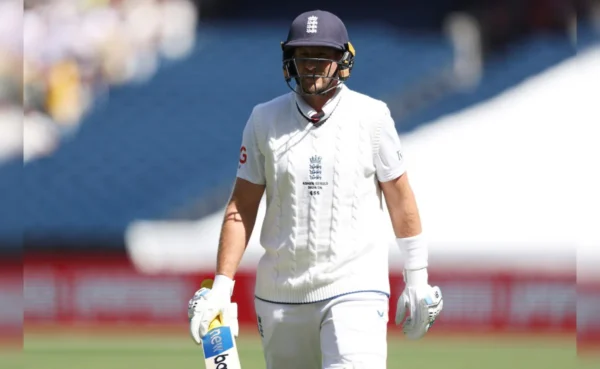
Australia, bowled out for 167 in their first innings and 127 in the second, somehow clawed to a tense 45-run win after England collapsed dramatically chasing just 173. While the atmosphere was electric, the pitch became the major talking point across both camps—and cricketing circles worldwide.
A Collapse-Filled Classic
The match began promisingly for Australia on Boxing Day morning, but soon turned treacherous. The early sessions saw movement more suited to the Gabba’s occasional green-tops than the usual firm Melbourne surface.
Batting first, Australia’s top order fell like dominoes. Repeated instances of balls exploding off good length or staying alarmingly low left even veteran players bewildered. Marnus Labuschagne flashed at one that leapt towards his gloves, while Steve Smith was trapped in front by a delivery that skidded on ankle height from Mark Wood.
It was Michael Neser, playing his first Test since 2022, who top-scored with a fighting 35 — a number that underlined just how tough the conditions had become. His resilience, backed by 21 from Alex Carey, pushed Australia to 167, a total looking modest yet oddly competitive given the surface’s behavior.
England’s openers Zak Crawley and Ben Duckett initially looked composed, but the nightmare repeated. Josh Hazlewood’s impeccable full length and Pat Cummins’ relentless accuracy combined to trap both batters early. Hazlewood finished the day with figures of 4/36, running through the middle order before England managed 138, largely thanks to Harry Brook’s breezy 41 off 34 balls — a knock that stood out for its courage rather than fluency.
England Great Slams MCG/sbkinews.in
Second Innings Chaos
The surface deteriorated rapidly by Day 3. By the time Australia came out to set a fourth-innings target, it had become almost unplayable. Uneven bounce and exaggerated seam movement reduced the contest to survival. Travis Head’s 27-ball 22 was the highest contribution among the top six before another collapse saw the hosts bundled for 127.
England’s bowlers, led by Mark Wood (3/32) and Ollie Robinson (2/19), dominated, exploiting cracks that widened near the good-length spot. At one point, a delivery from Robinson climbed viciously past the head of keeper Ben Foakes, drawing gasps from commentators and spectators alike.
But England’s run chase turned horror at 58/5. Despite Brook’s counterattacking 25 in the second innings, Cummins’ late spell of reverse swing sealed the result. England folded for 127, losing by 45 runs in a contest that lasted barely three and a half days.
England Great Slams MCG/sbkinews.in
Vaughan and Former Players Outraged
Michael Vaughan was among the first to react, calling the MCG wicket a “poor advertisement for Test cricket.” Speaking on the BBC Test Match podcast, he said:
“I’ve never seen such a two-paced wicket at the MCG. One ball lifts to your ribs from back of a length, the next keeps low. It’s not a fair contest — you can’t call this proper Test cricket.”
Vaughan’s comments sparked agreement from several former cricketers, including Kevin Pietersen, who took to social media:
“This isn’t skill versus skill. It’s survival versus luck. Players are guessing which ball will move or bounce. That’s a shame on a stage like MCG.”
Former Australian pacer Glenn McGrath offered a more nuanced perspective, acknowledging that while the pitch was “challenging,” it wasn’t unplayable.
“Yes, it’s tough, but not impossible. There was moisture underneath, and the surface wasn’t allowed to settle. Maybe the curators overcompensated after past criticism of flat tracks.”
The Curators’ Dilemma
The MCG ground staff, led by curator Matt Page, faced heavy pressure after years of complaints that the Boxing Day Tests were too batting-friendly. The infamous 2017 clash against England was rated “poor” by the ICC due to its lifeless surface.
This time, the curators intentionally left more grass on the pitch to aid seamers and ensure a result. However, the match’s uneven bounce and unpredictable lateral movement reignited familiar criticism — only this time, from the opposite extreme.
The Victorian Cricket Association defended the pitch, stating in a release:
“The MCG surface continues to evolve. Our aim was to produce competitive cricket. Variable bounce is a natural consequence of early moisture in layered pitches. The match produced entertainment, and we’ll review outcomes before the New Year Test.”
While officials highlighted the thrilling finish, players’ body language painted another picture. England captain Ben Stokes visibly gestured frustration after multiple deliveries reared sharply from good length, one of which struck him on the wrist.
England Great Slams MCG/sbkinews.in
Brook’s Fighting 41
One of the few bright spots for England was Harry Brook’s aggressive intent amid chaos. His 41 off 34 balls in the first innings included six boundaries and one imperious pull off Hazlewood that landed just short of the midwicket boundary. It was Brook’s innate counterpunching that briefly neutralized Australian momentum, though he too eventually succumbed to a rising delivery that took the glove to slip.
Post-match, Brook admitted the conditions were “unlike anything” he had faced before.
“You’re either dead-batted or done for. We knew when it starts doing that off the seam, you’re never in. Still, it’s Test cricket — you’ve got to find a way to survive.”
Neser’s Surprise Heroics
For Australia, Michael Neser’s all-round contribution made him an unlikely hero. His fighting 35 in the first innings provided rare stability, and his probing swing bowling later accounted for Duckett and Root. Neser’s consistency in South African conditions last month had earned him this Boxing Day recall, and his performance justified the selectors’ faith.
“This pitch needed you to be in the game every ball. I just kept things simple — hit the seam, build pressure. It worked,” Neser said post-match.
However, several commentators, including Mark Taylor, noted that relying on lower-order heroics underscored Australia’s own top-order fragility. With both Smith and Labuschagne struggling for form, the upcoming Sydney Test looms large.
England Great Slams MCG/sbkinews.in
Fans Divided: “Thriller or Chaos?”
While purists lamented the nature of the wicket, many fans viewed the low-scoring thriller as a refreshing change from modern batting-dominated Tests. Social media buzzed with debates — was this vintage Test grit or simply flawed preparation?
Some called it “true Test theatre” where every run counted, while others shared slow-motion videos of unplayable deliveries squirming along the ground.
A viral post on platform X (formerly Twitter) showed a compilation captioned:
“This isn’t cricket — it’s dodgeball in whites!”
ICC Likely to Review Surface
With the MCG under ICC watch for past inconsistencies, match referee Andy Pycroft is expected to include comments about the pitch in his report. If deemed “below average” or worse, the venue could face demerit points.
Sources within Cricket Australia, however, maintain confidence. A senior CA official told The Age:
“It wasn’t perfect, but conditions improved slightly after tea on Day 2. We’ll cooperate with ICC reviews, but there’s no immediate concern about rating penalties.”
Broader Implications
The debate goes beyond a single Test. England’s series deficit now stands at 0–3, confirming another lost Ashes campaign in Australia. For all of Ben Stokes’ charisma and McCullum’s “Bazball” ethos, the inability to adapt to extreme conditions again highlights England’s overseas weaknesses.
Meanwhile, Australia’s victory cements their dominance at home but raises introspection about consistency and batting technique. With the Sydney Test around the corner, selectors face dilemmas over form and fatigue — especially for Smith and David Warner, who managed single-digit scores in both innings.
England Great Slams MCG/sbkinews.in
Conclusion
The 2025 Boxing Day Test will be remembered as much for its drama as for its controversy. The MCG pitch, designed to ensure a result, indeed produced one — but at the cost of balance between bat and ball. Michael Vaughan’s “unfair contest” remark echoed widely, encapsulating the unease felt even amidst thrilling cricket.
As both sides regroup, one question lingers beyond scorecards and celebrations: in chasing spectacle and results, has Test cricket risked losing the essence of contest where skill, not chance, defines victory?