This image is AI generated.
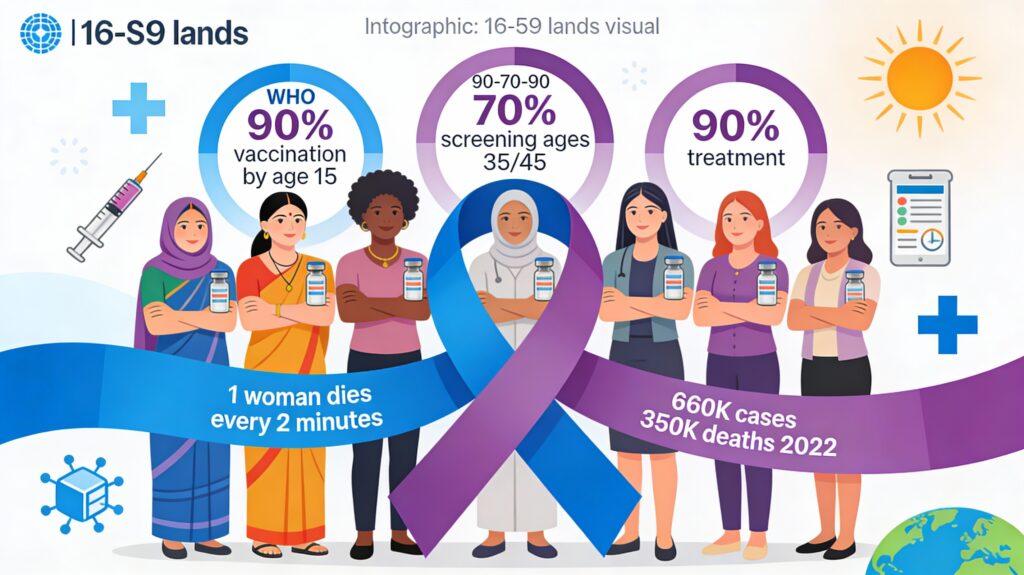
Global, January 4, 2026 – Every two minutes, a woman loses her life to cervical cancer, the fourth leading cancer among women worldwide that claimed 350,000 lives in 2022 despite being nearly 100% preventable through vaccination and screening. The World Health Organization marks January as Cervical Cancer Awareness Month, amplifying Jeanette’s tragic story: “I felt betrayed by my body,” she shared before succumbing at just 31 years old—a stark reminder that early detection makes this disease curable.
Cervical cancer forms in the cervix, linking the uterus to the vagina, primarily triggered by persistent human papillomavirus (HPV) infection—a sexually transmitted virus. In 2022 alone, 660,000 women received diagnoses, with 94% of deaths occurring in low- and middle-income countries where healthcare access remains severely limited. Regions like sub-Saharan Africa, Central America, and South-East Asia suffer disproportionately, highlighting devastating inequities in prevention, screening, and treatment availability.
WHO’s Transformative 90-70-90 Strategy
Launched in 2020 by 194 nations, the Global Strategy to Accelerate Cervical Cancer Elimination sets three critical 2030 targets:
90% of girls fully HPV-vaccinated by age 15, averting 17.4 deaths per 1,000 vaccinated.
70% of women screened using high-performance HPV DNA tests at ages 35 and 45.
90% of diagnosed women accessing treatment, from precancer ablation to advanced cancer care.
Achieving these pillars could prevent 74 million new cases and 62 million deaths by 2120, reducing incidence below 4 per 100,000 women—effectively eliminating cervical cancer as a public health threat. World Cervical Cancer Elimination Day on November 17 annually reinforces this urgent global commitment.
Proven Prevention and Treatment Pathways
Safe HPV vaccines like Gardasil and Cervarix target high-risk strains 16/18 responsible for 70% of cases, most effective before sexual debut (ages 9-14). Screening methods—Pap smears, HPV testing, visual inspection with acetic acid (VIA)—detect precancerous changes, enabling 90-100% cure rates when addressed early. Treatment escalates from LEEP procedures for precancer to surgery, radiation, or chemotherapy for invasive stages.
January’s awareness campaign demands action: HPV vaccination for adolescent girls, biennial screening for women 30-49, annual checks for those 50+. Yet disparities persist—only 46% of low-income nations offer national HPV programs compared to 98% in high-income countries.
Disproportionate Global and Indian Toll
Peak incidence hits women aged 35-44, devastating families as mothers and providers vanish; India loses one woman every 8 minutes to this preventable killer. Low-resource areas endure 90% of deaths due to screening and treatment gaps, with sub-Saharan Africa recording the highest rates globally.
Risk amplifiers include multiple partners, early sexual activity, smoking, HIV, and immune suppression; protection comes via condoms, monogamy, and routine screening. Late symptoms—post-coital/intermenstrual bleeding, foul discharge, pelvic pain—underscore prevention’s primacy over reactive care.
India’s National Fightback
Bearing 25% of global burden (123,000 cases, 77,000 deaths annually), India ranks cervical cancer second only to breast cancer. NPCDCS integrates community screening; 2023 HPV vaccine rollout targets routine immunization. The Cervical Cancer Elimination Initiative embraces WHO’s 90-70-90 via mCervix app tracking ASHA-led VIA screenings reaching millions in rural interiors.
Challenges persist—low awareness, rural access barriers, vaccine hesitancy—but ASHA successes demonstrate scalable impact. States like Tamil Nadu and Maharashtra lead screening coverage above 70%.
Victory Within Reach
WHO demands political will, equitable funding, HPV vaccine access—90% case prevention hinges on immunization alone. Australia nears elimination through sustained vaccination/screening; India eyes 2070 milestone with accelerated rollout.
January sounds the alarm: vaccine-preventable, screen-detectable, treatable. Two minutes lost every two minutes demands immediate action—vaccinate daughters, screen mothers, save lives now. For in-depth report read here.
Empowerment Call: Free government HPV vaccines for girls 9-14, ASHA screening camps nationwide, corporate wellness drives—elimination starts locally.
Two minutes lost every two minutes—act now to eliminate cervical cancer. Stay informed with more life-saving insights from Health News Updates. SBKI News – Empowering preventive health.