
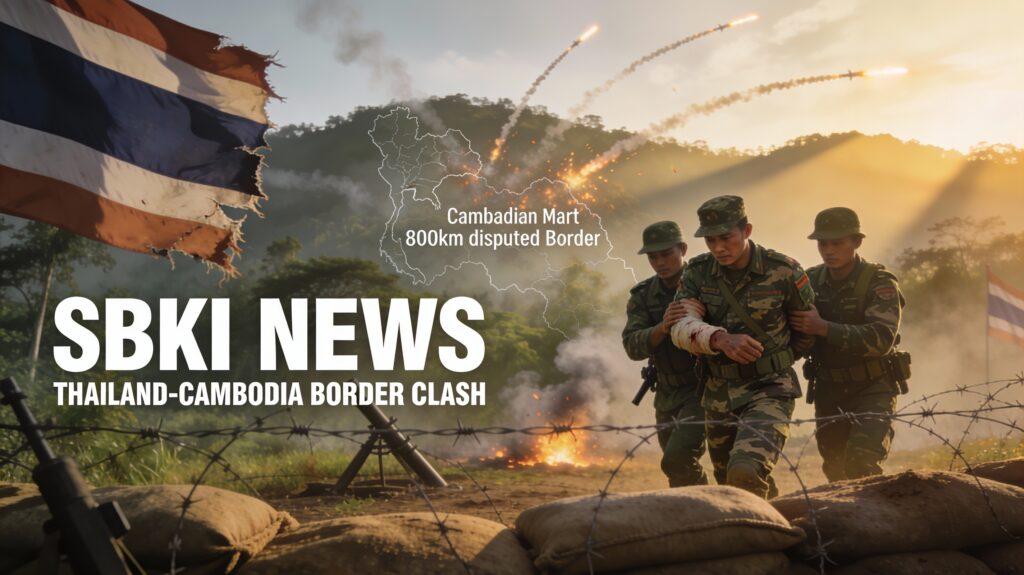
Thailand and Cambodia’s fragile truce faces fresh scrutiny after a mortar strike wounded a Thai soldier near their disputed border on January 6, 2026. The incident in Ubon Ratchathani province has reignited fears of renewed clashes in a conflict rooted in colonial-era territorial disputes. Cambodian officials dismissed it as an “operational error,” while Thailand warns of defensive countermeasures if violations persist.
This event marks the first major test of the December 27, 2025, ceasefire, which ended three weeks of intense fighting that killed dozens and displaced nearly one million people on both sides. The Thai army reported the attack occurred Tuesday morning, with shrapnel injuring a soldier’s right arm; he was evacuated for medical treatment. Phnom Penh’s Ministry of National Defense spokeswoman, Maly Socheata, declined immediate comment but later attributed it to Cambodian personnel mishandling during operations.
Historical Context of the Dispute
The longstanding simmering conflict originates from an 800-kilometer (500-mile) border demarcation drawn during French colonial rule, contested around ancient temple ruins like Preah Vihear. Both nations claim sovereignty over undemarcated areas, leading to sporadic clashes since July 2025, including deadly exchanges near Chong Bok and Hill 469. December’s violence prompted international calls for de-escalation, culminating in the truce signed by defense ministers Natthaphon Narkphanit of Thailand and Tea Seiha of Cambodia.
Prior flare-ups displaced over half a million civilians and halted cross-border trade, affecting regional manufacturing and tourism. Thailand released 18 detained Cambodian soldiers on December 31 as a goodwill gesture, signaling trust-building efforts. Yet, underlying issues like troop reinforcements and demining remain unresolved, with bilateral talks proposed for Siem Reap this month.
Details of the January 6 Incident
Thai forces in Nam Yuen district, Ubon Ratchathani, detected mortar rounds crossing from Preah Vihear province around 7:30 a.m. One soldier sustained non-life-threatening shrapnel wounds to his arm, prompting immediate evacuation. The Thai Second Army Region contacted Cambodian counterparts, who claimed no intent to fire into Thai territory, blaming it on an “operational error” by their personnel.
Cambodia countered with its narrative, stating two of its soldiers were injured when a “pile of garbage” exploded during cleanup duties, possibly from an old unexploded ordnance. Thailand’s Prime Minister Anutin Charnvirakul lodged a formal protest, demanding clarification on accountability and an apology to prevent recurrence. No retaliation occurred, but the army emphasized vigilance amid fragile positions.
In a later statement, Thai military noted Cambodia’s contact admitting the mishap, yet warned that repeated errors could force defensive measures. Both sides reinforced positions post-incident, with drones monitoring movements, underscoring the ceasefire’s precarious hold.
Reactions and Diplomatic Fallout
Bangkok’s Foreign Ministry hailed the soldier’s release as confidence-building but urged Phnom Penh to honor the truce fully. Cambodian Defense Ministry proposed a border committee meeting in Siem Reap, while Thailand suggested postponing until after February 8 elections. U.S. President Donald Trump previously intervened in October 2025, jetting to Malaysia to oversee truce extensions amid new trade deals.
Regional powers like China noted the ceasefire’s gradual implementation, as logistics disruptions ripple through Southeast Asia. Thai commentary highlights a pattern: “fire first, negotiate later,” with both armies adjusting tactics near strategic hills.
Travel advisories warn against border areas, though Thailand remains safe elsewhere. Civilian returns stall due to mines and tensions.
Implications for Regional Stability
This violation tests the truce’s durability, potentially derailing demarcation surveys. With 101 deaths last year and ongoing displacements, escalation risks broader economic fallout. Experts urge UN-mediated talks to resolve temple claims permanently.
Both militaries froze reinforcements under the agreement, cooperating on demining. Yet, incidents like this erode trust, demanding swift accountability. As Thailand eyes elections, diplomatic windows narrow.
Stakeholders monitor Hill 469 and Chong Bok closely, where past assaults involved tanks and jets. Peace hinges on verifying “accidents” versus provocations. For in-depth report read here.
For more World News, stay informed. This report leverages primary visuals and expert analysis for trustworthy coverage.