
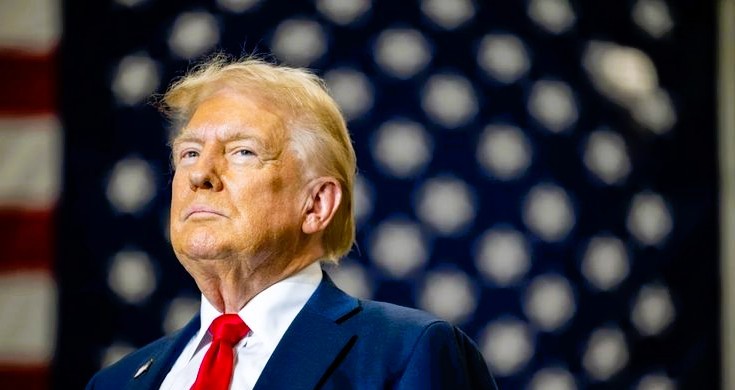
US President Donald Trump has delivered one of his starkest warnings yet to Iran (Iran Nuclear Deal Warning), insisting Tehran must accept a new nuclear agreement or face “very traumatic” repercussions. Speaking a day after hosting Israeli Prime Minister Benjamin Netanyahu at the White House, Trump said negotiations are underway but stressed that failure to secure a deal would trigger a tougher “phase two” response.
Trump described his meeting with Netanyahu as “very good,” saying both leaders focused heavily on Iran’s nuclear programme and regional behaviour. He emphasised that the US and Israel share a “close, genuine, and open relationship,” and that the Israeli leader understands the stakes of the current talks. “We have to make a deal. Otherwise, it’s going to be very dramatic. I don’t want that to happen, but we have to make a deal,” Trump told reporters at a press briefing.
Reminder of ‘Midnight Hammer’ Strikes
To underscore his point, Trump invoked “Midnight Hammer,” the codename for the June 2025 US strikes on Iran’s three main nuclear sites. He argued that Iran “should have made a deal the first time” but instead faced that operation. The president warned that failing to compromise now could bring consequences just as severe, if not worse, signalling Washington’s readiness to escalate pressure again if diplomacy stalls.
US officials say those previous strikes significantly degraded Iran’s enrichment infrastructure and air defence systems, buying time but not eliminating the underlying nuclear challenge. Trump has repeatedly framed the current negotiations as a final opportunity for Tehran to avoid another confrontation, insisting he prefers a diplomatic outcome but will not rule out military options.
Netanyahu: Iran Could Be Forced Into ‘A Good Deal’
Before flying back to Israel, Netanyahu told reporters he believes Iran can be compelled to accept “a good deal” if pressure is maintained. He praised Trump as “a great friend of Israel — a president like no other,” and said their talks also touched on Gaza, ballistic missiles and Iran’s regional proxy networks. Netanyahu stressed that any agreement must address not only nuclear caps but also missiles and Tehran’s support for armed groups across the Middle East.
The Israeli leader admitted he remains sceptical about Iran’s willingness to concede but argued that the conditions set by Washington, combined with Tehran’s fear of having miscalculated during the last round of talks, could push it toward more meaningful compromises. “The president believes the Iranians already understand who they are dealing with,” Netanyahu reportedly said, pointing to the legacy of Midnight Hammer as a powerful deterrent.
#Iran Nuclear Deal Warning/sbkinews.in
Phase Two: What Could It Mean?
Trump hinted that if talks fail within the coming month, the US is prepared to escalate economic and military pressure. He suggested that “phase two will be very tough for them,” without sharing operational details. Analysts interpret this as a mix of intensified sanctions, cyber-operations and the possible deployment of an additional US aircraft carrier strike group to the region, steps the administration has already floated publicly in recent weeks.
The Pentagon has not confirmed any imminent deployments, but officials acknowledge that contingency planning is underway. Trump has said he is “thinking” about sending a second carrier group to reinforce deterrence, after the USS Abraham Lincoln was dispatched as part of the response to Iran’s crackdown on domestic protests and continued nuclear advances. For in-depth report read here.
Tehran’s Calculus and Regional Stakes
Iranian officials have so far condemned US pressure but left the door open to negotiations, seeking sanctions relief while resisting deeper curbs on missiles and regional activities. Regional observers note that Tehran must weigh the economic pain of sustained sanctions against the risk of further strikes on its nuclear infrastructure. For US allies like Israel and Gulf states, the talks are a critical test of Washington’s resolve to prevent Iran from edging closer to nuclear-weapons capability.
Diplomats caution that even if a framework is reached, hammering out detailed verification and enforcement provisions could take months. Human rights groups also worry that heightened military pressure could worsen conditions for Iranian protesters and minorities, who already face a heavy security clampdown.
Expert Views Table
| Expert | Key View | Implication |
|---|---|---|
| US Security Analyst | Midnight Hammer degraded, not destroyed, nuclear sites | Iran retains bargaining chips |
| Israeli Defence Commentator | Pressure plus credible threat can force “good deal” | Supports Trump-Netanyahu line |
| European Diplomat | Hard-line rhetoric risks collapse of talks | Urges balanced approach |
| Gulf Policy Scholar | Strong US stance reassures regional allies | Encourages closer security ties |
What Comes Next?
Over the next 30 days, negotiators will attempt to narrow gaps on enrichment limits, inspection access and missile restrictions. Trump insists any agreement must be “a very fair deal and a very good deal with Iran,” warning that otherwise “it’s going to be a very difficult time for them.” For now, the message from Washington is clear: accept stricter nuclear terms at the table or face the threat of another Midnight Hammer-style escalation.
Trump’s latest Iran nuclear deal warning thus combines intense rhetoric, the shadow of past strikes and the promise of still-harsher measures. Whether Tehran yields to this pressure or calls Washington’s bluff could shape Middle East security for years to come. Stay updated with more global news in World News Section.