
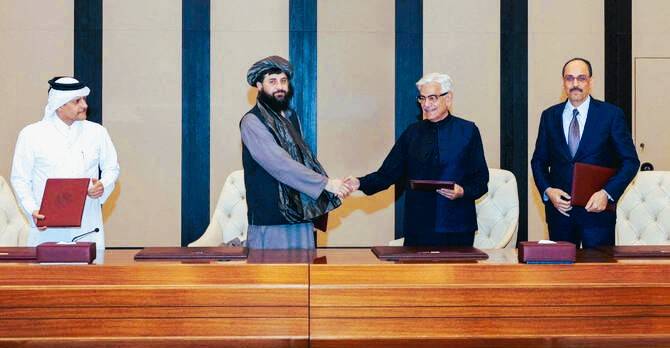
In a significant diplomatic breakthrough, Afghanistan and Pakistan have agreed to continue their ceasefire following productive talks in Istanbul, Türkiye. The ceasefire, which first came into force on October 19, has brought much-needed calm along the conflict-prone border, where recent military escalations had strained regional stability.
Sources close to the Istanbul talks confirmed that both nations expressed their commitment to maintaining peace and preventing further clashes. Officials announced that Afghan and Pakistan representatives will reconvene in Istanbul on November 6 to refine a detailed roadmap for de-escalation and long-term stability-building measures.
The decision reflects a renewed intent from both governments to pursue conflict resolution through dialogue rather than force. According to statements released by Türkiye’s foreign office, the talks were mediated by senior Turkish diplomats who helped establish a mutual understanding of the pressing issues that have long divided the neighboring countries.
A Crucial Step Toward Regional Stability
The continuation of the ceasefire marks a hopeful turning point in decades of strained relations between Afghanistan and Pakistan. Both nations have frequently accused each other of cross-border violations and harboring militant groups. The new development may pave the way for meaningful cooperation in counterterrorism, economic development, and refugee management.
Observers in the region have described the Istanbul meetings as a rare success for regional diplomacy. With Türkiye playing an active mediating role, international analysts believe this dialogue could inspire broader regional alignment around peace and trade cooperation in South Asia and Central Asia.
#Afghan and Pakistani/sbkinews.in
Monitoring Mechanism and Accountability
One of the most important outcomes of the recent agreement is the creation of a “monitoring mechanism” designed to ensure that ceasefire terms are respected. This mechanism will include representatives from both sides, as well as technical observers from Türkiye and possibly other neutral entities.
The monitoring body will be responsible for verifying compliance, investigating violations, and recommending penalties against those responsible for disrupting peace. Such accountability measures represent a new level of seriousness in how both governments intend to approach conflict management.
According to reports, the joint monitoring framework is expected to include both real-time surveillance tools and field-level verification systems. While the details remain under discussion, officials confirmed that digital tracking and secure communication channels will be part of the monitoring system’s design.
Taliban’s Commitment to Dialogue
Taliban spokesman Zabihullah Mujahid confirmed that Kabul supports the ongoing dialogue and considers peaceful engagement with Pakistan essential for the region’s security and progress. He indicated that both sides have agreed to maintain regular consultation meetings beyond the November 6 session in Istanbul to sustain momentum in peace efforts.
Mujahid emphasized that Afghanistan’s government aims to stabilize the border and prevent militant infiltration that could undermine the ceasefire. His remarks suggested optimism about rebuilding mutual trust, which has often been eroded by conflicting interests and security incidents.
Türkiye’s Role as Mediator
Türkiye’s mediation has been widely recognized as a diplomatic success. Ankara’s experience in facilitating intra-Afghan peace efforts and maintaining stable ties with both Islamabad and Kabul has placed it in a unique position to foster mutual understanding. Turkish officials said that their goal was not only to support an immediate ceasefire but also to encourage long-term stability through institutional cooperation.
Experts say Türkiye’s growing influence in the peace process aligns with its broader strategy to strengthen its geopolitical role in the Muslim world and promote conflict-resolution diplomacy.
Future of Afghanistan and Pakistan Relations
The continuation of the ceasefire offers cautious optimism. However, analysts warn that the real challenge lies in sustaining dialogue beyond symbolic agreements. Historical tensions, unresolved border disputes, and trust deficits could still derail progress if not carefully managed.
Nevertheless, the establishment of communication channels, a formal monitoring body, and planned follow-up meetings are encouraging steps. As both countries work toward improved relations, regional stakeholders—including Iran, China, and Central Asian republics—are likely to closely observe these developments due to their potential impact on trade, migration, and regional security.
By maintaining open diplomacy and mutual accountability, Afghanistan and Pakistan may be able to transform this ceasefire into a foundation for enduring peace. The coming Istanbul meeting on November 6 will be a critical test of their willingness to move from temporary restraint to sustainable partnership.
For more details on the ceasefire extension and the Istanbul talks, refer to the full report by NDTV.