
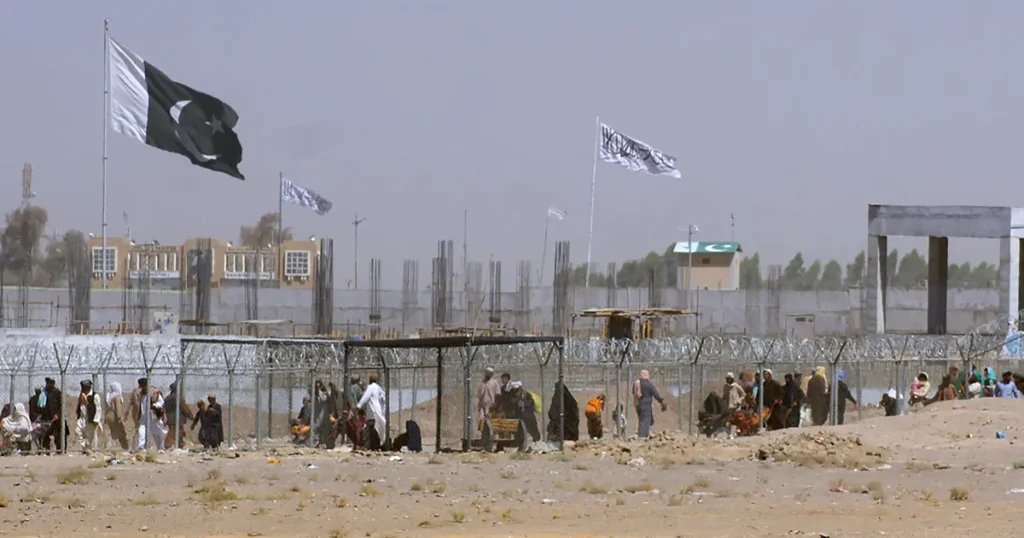
Afghanistan Pakistan border/sbkinews.in
October 2025 — In a concerning escalation of tensions along the strategically sensitive border between Pakistan and Afghanistan, Pakistani and Afghan forces recently engaged in deadly cross-border firing. The exchange of fire, which resulted in casualties on both sides, has raised alarm among regional security analysts and international observers about the fragile peace and stability in the region. This incident marks one of the most serious border confrontations since the Taliban came to power in Afghanistan in 2021, underscoring the precariousness of relations between Kabul and Islamabad.
The Incident: Details and Immediate Aftermath
The clash occurred along the Durand Line, the loosely demarcated border between Pakistan’s Khyber Pakhtunkhwa province and eastern Afghanistan. Reports indicate that Pakistani Frontier Corps and Afghan border security forces exchanged heavy gunfire late last week after a dispute over alleged illegal crossings and accusations of hostile intent.
Initial reports from Pakistani military sources confirmed casualties among their troops and vowed a measured response to maintain sovereignty along the frontier. Afghan authorities acknowledged the engagement but attributed the incident to misunderstandings and reaffirmed their commitment to peaceful border management.
Local residents along the border have expressed heightened anxiety as the skirmishes disrupted daily life and safety. Temporary displacement of civilians has been reported as families sought refuge from the crossfire.
Afghanistan Pakistan border
Historical Context: A Flashpoint Region
The Pakistan-Afghanistan border has long been a hotspot for contestation and conflict. The Durand Line, established in 1893 during British colonial rule, remains disputed by Afghanistan, which refuses to officially recognize it as an international boundary. The region is characterized by rugged terrain, porous border crossings, and tribal areas that straddle both countries, complicating control and governance.
Cross-border militancy, smuggling, and refugee movements have frequently ignited tensions. Both nations accuse each other of harboring insurgents and conducting cross-border attacks, contributing to a cycle of mistrust and insecurity.
The Taliban’s takeover of Afghanistan in 2021 added a new dimension to the conflict dynamic, as Pakistan navigates a complex relationship with the Taliban government while managing domestic security interests.
Afghanistan Pakistan border
Diplomatic Efforts and Military Posturing
Following the deadly exchange, diplomatic channels between Islamabad and Kabul have been activated to de-escalate tensions. Both sides have expressed regret over the incident and called for calm, emphasizing the importance of dialogue and cooperation.
Pakistan’s Foreign Office summoned Afghan diplomats to convey its concerns and demand measures to prevent future border violations. Afghanistan’s interim government reiterated its commitment to peaceful border management and pledged to investigate the circumstances surrounding the skirmish.
Military commanders from both sides have reportedly engaged in talks to establish mechanisms for border confidence-building, including joint border patrols and communication hotlines to quickly resolve conflicts.
Afghanistan Pakistan border
Regional and International Implications
The border clash has drawn international attention due to the region’s volatility and strategic significance. Afghanistan serves as a nexus for major geopolitical interests, including those of India, China, Russia, and the United States, each invested in stability for economic and security reasons.
The incident threatens to undermine ongoing regional cooperation initiatives such as the Quadrilateral Coordination Group and the Heart of Asia-Istanbul Process, which aim to foster dialogue and conflict resolution in Afghanistan and its neighboring countries.
Experts warn that continued border breaches could escalate into larger conflicts, destabilizing South and Central Asia and exacerbating humanitarian crises, including the plight of displaced populations.
Afghanistan Pakistan border
Security Challenges and Insurgency Threats
The border region is also a battleground for various militant groups, including the Tehrik-e-Taliban Pakistan (TTP), Islamic State Khorasan Province (ISKP), and other extremist factions. These groups exploit the porous border for safe havens, recruitment, and orchestrating attacks on both sides.
Both Pakistan and Afghanistan have vested interests in curtailing insurgent activities, but mutual accusations of complicity create friction. Effective border security requires enhanced intelligence sharing, coordinated operations, and political will—areas that remain fraught with challenges.
Afghanistan Pakistan border
Humanitarian Concerns and Civilian Impact
Frequent clashes along the border have disastrous effects on civilian populations. Insecurity disrupts agriculture, trade, and livelihoods, compounding poverty in already vulnerable communities. Displaced families face limited access to shelter, healthcare, and education.
Humanitarian organizations call for urgent ceasefire agreements and safe access to affected areas to provide relief and prevent further suffering.
Afghanistan Pakistan border
Prospects for Peace and Coexistence
Despite the recent violence, there are hopeful signs towards stabilizing the border. Historical agreements such as the 2016 Bilateral Border Management Plan between Pakistan and the Afghan government laid the foundation for joint mechanisms to prevent incidents.
The Taliban leadership’s recent diplomatic outreach and Pakistan’s pragmatic engagement hint at a mutual interest in preventing armed escalation.
For sustained peace, confidence-building measures must be reinforced, and longstanding political and territorial disputes require diplomatic resolution. The international community can play a supportive role by facilitating dialogue and providing resources for border management and community development.
Afghanistan Pakistan border
Conclusion: Navigating Complex Realities
The deadly exchange of fire between Pakistani and Afghan forces is a stark reminder of the fragile security environment along their shared border. While immediate de-escalation efforts offer a respite, the underlying tensions fueled by historical grievances, insurgency threats, and political uncertainties persist.
Maintaining peace demands concerted efforts from both countries and their partners to address root causes and build resilient mechanisms of cooperation. Protecting the lives and livelihoods of border communities must remain a humanitarian and strategic priority.
As the region watches closely, the hope is that diplomacy and dialogue will prevail over conflict, paving the way for stability and prosperity along thePakistan-Afghanistan border.