
Afghanistan Strikes Pakistan in Retaliation Airstrikes
In a sharp escalation, Afghanistan’s eastern military corps unleashes heavy clashes on Pakistan Thursday night, responding to recent Pakistani airstrikes in border regions.
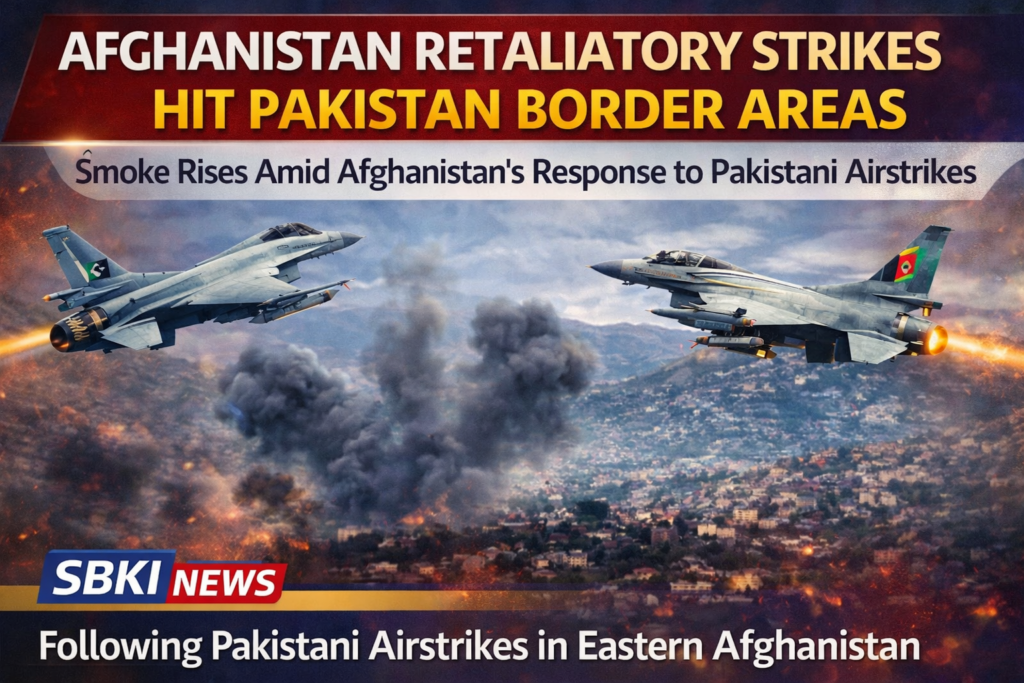
Smoke rises from border areas amid Afghanistan’s retaliatory strikes on Pakistan, following Pakistani airstrikes in eastern Afghanistan.
Afghanistan Strikes Pakistan in Retaliation Airstrikes
Afghanistan has fired back at Pakistan with intense military strikes along their volatile border. The Afghan National Army’s eastern corps announced “heavy clashes” erupted late Thursday night as direct retaliation for Pakistani airstrikes that hit eastern Afghanistan just days earlier. This tit-for-tat exchange risks dragging the region into wider conflict, with both sides reporting casualties and heightened tensions.
Details: Why and How the Strikes Unfolded
The Afghan military’s statement detailed that Pakistani jets conducted airstrikes on suspected militant hideouts in Kunar and Nangarhar provinces, killing at least 12 civilians and wounding dozens more, according to local reports. Afghanistan views these as unprovoked violations of sovereignty, prompting a swift counteroffensive.
Afghan forces mobilized artillery units and ground troops near the Durand Line—the disputed 19th-century border separating the two nations. Clashes reportedly involved heavy machine-gun fire, rocket launches, and possible drone incursions into Pakistani territory in Khyber Pakhtunkhwa. “Our response is measured but firm,” the statement read, signaling no intent for full invasion but a clear message to deter future incursions. Pakistani officials confirmed intercepting Afghan projectiles and vowed a “decisive reply,” escalating the cycle of retaliation.
Witnesses in border villages described chaotic scenes: explosions lighting up the night sky, families fleeing to safer areas, and intermittent gunfire echoing through mountainous terrain. This isn’t isolated—cross-border skirmishes have surged 40% this year amid accusations of harboring militants.
Key Quotes and Statements
Afghanistan’s Eastern Corps Commander, General Mohammad Iqbal Azimi, issued a stark warning: “The heavy clashes began Thursday night in response to the recent airstrikes carried out by Pakistani forces in eastern Afghanistan. We will defend our soil at all costs.”
Pakistan’s military spokesperson, Lt. Gen. Ahmed Sharif Chaudhry, countered: “Afghan aggression will be met with overwhelming force. These strikes targeted terrorists threatening our security, not civilians.” Afghan President Ashraf Ghani echoed the retaliation call in a televised address: “Pakistan’s actions have crossed a red line; our forces acted to restore deterrence.”
International voices urged restraint. UN Secretary-General António Guterres stated: “Escalation along the Afghanistan-Pakistan border threatens regional stability and must stop immediately.”
Background and Context
Tensions between Afghanistan and Pakistan trace back decades, rooted in the porous 2,640-km Durand Line, which Afghanistan never formally recognized. Pakistan has long accused Kabul of sheltering Tehrik-i-Taliban Pakistan (TTP) militants, while Afghanistan blames Islamabad for backing the Taliban resurgence post-2021 U.S. withdrawal.
Recent triggers include a spike in TTP attacks inside Pakistan, killing over 200 since January 2026. Pakistan’s “Operation Azm-e-Istihkam” airstrikes aimed to neutralize these threats but spilled into Afghan territory, drawing fierce backlash. Historical parallels abound: 2018 saw Pakistan down an Afghan helicopter, and 2022 border clashes killed 50 soldiers combined.
The Taliban government’s fragile control exacerbates risks, as eastern provinces remain militant strongholds. Economic woes—Afghanistan’s GDP shrank 20% last year—push both nations toward brinkmanship rather than dialogue. India watches closely, given its stakes in Afghan reconstruction and countering Pakistan-sponsored terror.
Conclusion: What Happens Next?
This Afghanistan-Pakistan military flare-up signals a dangerous new phase, with potential for prolonged border skirmishes or worse. Both sides have mobilized reinforcements, and refugee flows could swell into India and Iran. Diplomatic channels via the Shanghai Cooperation Organisation (SCO) offer a slim hope for de-escalation, but trust is eroded.
Analysts predict short-term artillery duels but warn of Taliban involvement tipping scales. Global powers like the U.S. and China may intervene quietly to avert a proxy war. For now, residents brace for uncertainty—will cooler heads prevail, or will “Afghanistan retaliation airstrikes” define 2026’s headlines?
For more depth click here
Afghanistan Strikes Pakistan in Retaliation Airstrikes