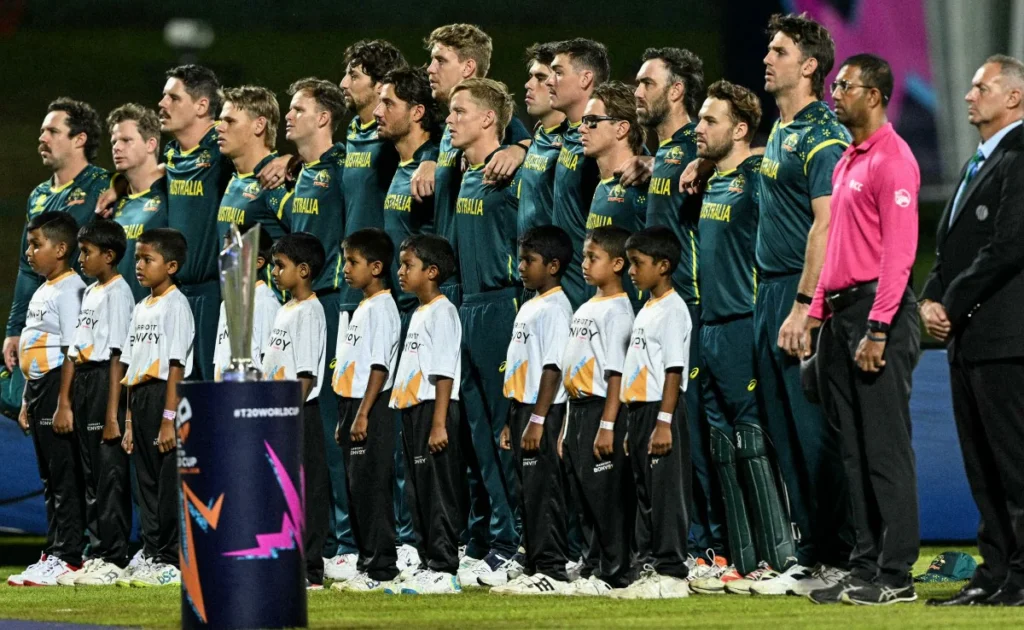
Australia Star Adam Zampa’s Candid ‘Dressing Room’ Admission After T20 World Cup 2026 Heartbreak/sbkinews.in
Adam Zampa has laid bare the mood inside the Australian camp, admitting that even a comprehensive nine‑wicket win over Oman in their final group fixture did little to soften the sting of an early exit from the ICC Men’s T20 World Cup 2026.
The leg-spinner, one of Australia’s key white-ball performers in recent years, revealed that the dressing room was “flat” and emotionally drained, with players struggling to take any real satisfaction from a dead-rubber victory that came only after their Super Eight hopes had already been extinguished.
Australia’s campaign never truly caught fire, and Zampa’s honesty reflects a group still processing how a squad stacked with experience and T20 pedigree could be out of the tournament while the business end was just beginning. The win over Oman, convincing as it was on the field, felt more like damage control than redemption inside the four walls of the change room.
‘The Win Didn’t Change Anything’: Zampa On Dressing Room Mood
Speaking after the Oman game, Zampa reportedly acknowledged that there was very little celebration despite the dominant performance. Players shook hands, went through the usual post-match routines, but the energy was muted. The leggie admitted that the result “didn’t change anything that mattered,” because the real target—progressing to the Super Eight—was already gone.
He is understood to have said that the dressing room was disappointed not only by the exit itself but by the sense that Australia had underperformed in key pressure moments. The Oman win felt like proof of what this side was capable of when things clicked, but also a reminder that they had found that level too late. For a group that still carries the standards of 2021 T20 champions and multiple ODI world titles, going home at the group stage is simply not acceptable.
Zampa’s comments highlight the emotional cost as much as the sporting one: players felt they had let themselves, their staff, and fans back home down. A comfortable, almost clinical victory over a lower-ranked side was never going to erase earlier missteps.
Lessons From A Flat Campaign
The disappointment is rooted in more than just results; it is also about how Australia played when the heat was on. In crunch matches against stronger opposition, issues surfaced that a nine-wicket win over Oman could not mask.
Key themes likely to feature in internal reviews include:
Tactical conservatism with the bat: There will be questions over whether Australia were aggressive enough in the Powerplay in earlier games, especially in must-win situations. Their best cricket often comes when they attack early, but they appeared tentative at times in this tournament.
Middle-overs drift: In several matches, Australia allowed the game to meander in overs 7–15, both with bat and ball. With the bat, they got stuck against spin; with the ball, they failed to squeeze as effectively as other top sides.
Selection calls under scrutiny: Zampa’s own role illustrates this. When used properly, he is a genuine match-winner, but there will be questions over whether he was brought on at the right times and whether Australia played their best balance of spin and pace for subcontinental conditions.
Adaptation to conditions: Pitches in this tournament have rewarded smart spin and changes of pace. Australia were out-bowled and out-thought in conditions where other sides leaned harder into spin and variations.
Zampa’s admission, then, isn’t just emotion; it is an acknowledgment that technical and tactical shortcomings surfaced too often against quality opposition.
Pride In One Win, Regret Over The Bigger Picture
Despite the overarching disappointment, Zampa stopped short of dismissing the Oman performance entirely. Inside any professional dressing room, there is pride in executing a plan well, and Australia did that emphatically in their final outing: their new ball bowlers were disciplined, the spinners suffocated the middle overs, and the top order made short work of the chase.
But from the players’ perspective, this was more about professional standards than joy. The win was necessary to at least end on a positive note, avoid further embarrassment, and give the fans something to hold on to—but it did not change the story of the campaign.
In that sense, Zampa’s words capture a common elite-sport paradox: you can play a near-perfect game and yet feel empty if it arrives after the one that really mattered was lost.
What Zampa’s Honesty Reveals About Australia’s Mindset
Zampa has become one of the more thoughtful voices in the Australian setup, and his willingness to talk about the dressing-room mood suggests:
The standards in the group remain very high: They are not willing to sugarcoat failure with a consolation win.
There is a core of players who understand tournament rhythms: They know that peaking late in a short World Cup is as bad as not peaking at all.
Introspection has already begun: Honest admissions like this often precede tough internal conversations around roles, planning, and future direction.
It also indicates that, despite the disappointment, there is still a foundation of accountability rather than denial. That is crucial if Australia are to rebound at the next global event.
Pressure On Leadership And Future Planning
An early exit inevitably raises questions beyond individual performances. While Zampa did not publicly point fingers, his comments arrive in a climate where:
The head coach and selectors will be scrutinised for squad balance, spin resources, and middle-order roles.
Senior batters may face tough decisions about role clarity—anchor vs aggressor—and whether changes in personnel or approach are needed.
T20 strategy as a whole may be revisited; other top teams are leaning into specialist roles and more spin-heavy combinations, especially in Asian conditions.
Australia is likely to conduct a full review into their preparation, from warm-up game quality and venue acclimatisation to how they managed workloads from bilateral series and franchise cricket into a major ICC event.
The Emotional Weight Of A Third Major Disappointment
Though this campaign will be judged on its own merits, it does not exist in isolation. For many of these players, this is another chapter in a recent sequence of underwhelming global tournaments. That cumulative fatigue feeds into the dressing-room malaise Zampa described.
For senior cricketers, there is a realisation that they may not get too many more chances at T20 World Cups. That perspective can sharpen the pain of exits like this. Zampa’s phrasing reflects a group that understands the finite nature of their window together, and the urge to make the next opportunity count.
Where Australia Go From Here
Zampa’s candid reflection suggests that, beneath the disappointment, there is still belief that the core of this side can be competitive if they adapt intelligently. Likely next steps include:
Reassessing T20 roles: clearer definition of who attacks, who stabilises, and who finishes in the batting order.
Strengthening spin depth: ensuring the team is never under-resourced in slow, turning conditions.
Leaning into specialists: perhaps moving away from shoehorning multi-format stars into roles better suited to short-format specialists.
Investing in the next generation: using bilateral T20Is to blood younger players around a senior core that includes Zampa.
For now, though, the overriding mood remains as Zampa described it in that quiet dressing room: a sense that they have underachieved, and that a big win over a lower-ranked side cannot mask the reality of a failed campaign.