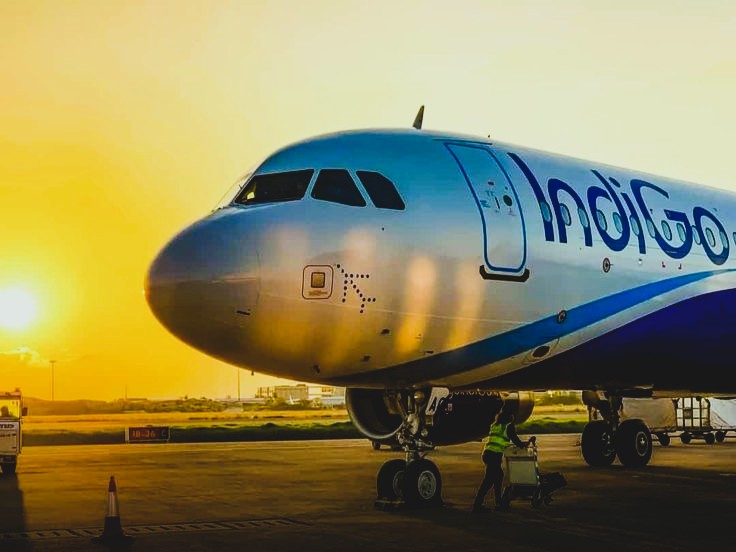
The civil aviation ministry has granted initial clearance to two airlines, Al Hind Air and Fly Express, to begin operations, weeks after IndiGo’s large‑scale cancellations highlighted the lack of competition in India’s fast‑growing aviation market. Minister Ram Mohan Naidu said both carriers received their no‑objection certificates this week, signalling the government’s intent to diversify capacity beyond the current duopoly of IndiGo and Air India Group.
IndiGo’s dominance and 4,500‑flight disruption
IndiGo currently controls about 65% of India’s domestic market, followed by Air India Group with roughly 27%, leaving limited room for smaller carriers. Earlier this month, IndiGo’s staffing and planning issues led to cancellations or major disruptions on around 4,500 flights, stranding thousands of passengers and exposing the vulnerabilities of over‑reliance on a single airline.
Analysts argued that the episode underscored the need for more players to ensure service continuity, pricing discipline and better consumer protection in the event of operational shocks. The ministry’s decision to fast‑track NOCs for new entrants is being read as a direct response to these concerns.
Who are Al Hind Air and Fly Express?
According to preliminary disclosures, Al Hind Air plans to focus on southern India using a fleet of ATR turboprop aircraft and is in the process of securing its Air Operator Certificate. The carrier is being promoted by Kerala‑based investors and aims to link tier‑2 and tier‑3 cities with larger metros, filling gaps in regional connectivity left by previous shutdowns.
Fly Express, meanwhile, has so far revealed little beyond a “coming soon” teaser on its website, but officials say it is expected to operate as a low‑cost carrier on underserved domestic routes. Both airlines must now complete safety audits, demonstrate financial viability and conduct proving flights before receiving final operating permits.
For more insightful coverage on markets, startups and tech, explore our dedicated section: Business & Technology News.
Shankh Air and recent approvals
The latest NOCs follow earlier approvals for Uttar Pradesh‑based Shankh Air, which is likely to launch operations in 2026 once its certification process is complete. In total, India has granted permits to six air operators since 2020, including regional outfits, as part of a broader push to deepen connectivity under the UDAN scheme and reduce concentration risk in the sector.
Apart from full‑service and low‑cost incumbents such as Air India, Air India Express, IndiGo and government‑owned Alliance Air, newer private airlines like Akasa Air, Star Air, Fly91 and IndiaOne Air have also entered selected routes, though none yet rival IndiGo’s scale.
Government’s competition and consumer focus
Officials say the approval for Al Hind Air and Fly Express is aligned with the government’s goal of encouraging “more competition and better service quality” in domestic skies. By diversifying the operator base, policymakers hope to mitigate the impact of any single airline’s disruption on overall connectivity, especially during peak travel seasons.
Consumer groups have welcomed the move but stress that regulators must also strengthen passenger‑rights enforcement—ensuring timely refunds, rebooking support and transparent communication when flights are cancelled. Industry experts add that for new airlines to survive, the ministry must address systemic challenges such as high jet fuel taxes, congested airports and limited slots at major hubs.
#Aviation Ministry#New Airlines/sbkinews.in
Outlook for India’s aviation market
India is the world’s fastest‑growing major aviation market, with domestic passenger traffic expected to double over the next decade, driven by rising incomes and expanding tourism. The entry of Al Hind Air, Fly Express and Shankh Air is likely to intensify competition on regional routes, potentially leading to more options and sharper fares for travellers, though profitability will remain a challenge in a cost‑sensitive environment. For in-depth report read here.
How quickly these new carriers can scale up, maintain safety standards and build brand trust will determine whether they can meaningfully dilute IndiGo’s dominance or simply occupy niche pockets in India’s crowded skies.