Bangladesh bans IPL broadcast/sbkinews.in
In a move without modern precedent in South Asian cricket broadcasting, Bangladesh’s interim government has ordered an indefinite, nationwide ban on the telecast and streaming of the Indian Premier League (IPL), turning a franchise selection dispute into a full‑blown political and diplomatic flashpoint. The directive comes in direct response to the Board of Control for Cricket in India (BCCI) instructing Kolkata Knight Riders (KKR) to release Bangladesh pace spearhead Mustafizur Rahman ahead of the 2026 IPL season, a decision Dhaka has publicly branded “illogical”, “distressing” and an affront to national sentiment.
What Exactly Has Bangladesh Banned?
The Ministry of Information and Broadcasting’s order imposes a blanket suspension on all IPL content within Bangladesh’s borders.
All live telecasts of IPL 2026 matches on Bangladeshi TV channels have been halted “until further notice”.
Simulcasts, highlights shows, discussion programmes, promos and any IPL‑branded content have also been ordered off‑air.
The order explicitly covers both broadcast and streaming, meaning licensed OTT platforms operating in Bangladesh are expected to comply as well.
The ministry’s notification, issued under the authority of the interim government led by Nobel laureate Muhammad Yunus, says the suspension is in the “public interest” and will remain in force until the government issues fresh instructions. Officials frame it as a targeted, retaliatory step rather than a permanent policy shift, but there is no sunset clause in the text.
How the Mustafizur–KKR Dispute Triggered the Ban
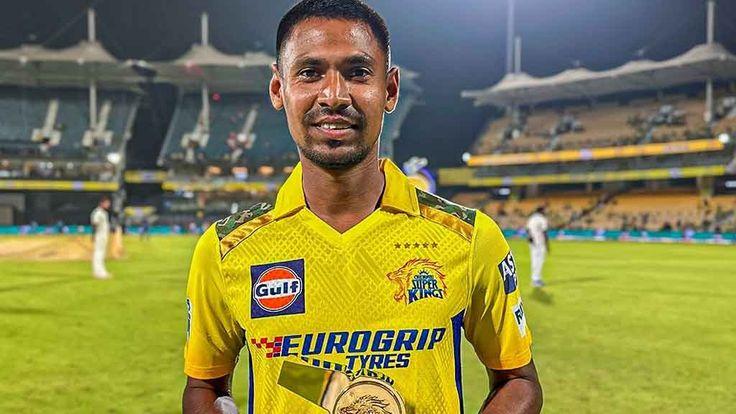
The immediate spark for the ban was the abrupt removal of Mustafizur Rahman from KKR’s 2026 squad at BCCI’s insistence.
KKR had picked Mustafizur at the mini‑auction for around INR 9.2 crore, expecting him to play a central role in their pace attack.
On January 3, BCCI secretary Devajit Saikia confirmed that the board had directed KKR to release the Bangladesh left‑arm seamer, citing unspecified “developments all around”.
The board allowed KKR to sign a replacement but offered no detailed explanation publicly, a lack of clarity that Dhaka seized upon as evidence of disrespect.
Simultaneously, the Bangladesh Cricket Board (BCB) revoked Mustafizur’s No Objection Certificate (NOC) to play in the IPL, stressing that even if KKR reversed course, he would not be permitted to participate due to “security concerns” and the wider political climate. That step alone would have kept the pacer out of the tournament, but the government went further by turning the dispute into a broadcast standoff.
Dhaka’s Rationale: “Saddened, Hurt, Aggrieved”
The information ministry’s language underscores just how much symbolic weight Mustafizur carries in Bangladesh’s national psyche.
The order states there is “no logical reason” for BCCI’s decision to push KKR into dropping Mustafizur and says the move has “distressed, shocked and angered” the Bangladeshi public.
Officials describe Mustafizur as a national icon whose exclusion is seen at home not as a routine team call, but as a slight directed at Bangladesh itself.
Dhaka’s reaction is also layered onto a deteriorating diplomatic backdrop:
Anti‑India sentiment in Bangladesh has grown since former prime minister Sheikh Hasina took refuge in India in 2024 and New Delhi declined to repatriate her despite repeated requests from Dhaka’s new establishment.
Protests in Bangladesh over the killing of student leader Sharif Osman Hadi and a series of attacks on Hindu minorities have further strained ties, with Indian political discourse turning sharper in response.
Against that context, the Mustafizur decision became a lightning rod. Bangladesh’s interim authorities argue that the BCCI’s opaque handling “hurt national pride” at a delicate moment, justifying a strong retaliatory message through cricket – the most visible shared arena in the relationship.
Beyond the Ban: World Cup Venues and Bilateral Fallout
The telecast blockade is not the only measure Dhaka is pursuing.
The BCB has convened emergency meetings and approached the ICC seeking relocation of Bangladesh’s fixtures in the 2026 Men’s T20 World Cup away from India, citing “safety and security” concerns for players and officials.
Bangladesh has also signalled that it will not tour India in the near term, raising the prospect of a prolonged freeze in bilateral cricket relations.
Cricket boards rely heavily on stable government‑to‑government ties when resolving schedule disputes; using an ICC event as leverage illustrates how deeply this spat has cut into the sporting relationship.
Impact Inside Bangladesh: Fans, Broadcasters, and the Market
From a pure numbers perspective, experts believe the ban will barely dent IPL’s global revenue machine. IPL rights are sold in huge multi‑territory packages, and Bangladesh’s standalone TV market is relatively small compared with India, the Middle East and North America.
Within Bangladesh, however, the implications are more tangible:
Bangladeshi fans, who have long followed IPL as much to track their own stars as to watch Indian franchises, now lose legal access to live coverage in their home language and on local cable networks.
Domestic broadcasters holding sublicensed rights face a sudden content shortfall at a time of usually strong T20 viewership, potentially harming ad revenues and subscription numbers.
OTT platforms serving Bangladesh will have to geo‑block IPL content, increasing the risk of piracy and grey‑market streaming.
Politically, the move plays well with nationalist sections of Bangladeshi opinion who see it as “standing up” to India. But it also forces ordinary fans into the crossfire of a diplomatic quarrel they did not cause.
How the BCCI and Indian Stakeholders Are Responding
On the Indian side, the initial public response has been measured but firm.
Former BCCI officials quoted in Indian media have said Bangladesh’s ban amounts to “over‑reaction” driven by domestic politics, and insist it will not materially affect IPL finances or global appeal.
BCCI insiders point to “security‑related developments” and wider India–Bangladesh tensions as the underlying reason for pulling Mustafizur out of KKR, even if those reasons were not detailed in the initial communication.
Privately, franchise executives see Mustafizur’s removal as one of many late player‑availability changes they are forced to deal with every season due to geopolitics, scheduling clashes and board‑level decisions. The unprecedented element for them is a foreign government banning the league’s telecast outright in retaliation.
A Rare Case of a State Using a League as Leverage
Countries have restricted foreign entertainment content before, but a government singling out a specific sports league in this way is rare, especially when the formal trigger is the treatment of a single player rather than explicit political propaganda inside the content itself.
Bangladesh’s calculus appears to rest on three pillars:
Symbolism: Cricket is the most powerful cultural bridge between India and Bangladesh; cutting off the IPL is a way to show public disapproval with maximum visibility at relatively low direct cost.
Domestic optics: The move taps into grievances over perceived slights from India in both politics and sport, allowing the interim government to project itself as assertive.
Negotiating signal: By tying the ban to both Mustafizur and broader “developments all around”, Dhaka is signalling it wants a reset in how its concerns are heard in Delhi and Mumbai.
Whether this gambit produces concessions or simply hardens attitudes on both sides remains to be seen.
What Could Happen Next?
Several scenarios are now in play.
Quiet de‑escalation: Behind‑the‑scenes dialogue could lead to calibrated steps – for example, a more detailed BCCI explanation, softening of language in Dhaka, and eventual lifting of the broadcast suspension before the end of IPL 2026.
Prolonged standoff: If neither side backs down, Bangladesh may keep the IPL off air for multiple seasons, maintain its refusal to play in India and push harder at ICC fora, turning a franchise dispute into a semi‑permanent fault line.
Wider sporting boycott: In a worst‑case scenario, other forms of cricket co‑operation – A‑team tours, women’s fixtures, age‑group competitions – could all be casualties until political ties improve.
For now, the only certainty is that Mustafizur Rahman will not bowl a ball in IPL 2026, either for KKR or anyone else, and millions of Bangladeshi viewers will be watching something other than one of the world’s richest cricket tournaments on their screens this season.