
Bijnor News today
उत्तर प्रदेश के बिजनौर जिले में फसलों के अवशेष से बनाए जाने वाले बायो पैलेट अब होटलों, डेरियों, मंदिर रसोइयों और चाय‑पूजा केंद्रों में ईंधन के लोकप्रिय विकल्प बन गए हैं। सिद्धबली मंदिर और अन्य धार्मिक स्थलों से आर्डर मिलने से यह उद्योग और तेजी से बढ़ रहा है, साथ ही पर्यावरण प्रदूषण कम करने में यह भूमिका निभा रहा है।
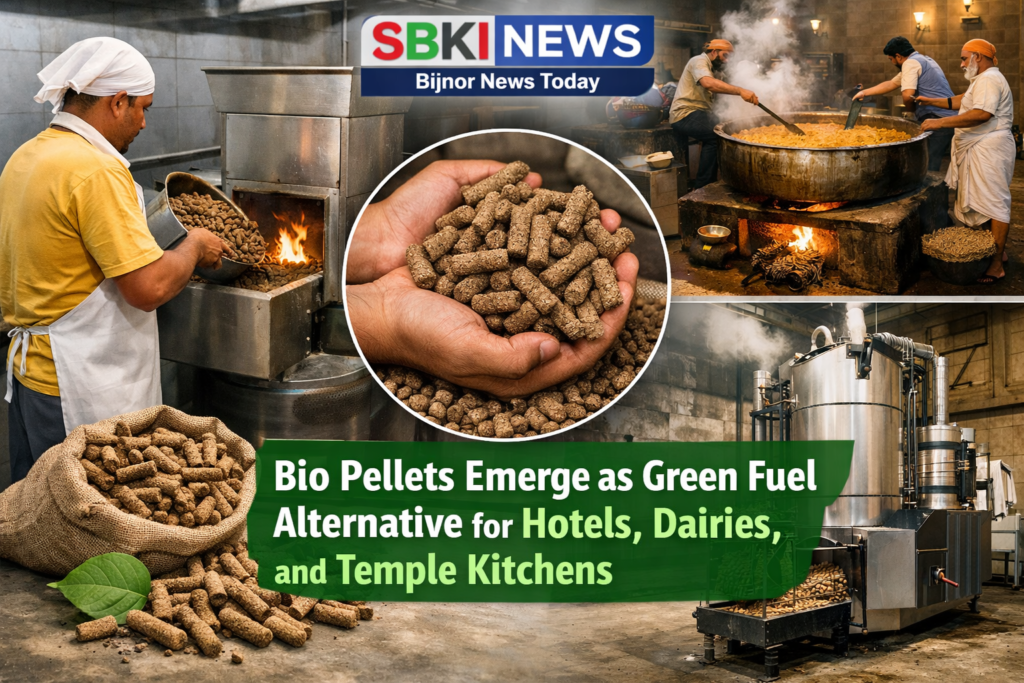
बिजनौर–चांदपुर रोड पर स्थित बायो पैलेट यूनिट में फसल अवशेष से बने पेलेट। यह ईंधन अब होटल, डेरी और मंदिर रसोइयों में इस्तेमाल हो रहा है।
ईंधन के रूप में बायो पैलेट क्यों बढ़ रहा है महत्व?
बिजनौर में इंजीनियर अनूप सिंह, पुलकित सिंह और वन विभाग से जुड़े वैज्ञानिक अंकित सिंह ने 2023 में बिजनौर–चांदपुर रोड पर फसलों के अवशेष से बायो पैलेट बनाने की यूनिट स्थापित की थी। यह इकाई “Pali Sil Energy” नाम से काम करती है और गन्ने की पत्ती, सरसों की फली, पराली और लकड़ी के बुरादे जैसे कृषि अपशिष्ट को कंप्रेस करके ठोस ईंधन‑पेलेट तैयार करती है।
पारंपरिक कोयले और एलपीजी जैसे ईंधन की बढ़ती कीमतों और इस्राइल–ईरान युद्ध जैसी स्थितियों के बीच एलपीजी की किल्लत और खपत बढ़ने से ईंधन के नए विकल्पों की तलाश जारी है। बायो पैलेट इसी फंट में “ग्रीन फ्यूल” के रूप में उभर रहा है, जिसका उपयोग बायलर और रसोई दोनों में किया जा सकता है।
बायो पैलेट कैसे बनता है, किस तरह बेहतर है?
बायो पैलेट बनाने की प्रक्रिया बहुत सरल और स्वच्छ है। किसानों से खेतों से उठाए गए फसल अवशेष (पराली, पत्तियां, बुरादा आदि) को खूब सूखाकर, बारीक करके और कंप्रेस करके छोटे ठोस पेलेट के रूप में तैयार किया जाता है। यह पेलेट कोयले की तरह जलता है, लेकिन धुआं और जहरीले गैस निकास कम होते हैं, जिससे हवा‑प्रदूषण पर बोझ कम लगता है।
जागरण की रिपोर्ट्स के अनुसार, इस यूनिट ने अब तक लगभग दस हजार मीट्रिक टन फसल अवशेष से बायो पैलेट बना चुके हैं। कुछ रिपोर्टों में यह भी बताया गया है कि बायो पैलेट कोयले से भी अधिक ताप देने में सक्षम है, लेकिन उसका उत्सर्जन बहुत कम प्रदूषक है।
होटल, डेरी और मंदिर रसोइयों में बढ़ता प्रयोग
पहले यह बायो पैलेट मुख्य रूप से इंडस्ट्रियल बायलर और बिजली उत्पादन वाले प्लांट में ईंधन के रूप में इस्तेमाल होता था, जिसे जर्मनी और डेनमार्क जैसे यूरोपीय देशों में भी निर्यात किया जा रहा है। लेकिन अब यूनिट ने होटलों, डेयरी फैक्ट्रियों, मंदिर रसोइयों और चाय‑पूजा केंद्रों के लिए अलग‑अलग आकार और शक्ल के पेलेट बनाने शुरू कर दिए हैं, जिन्हें छोटे और मध्यम आकार के बर्नर में आसानी से इस्तेमाल किया जा सकता है।
मध्य प्रदेश के मुरैना जिले में एक चिक्की बनाने वाली फैक्ट्री को बायो पैलेट की खेप पहुंच चुकी है, जबकि उत्तराखंड के फोटद्वार मार्ग पर स्थित सिद्धबली मंदिर से भी आर्डर मिला है। इन आर्डरों से न केवल यूनिट को वित्तीय लाभ हो रहा है, बल्कि धार्मिक स्थलों को भी पर्यावरण‑अनुकूल ईंधन का विकल्प मिल रहा है।
पर्यावरण और किसानों दोनों के लिए फायदेमंद
बायो पैलेट बनने से पर्यावरण और किसान दोनों लाभान्वित हो रहे हैं। अक्सर खेतों में फसल अवशेष जलाए जाते हैं, जिससे भारी मात्रा में धुआं और प्रदूषण होता है। अब ये अपशिष्ट यूनिट में जाकर ईंधन बन जाते हैं, जिससे खेतों का कचरा ऊर्जा में बदल रहा है।
किसान खेत से उठाए गए अपशिष्ट के बदले अतिरिक्त आय भी कमा रहे हैं। यूनिट के कर्मचारी खुद खेतों से फसल अवशेष उठवा रहे हैं, जिससे किसानों को लागत नहीं आती और उनके पास अतिरिक्त आय का स्रोत भी बन रहा है। इस तरह बायो पैलेट उद्योग, पर्यावरण संरक्षण और किसान आय वृद्धि के तीनों लक्ष्यों को एक साथ पूरा कर रहा है।
सरकारी और व्यावसायिक प्रयासों की दिशा
बायो पैलेट उद्योग की सफलता से प्रशासनिक व व्यावसायिक दोनों स्तरों पर इसे बढ़ावा देने की चर्चा भी शुरू हो गई है। अधिकारियों का कहना है कि ईंधन के विकल्प के रूप में फसल अवशेष से ईंधन बनाने
For in depth clickhere
Also read here more
Ghaziabad news: Husband Shoots Dead Wife and Lover Over Illicit Affair; Police Forms Three Teams to Nab Accused
Bijnor news today : Bio Pellets Emerge as Green Fuel Alternative for Hotels, Dairies, and Temple Kitchens
Bijnor News today
In Bijnor, Uttar Pradesh, a small unit is turning crop residues into biomass pellets that are now being used as eco‑friendly fuel in hotels, dairies, and temple kitchens. The plant has already supplied pellets to a chikki factory in Madhya Pradesh and received an order from the Siddhbatli temple in Uttarakhand, signaling strong demand for this green alternative to LPG and coal.
A bio‑pellet unit near Bijnor–Chandpur road compresses crop waste into solid fuel pellets for use in boilers, hotel kitchens, and dairy units.
Why bio pellets are gaining traction
Agricultural residues like sugarcane leaves, mustard stalks, stubble, and wood shavings are often burnt in fields, creating heavy air pollution. To combat this, three engineers—Anup Singh, Pulkit Singh, and Ankit Singh—set up a bio‑pellet unit on Bijnor‑Chandpur road in 2023 under the name “Pali Sil Energy.”
Their unit collects farm‑waste such as rice straw, sugarcane leaves, and sawdust, dries and compresses them into small, solid pellets. These pellets burn cleanly in industrial boilers and small‑scale burners, making them a viable alternative to coal and LPG. With rising LPG prices and supply concerns linked to global tensions, many hotels and small industries are now turning to biomass pellets as a cheaper, more sustainable fuel source.
How biomass pellets work and why they’re cleaner
Bio‑pellets are made by shredding crop waste, drying it, and pressing it under high pressure into uniform cylinders or briquettes. The final product looks like compact cylinders similar to traditional charcoal but generates far less smoke and soot when burned.
Compared to coal and even LPG in some heating applications, biomass pellets offer:
Lower carbon emissions and minimal particulate pollution.
Use of renewable agricultural waste instead of fossil fuels.
Reduced dependence on imported gas and fuel.
Reports from pellet‑burner manufacturers note that biomass‑based systems can cut fuel costs by 40–60% compared to LPG in commercial kitchens and small boilers, while still providing high, consistent heat.
From factories to hotels, dairies, and temple kitchens
Initially, Bijnor’s bio‑pellet unit mainly supplied large boilers and industrial units, including export orders to countries like Germany in Europe. However, the plant has now diversified its product line, creating pellets suited for smaller burners used in:
Hotel and restaurant kitchens.
Dairy processing units.
Temple community kitchens and “choti”‑type community‑feeding setups.
According to local reports, bio‑pellet shipments have already reached a chikki manufacturing unit in Morena district, Madhya Pradesh. The unit has also received an order from the Siddhbatli temple in the Phata‑dwar route of Uttarakhand, where the fuel will be used in ritual cooking and prasad‑preparation units.
Benefits for farmers, environment, and businesses
For farmers: Instead of burning stubble or discarding residues, they can sell agricultural waste to the pellet unit, earning extra income and helping reduce field‑burning.
For environment: Converting waste into fuel cuts open‑burning and helps lower air pollution, especially in the Indo‑Gangetic plain.
For businesses: Hotels, small factories, and dairy units can lower their operating costs and avoid fuel‑crisis disruptions by using locally‑produced bio pellets.
Several pellet‑burner manufacturers in India highlight that biomass pellets can replace LPG, diesel, and furnace oil in many heating applications, with cleaner, more stable combustion.
Future: Push for more pellet‑based fuel use
With such success, local authorities and clean‑energy advocates are urging the government to promote more biomass‑pellet units and to support farmers and entrepreneurs working in this space. Experts suggest that if more plants like Bijnor’s come up, India can significantly reduce fossil‑fuel dependence, create rural jobs, and cut down on farm‑waste burning at the same time.
For now, Bijnor’s bio‑pellet unit stands as a small but powerful example of how turning farm waste into fuel can benefit the economy, the environment, and everyday users—from hotel kitchens to temple prasad‑preparation units.