
#Blue Dogs Mystery/sbkinews.in
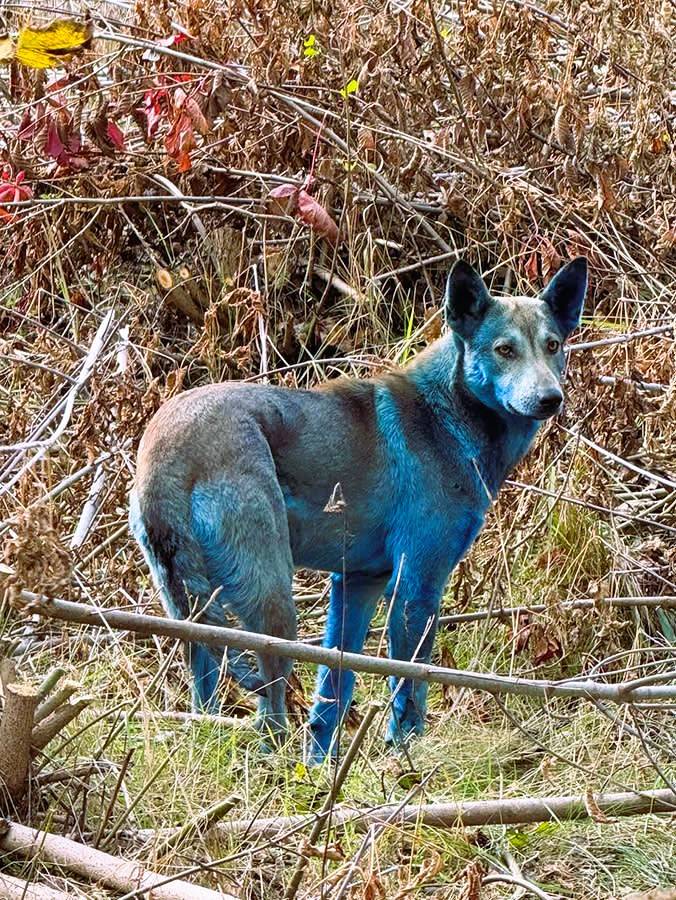
In the heart of Ukraine’s Chernobyl exclusion zone, an unusual and eye-catching mystery has attracted international attention. A week ago, locals and volunteers working with the non-profit Dogs of Chernobyl noticed several stray dogs in the area with a striking blue tint covering their fur. These dogs, typically brown or gray, appeared to have suddenly turned a surreal shade of blue.
This discovery has triggered a wave of curiosity among scientists, animal lovers, and social media users across the globe. The enigmatic transformation of the dogs has become a viral talking point, raising questions about potential chemical exposure in an area already famous for its history of nuclear contamination.
The Organization Behind the Discovery
The non-profit Dogs of Chernobyl works in partnership with the Clean Futures Fund, a U.S.-based charity dedicated to supporting communities and ecosystems affected by industrial and nuclear disasters. The organization manages hundreds of stray dogs living in the 30-kilometer exclusion zone, caring for them through vaccination, feeding, and sterilization programs.
According to reports from the charity’s volunteers, these dogs were seen just a week ago with their usual natural fur tones. However, upon returning to feed the animals, they were astonished to see several dogs with bright blue coats. Photos shared on the internet quickly went viral, pulling the attention of both Ukrainian authorities and international scientists.
What Could Be Causing the Blue Color?
At first glance, it’s easy to assume that the Chernobyl radiation might have caused the color shift, given the area’s infamous history with the 1986 nuclear disaster. But the Clean Futures Fund quickly ruled out radiation as a cause. Laboratory tests conducted on the animals indicate normal health conditions and no unusual radioactive readings.
Experts instead suspect contact with industrial chemical waste left behind in the restricted zone. The Chernobyl area contains remnants of abandoned factories, paint facilities, and machinery sites. Observers believe that some dogs may have rolled in or ingested residues containing blue pigments or chemical byproducts that dyed their fur temporarily.
Such incidents are not unheard of in industrial or post-industrial environments. In the past, stray animals near factories in India and Russia have turned blue or green after exposure to copper sulfate, methylene blue, or other pigments commonly used in metal and dye industries.
Authorities and Experts Investigate
Ukrainian officials have now launched an investigation to identify specific contamination sources inside the exclusion zone. Samples of fur and soil from areas where the dogs gather have been collected for laboratory analysis. The goal is to trace whether old industrial materials or chemical drums are leaking into the ecosystem.
Reports also note that the dogs themselves appear active, friendly, and healthy. Volunteers from the Clean Futures Fund emphasized that despite their unusual appearance, the animals showed no symptoms of illness or stress. Still, safety measures have been put in place to prevent close human contact until more definitive results are available.
A Legacy of Abandonment and Survival
The blue dogs are part of a much larger story about survival in Chernobyl. Around 700 dogs currently inhabit the zone, descendants of pets left behind when thousands of families were evacuated after the nuclear explosion. Over decades, these animals have adapted to extreme conditions, forming packs that now depend heavily on non-profits and scientific teams that visit the area for sterilization and food distribution drives.
These efforts not only help the dogs survive but also allow scientists to study long-term radiation effects on mammal populations in unique environmental conditions. Although radiation levels have dramatically decreased since 1986, the zone still poses challenges for wildlife and researchers alike.
Global Reactions and the Viral Buzz
After the first images of the blue dogs appeared on social media, they spread rapidly across global platforms, sparking a mix of fascination and concern. Internet users shared theories—ranging from radioactive mutations to artistic hoaxes. But as credible organizations like the Clean Futures Fund stepped forward with factual clarifications, the conversation shifted toward environmental accountability.
Animal rights groups have used this viral moment to highlight the broader issue of industrial pollution and its often-overlooked effects on stray and wild animals. Environmental experts are now calling for a thorough clean-up of abandoned industrial materials in the exclusion zone, warning that similar incidents could reoccur if waste sites remain unmanaged.
Hope for the Future
For the volunteers of Dogs of Chernobyl, the mystery of the blue dogs underscores both the hazards and resilience within the zone. Their mission remains focused on protecting these animals, improving their living conditions, and using scientific transparency to counter misinformation.
The Clean Futures Fund has reaffirmed its commitment to analyzing the findings and sharing results publicly to ensure global awareness. As the investigation continues, the blue dogs stand as a vivid reminder of the interconnectedness of pollution, neglect, and the natural world’s ability to adapt in extraordinary ways.
For more updates on global events and other intriguing stories, visit our World News.
For more details, you can read the full story on news18.com |