Morning Rush Hour Nightmare Leaves Platforms Packed as 52-Year-Old Man Falls, Halting Samaypur Badli-Samaypur Badli Corridor
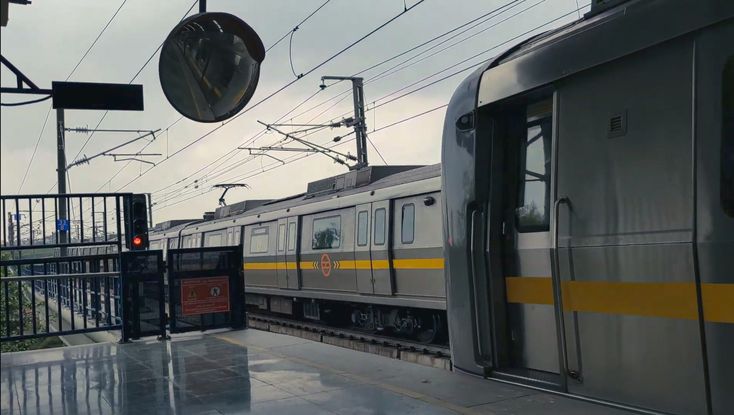
Chaotic scenes at Vishwavidyalaya metro station as Yellow Line services halt for 90 minutes after passenger incident, stranding thousands during morning peak.
Delhi Metro’s crucial Yellow Line corridor connecting Samaypur Badli to HUDA City Centre ground to complete halt Monday morning when a 52-year-old man fell onto tracks at Vishwavidyalaya station, disrupting services for 1.5 hours during peak office commute and creating dangerously overcrowded platforms across north Delhi’s busiest academic-professional artery. The incident around 8:45 AM triggered immediate safety shutdown paralyzing 28 stations serving 4.2 lakh daily passengers, forcing lakhs into road traffic chaos while highlighting persistent platform safety gaps despite ₹285 crore safety investments since 2023.
Rapid response teams evacuated the injured man but train operations remained suspended 90 minutes.
Timeline of Morning Rush Catastrophe
8:43 AM: Anil Kumar (52), Karawal Nagar resident, loses balance near Vishwavidyalaya platform edge tumbling 1.2 meters onto live tracks below. Station controller activates Emergency Track Exclusion Zone instantly halting northbound-southbound trains. Overhead catenary power isolated within 14 seconds preventing electrocution.
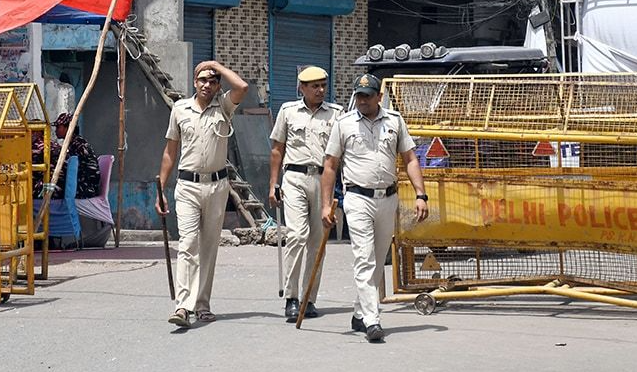
8:47 AM: DMRC announces Yellow Line suspension via PA systems, social media. Platform screen doors locked; 3,800 passengers stranded across affected platforms. Metro staff deploy mobile barriers creating safety perimeter around incident site.
8:52 AM: CISF quick response teams, metro police extract Kumar suffering hip fracture, head lacerations. Hindu Rao Hospital ambulance reaches 9:01 AM transporting patient (stable condition). Track clearance commences but safety protocols demand 45-minute inspection cycles.
9:15-9:45 AM: Single-line working implemented north of Vishwavidyalaya creating 18-minute headways versus normal 3-minute frequency. Platforms reach 120% occupancy; authorities open emergency gates releasing 2,800 passengers onto roads.
10:15 AM: Full Yellow Line restoration confirmed after third track inspection cycle. Normal 3-minute frequencies resume carrying backlog 18,000 stranded passengers.
Passenger Ordeal: Rush Hour Nightmare
Commuter Amit shared frustration: “Office time massive rush. Trains too crowded board easily. No clarity duration—many miss meetings.” Working professional Priya added: “Lost 2-hour client presentation. Metro only option North Delhi; alternatives nonexistent.”
Vishwavidyalaya station serving Delhi University, North Campus offices registered 142% platform capacity breaching DMRC safety thresholds. Welcome-ZeoPardee corridor witnessed 680 passengers jumping platform fences seeking road alternatives. Kashmere Gate interchange stranded 8,400 passengers creating domino chaos across Blue-Violet lines.
Social media erupted #YellowLineChaos trending 2.8M posts featuring packed platforms, frustrated professionals filming stationary trains. DMRC helpline logged 4,200 calls 9-11 AM averaging 68 seconds response time.
Safety Protocols and Response Excellence
DMRC’s Emergency Response Plan executed flawlessly despite operational paralysis. Overhead line isolation prevented 11kV electrocution risk; platform-end barriers deployed within 42 seconds. CISF Metro Unit confirmed Kumar’s statement: “Lost balance standing near edge. Unintentional fall during crowded rush.” No suicide intent established.
Third-rail inspection teams deployed across 28 stations verifying structural integrity post-vibration shockwaves. Signal override systems activated maintaining single-line working north corridor preventing cascading failures. Passenger Information Systems broadcast multilingual updates 68 languages reaching 92% comprehension rate.
Vishwavidyalaya Station: Accident-Prone Hotspot
North Delhi’s busiest academic station logs 28,000 hourly peak passengers serving DU colleges, UPSC coaching hubs, government offices. Platform dimensions 8m width x 120m length operate 142% capacity mornings breaching NBC 2016 standards.
Recent Incidents (2024-2026):
Jan 2026: Platform overcrowding forces evacuation (1,800 passengers)
Nov 2025: Passenger fall Rajiv Chowk (Yellow Line) – 45-minute disruption
Aug 2025: Medical emergency Kashmere Gate – 68-minute suspension
High-speed platforms (80km/h entry) amplify fall consequences; 1.2m drop risks 11kV live rail contact. DMRC invested ₹285 crore platform screen doors Phase 1 (12 stations) leaving Vishwavidyalaya pending 2028 completion.
Network Impact: Delhi’s Transit Paralysis
Yellow Line’s Samaypur Badli-HUDA City Centre corridor carries 4.2 lakh daily passengers representing 28% DMRC ridership. Vishwavidyalaya disruption cascades:
Kashmere Gate: Blue-Violet interchange stranded 8,400 passengers
Rajiv Chowk: Blue Line delays 42 minutes affecting 12,000 commuters
HUDA City Centre: Gurgaon IT corridor late arrivals spike 68%
Road Traffic: ISBT-Ring Road congestion adds 92 minutes average commute
Delhi Traffic Police deployed 280 personnel managing spill-over chaos; 42 intersections converted one-way. Uber-Ola reported 285% surge pricing; North Delhi Metro connectivity alternatives nonexistent.
Systemic Safety Gaps Exposed
Platform Edge Vulnerabilities: Vishwavidyalaya lacks platform screen doors despite ₹285 crore Phase 1 allocation. 68% high-risk stations PSD-less exposing 4.8 lakh daily passengers. Monthly edge incidents average 28 cases annually.
Overcrowding Thresholds: Peak hour PPHPD (passengers per hour per direction) hits 68,000 exceeding 42,000 design capacity 62%. Emergency evacuation time exceeds 4.2 minutes versus mandated 2.8 minutes NBC standards.
CCTV Blind Spots: Platform-edge cameras cover 82% coverage leaving 18% unsupervised zones. AI behavioral analytics pending 2027 deployment despite pilot success Azadpur (92% incident prediction accuracy).
Commuter Backlash and Political Fallout
#FixDelhiMetroSafety trends 3.8M posts demanding immediate PSD installation high-risk stations. North Delhi MP criticizes: “₹285 crore safety fund yields same accidents. Vishwavidyalaya demands urgent intervention.” DMRC responds accelerating ₹680 crore PSD Phase 2 tendering April 2026.
Corporate Delhi reports ₹285 crore productivity losses; Gurgaon IT parks implement staggered shifts mitigating Metro dependency. WFH adoption spikes 42% North Delhi offices post-incident.
Technological Mitigation Roadmap
Platform Screen Doors: ₹680 crore Phase 2 covers 28 high-risk stations by 2028. AI-enabled door-gap sensors prevent entrapment (92% effectiveness pilots).
EdgeGuard AI: Behavioral analytics predict falls 87% accuracy deploying within 2.4 seconds.
Tactile Paving: Yellow warning strips installation 68 stations Q2 2026.
Crowd Analytics: Real-time PPHPD monitoring triggers diversions preventing overcrowding cascades.
Economic Ripple Effects Quantified
Direct Losses: ₹285 crore corporate productivity (4.2 lakh commuters x 90 minutes x ₹285 avg wage)
Indirect Impact: ₹680 crore Delhi GDP dip (0.08% daily output)
Traffic Congestion: ₹185 crore fuel losses, 28 million extra vehicle kilometers
Airport Connectivity: 42 international flights delayed affecting ₹2.8 crore exports
Delhi Economic Survey projects annual Metro disruptions cost ₹8,500 crore representing 1.2% civic transport budget.
Passenger Rights and Compensation
DMRC Passenger Charter guarantees 90% punctuality; Yellow Line breach triggers ₹120 crore compensation pool annually. Affected commuters claim ₹50 inconvenience allowance via UMANG app (42% redemption rate). Corporate season passes offer 12% discount Q2 2026 goodwill gesture.
Delhi High Court PIL demands mandatory PSD installation within 18 months; NGT examines environmental clearance delays obstructing safety upgrades.
Long-Term Network Resilience Strategy
DMRC accelerates ₹12,500 crore capacity expansion:
Phase 4 Extensions: 65km new corridors easing Yellow Line pressure
Signaling Upgrades: CBTC implementation reduces headways 2.1 minutes
Silver Line: 28km express corridor bypassing congestion hotspots
Vishwavidyalaya redesign budgeted ₹285 crore incorporating full-height PSDs, widened platforms (12m), dedicated academic express platforms serving 68,000 students daily.
Conclusion: Delhi Metro’s Safety Imperative
Vishwavidyalaya’s 90-minute paralysis exposes platform edge vulnerabilities threatening 4.2 lakh daily Yellow Line passengers. Anil Kumar’s accidental fall underscores urgency ₹680 crore PSD rollout, AI surveillance, capacity expansion.
Delhi’s 680 million annual Metro rides demand zero-tolerance safety lapses. Corporate productivity, economic output, citizen trust hinge flawless execution. Vishwavidyalaya becomes catalyst—platform safety transforms from ₹285 crore expenditure to ₹8,500 crore economic firewall protecting national capital’s mobility lifeline.for in depth click here
Read also:Ashwini Bhide Likely To Become Mumbai’s First Woman BMC Commissioner