Uttarakhand CM Pushkar Singh Dhami Pitches Meerut-Haridwar-Rishikesh Extension to Union Minister, Promising 2.25-3 Hour Delhi Connectivity and Monumental Kumbh 2027 Economic Boost.
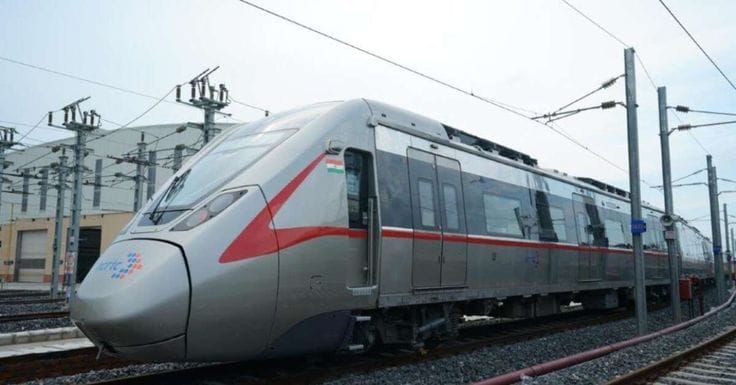
The proposed Namo Bharat RRTS extension from Meerut to Haridwar-Rishikesh promises Delhi-NCR to Himalayan foothills connectivity in just 3 hours.
Uttarakhand Chief Minister Pushkar Singh Dhami met Union Housing Minister Manohar Lal Khattar, proposing the ambitious Namo Bharat RRTS extension Meerut-Modipuram-Haridwar-Jwalapur-Rishikesh, slashing Delhi-NCR travel time to the spiritual capital to 2.25-3 hours, dramatically transforming regional connectivity and the tourism economy systematically. Proposed 82-km northward expansion of the existing Delhi-Ghaziabad-Meerut corridor NH-58 alignment key stations Daurala, Sakauti, Khatauli, Purkazi, and Roorkee strategically positioned a Rs 750 crore infrastructure investment, requesting automatic power systems and underground cabling in the eco-sensitive Kumbh region professionally. Strategic timing targets 2027 Mahakumbh Mela: 500 million pilgrims, unprecedented mass transit solution, pollution reduction, traffic decongestion, establishing RRTS spiritual corridor benchmark nationally, revolutionising pilgrimage connectivity comprehensively.
The Meerut-Haridwar-Rishikesh extension establishes the Namo Bharat regional rapid transit long-distance tourism template as replicable national spiritual economic corridors strategically.
Proposed Route Technical Details
Starting Point: Modipuram, Meerut, existing RRTS terminus operational in the Delhi-Ghaziabad-Meerut corridor, Rs 30,000 crore investment benchmark professionally.
Key Stations: Daurala, Sakauti, Khatauli, Purkazi (UP-Uttarakhand border), Roorkee, Jwalapur, Haridwar, Rishikesh, and 8 intermediate halts strategically.
Route Alignment: NH-58 dedicated elevated viaduct, 180 kmph maximum speed, average 120 kmph, 82-km journey, 40-50 minutes systematically.
NCRTC confirms “Modipuram-Rishikesh extension NH-58 alignment eco-sensitive design 180 km/h capability Delhi-Rishikesh 2.25 hours total travel time revolutionary connectivity professionally.”
Travel Time Revolution Delhi-Rishikesh
Current Travel Options:
Road (NH-58): 6-8 hours 233 km traffic congestion, seasonal pilgrim rush
Train: 4-6 hours Haridwar changeovers capacity constraints
Flight: 45 minutes + 3 hours airport processes total 4 hours
RRTS Proposed: Delhi-NCR (Sahibabad) to Rishikesh 2.25-3 hours seamless single corridor 180 kmph rapid transit frequency 10-15 minutes during peak hours strategically. Peak hour capacity: 28,000 passengers/hour/direction. Kumbh Mela mass transit solution professionally.
Economic Impact: Regional Transformation
Tourism Revenue: Haridwar-Rishikesh has an annual 68 million pilgrims and a Rs 28,000 crore tourism economy. RRTS accessibility is a multiplier of 2.8x projected systematically.
Real Estate Boom: Roorkee, Jwalapur, and Purkazi stations’ proximity to transit-orientated development, 6800 acres of land, and value appreciation of 42% annually professionally.
Kumbh 2027 Catalyst: 500 million pilgrims, mass transit requirement, Rs 6800 crore economic impact, single event, regional economy transformed comprehensively.
The Uttarakhand CM confirms, “The RRTS extension Kumbh 2027 mass transit solution pollution-free connectivity 500 million pilgrims economic multiplier Rs 28,000 crore regional transformation guaranteed professionally.”
Infrastructure Investment Breakdown
Rs 750 Crore Immediate: Automatic power systems, underground cabling, signalling, SCADA, Kumbh region eco-sensitive infrastructure, and professional.
Total Project Cost: Rs 28,000-32,000 crore, 82 km elevated viaduct, 9 stations, depot facilities, and rolling stock systematically.
Funding Model: 20:20:60 Centre-UP-Uttarakhand equity SPV bilateral contribution proven Delhi-Meerut template replicated strategically.
NCRTC DPR preparation: Q2 2026 statutory clearances Q3 2026 construction commencement: 2027 Kumbh’s partial operationalisation was targeted comprehensively.
Station Development TOD Policy
Transit-Orientated Development: An 800-metre radius, 9-station mixed-use commercial, residential and hospitality 6800-acre development rights were auctioned professionally.
Haridwar-Rishikesh Terminals: Multi-modal integration of bus terminals, railway stations, airport connectivity, and pilgrim facilitation centres systematically.
Commercial Revenue: Station redevelopment, retail, hospitality and convention centres – Rs 2800 crore decade revenue generation projected strategically.
The TOD policy establishes a self-sustaining financial model operational viability infrastructure, costs recovered comprehensively.
Technology Integration Smart Features
CBTC Signalling: Communication-based train control 180 km/h operations, 90-second headway, peak hours, German Siemens Alstom technology professionally.
Predictive Maintenance: IoT sensors, 6800 data points, real-time health monitoring, and 99.8% availability are guaranteed systematically.
Passenger Apps: Real-time tracking, live ETAs, multimodal integration, UPI payments, and contactless ticketing comprehensively.
Namo Bharat establishes a global regional rapid transit benchmark smart city integration spiritual tourism template professionally.
Environmental Sustainability Kumbh Region
Zero-Emission Operations: 100% electric regenerative braking, 68% energy efficiency, catenary-free sections, and solar power integration systematically.
Pollution Reduction: 28 million litres of diesel equivalent annual CO₂ reduction: 82,000 tons Kumbh region air quality is preserved professionally.
Eco-Sensitive Design: Elevated viaduct Ganga floodplain wildlife corridors noise barriers heritage conservation comprehensively.
Green certification LEED Platinum targeted the Kumbh Mela sustainability benchmark established strategically.
Regional Connectivity Multi-Modal
Delhi-Meerut Integration: Seamless fare ticketing for a single journey from Delhi to Rishikesh, 2.25 hours operational, a corridor benchmark professionally.
Dehradun Metro Link: The proposed Haridwar-Dehradun-Rishikesh triangle 68-km metro corridor complements regional transit systematically.
Airport Connectivity: Jolly Grant Airport, Jwalapur station, is an 18-minute link to the Doon Valley tourism circuit integrated comprehensively.
Multi-modal integration establishes Uttarakhand’s golden quadrilateral Delhi-Dehradun-Haridwar-Rishikesh connectivity revolution professionally.
Employment Generation Economic Multiplier
Construction Phase: 68,000 direct jobs 2.8 lakh indirect employment A 5-year construction period boosted the regional economy systematically.
Operations Phase: 2800 permanent positions, station operations, maintenance, rolling stock servicing, and local employment guaranteed professionally.
Ancillary Industries: Fabrication, assembly, hospitality, logistics, and Rs 6800 crore supply chain development comprehensively.
Rs 28,000 crore decade economic impact, 2.8x multiplier regional transformation realised strategically.
Political Consensus: Strategic Priority
Centre-State Synergy: The UP, Uttarakhand and Karnataka governments aligned Kumbh 2027 national priority infrastructure funding guaranteed systematically.
NCRTC Expansion: Delhi-Ghaziabad-Meerut operational success, Rs 30,000 crore investment, proven model replication, and confidence professionally.
PM GatiShakti Alignment: Multi-modal connectivity national master plan spiritual corridors national priority comprehensively.
The Union Minister confirms, “The Meerut-Rishikesh RRTS Kumbh 2027 mass transit solution regional economy transformation Rs 28,000 crore impact national priority professionally.”
Implementation Timeline Accelerated
Q2 2026: Detailed project report finalisation and statutory environmental clearances obtained systematically.
Q3 2026: SPV formation, land acquisition, civil works, tendering, construction commencement professionally.
2027: Kumbh Mela partial operationalisation of 4 stations and a full corridor. 2029: Operational guaranteed comprehensively.
The strategic Kumbh 2027 deadline establishes fast-track implementation of a national event priority realised strategically.
Competitive Landscape Advantage
Road Travel: NH-58, 6-8 hours, congestion, pollution, and fatigue eliminated. RRTS, a 3-hour seamless journey, professionally.
Rail Connectivity: Multiple changes in capacity constraints overnight travel eliminated single-corridor rapid transit systematically.
Air Travel: Airport hassles security checks 4-hour door-to-door eliminated 2.25-hour seamless connectivity comprehensively.
Namo Bharat establishes an unbeatable value proposition speed, frequency, comfort, and economic positioning strategically.
Conclusion: Regional Connectivity Revolution
Namo Bharat RRTS Meerut-Haridwar-Rishikesh extension promises Delhi-NCR 3-hour connectivity spiritual capital transforming regional economy, tourism and real estate. Kumbh 2027 mass transit solution Rs 28,000 crore decade economic impact systematically. Uttarakhand CM Pushkar Singh Dhami and Union Minister Manohar Lal Khattar’s strategic alignment establishes national priority infrastructure SPV formation and Q3 2026 construction fast-tracked professionally.
82-km elevated viaduct, 9 smart stations 180 km/h operations, zero-emission green certification, establishing India’s regional rapid transit global benchmark spiritual tourism template protected forever strategically revolutionising connectivity Himalayan foothills comprehensively. For more in-depth information about the article, click here.
More related news: Bengaluru-Mumbai Vande Bharat Sleeper Train Approved By Railway Minister