Delivery Workers Striking/sbkinews.in
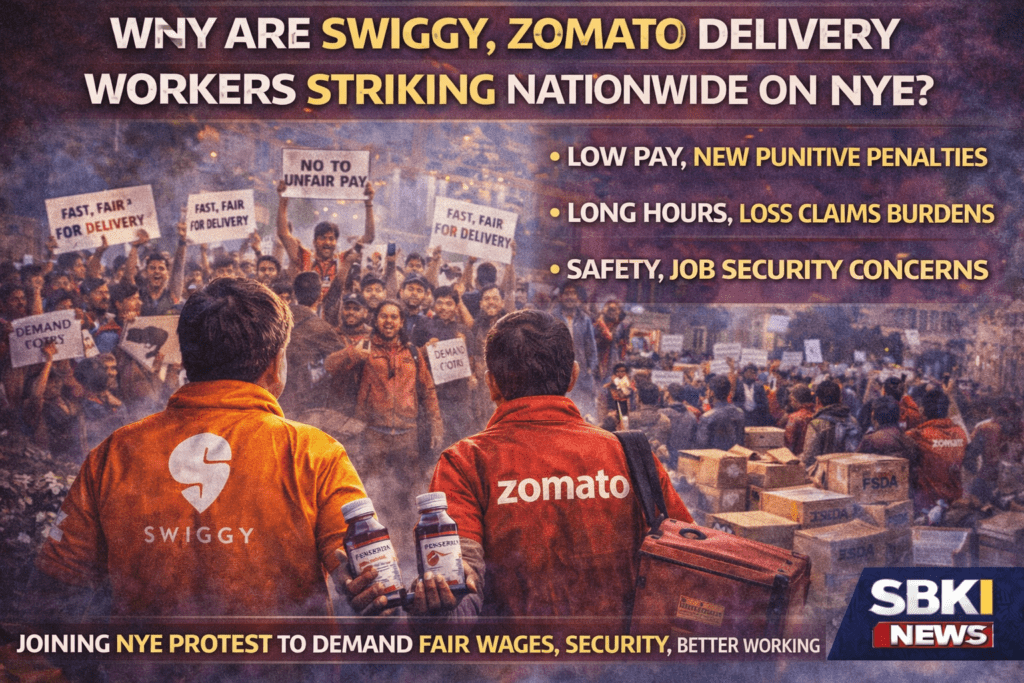
Swiggy, Zomato, and Amazon delivery workers launched a nationwide strike across major Indian cities just hours before New Year’s Eve, disrupting services amid festive peak demand. The action, coordinated by gig worker unions, highlights deepening frustrations over wages, safety, and exploitative algorithms. Platforms face massive order backlogs as thousands of riders refuse shifts.[web:previous]
Strike Timeline and Scale
The strike erupted on December 31, 2025, starting at midnight in Delhi-NCR, Mumbai, Bengaluru, Hyderabad, and Pune, with reports of over 50,000 workers participating nationwide. Unions like the Indian Federation of App-based Transport Workers (IFAT) and Platform Workers Federation claim 80% shutdown in key hubs, forcing companies to issue delay alerts. Protests featured bike rallies and dharnas outside corporate offices, escalating tensions as New Year orders piled up.
New Year delivery protest
Workers parked vehicles en masse at delivery hubs, sharing viral videos of empty streets and stalled warehouses. Platforms acknowledged disruptions via app notifications, urging customers to expect 2-3 hour delays. By evening, partial services resumed in some areas after negotiations, but core demands remain unmet, threatening extension into January 1 celebrations.[web:previous]
Core Demands of Agitating Workers
Gig workers demand a minimum guaranteed wage of ₹35,000 monthly, irrespective of orders, to counter variable pay cuts from algorithm tweaks. They seek insurance coverage for accidents, currently patchy despite high road risks, plus paid sick leave and maternity benefits—absent in current contractor models. Additional calls include capping delivery distances at 5 km per order and ending punitive rating systems that slash incentives for low scores.
New Year delivery protest
Safety tops the list, with riders protesting lack of helmets, vests, and vehicle maintenance reimbursements amid rising fatalities—over 500 reported in 2025 per union data. They oppose dynamic pricing that pressures unsafe speeds during peaks and demand union recognition for collective bargaining. “No more algorithm slavery,” chanted protesters, referencing opaque systems slashing earnings by 40% recently.
New Year delivery protest
Company Responses and Economic Impact
Swiggy and Zomato cited “temporary operational challenges” in statements, offering one-time bonuses of ₹500-1,000 to active riders while blaming “external factors.” Amazon promised faster grievance redressal but rejected wage hikes, calling workers “partners.” Platforms hired emergency temp staff, yet order volumes dropped 60%, costing millions in lost revenue during high-demand New Year.
The strike exposes gig economy fault lines, with workers earning under ₹15,000 monthly post-fuel costs despite 12-hour shifts. Legal experts note Supreme Court precedents mandating social security for gig workers, pressuring firms under the 2020 Social Security Code. Consumer backlash mounts on social media, with #SupportDeliveryWorkers trending alongside boycott calls.
Broader Context and Government Role
This marks the third major strike in 2025, following October’s Bengaluru protests over fuel price hikes. Unions link it to stalled national gig worker welfare board formation, promised in Labour Ministry talks. Gujarat, Maharashtra, and Karnataka governments deployed police at hotspots, mediating tripartite meetings set for January 2.
Economically, the sector employs 2.5 million riders, contributing ₹50,000 crore annually, but worker churn hits 70%. Analysts predict regulatory shifts, with states like Uttar Pradesh eyeing minimum wage notifications. Success could inspire similar actions in cab aggregators like Ola-Uber.Hindustan Time
New Year delivery protest
Future Outlook and Worker Voices
Riders vow to sustain pressure through phased strikes, targeting peak hours. Veteran activist Rajesh Kumar of IFAT stated, “New Year parties mean nothing without dignity for the hands delivering them.” Platforms risk reputational damage as public sympathy tilts toward workers amid exposés of heatstroke deaths and harassment.
As midnight nears, negotiations intensify in Delhi’s labour offices. A resolution hinges on wage commitments and safety audits. This uprising underscores the urgent need for gig economy reforms, balancing innovation with human rights in India’s digital workforce revolution. SBKI News monitors updates.
Stay Informed with SBKI News – Delhi, Punjab, UP, Uttarakhand Coverage