DrugsControl News
DrugsControl reveals CDSCO’s nationwide blitz on unauthorized GLP-1s. Rajya Sabha discloses 860+ actions, codeine raids, DCGI’s 90 FDC bans – pharma earthquake!
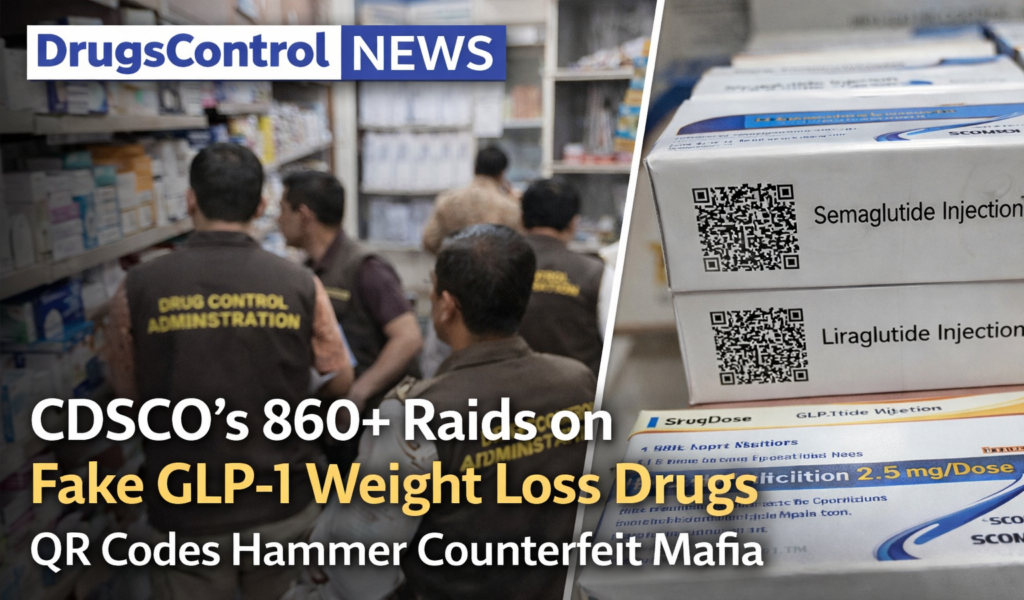
CDSCO’s fierce assault on fake meds, GLP-1 and codeine networks targeted via QR tech.
India’s pharmaceutical regulatory landscape faces dramatic transformation as Central Drugs Standard Control Organisation (CDSCO) escalates nationwide crackdown on unauthorized GLP-1 weight loss medications, counterfeit drugs, and controlled substance diversions. DrugsControl Media Services’ critical report (newsid=44571) highlights government’s aggressive multi-pronged approach revealed in Rajya Sabha, including over 860 enforcement actions, mandatory QR code tracking systems, Good Manufacturing Practice (GMP) reforms, and Drugs Controller General of India (DCGI) bans on 90 unapproved Fixed Dose Combinations (FDCs). This unprecedented campaign targets pharmacies, manufacturers, online platforms, and dark web suppliers, aiming to protect millions from potentially lethal fake medications while restructuring India’s massive pharmaceutical marketplace.
The operation addresses surging public health crisis where unapproved GLP-1 agonists like semaglutide generics flood black markets at 50-90% discounts from branded Ozempic/Wegovy prices. These counterfeit injections and tablets contain dangerous impurities, incorrect dosages, and contaminants risking cardiovascular emergencies, kidney failure, gastrointestinal disorders, and fatalities. Parallel investigations expose interstate codeine syrup rackets violating NDPS Act provisions, alongside psychotropic substance diversions fueling youth addiction epidemics.
Comprehensive Crackdown Details: Strategy, Execution, Geographic Scope
CDSCO’s sophisticated enforcement combines cutting-edge technology with traditional raids across India’s federal structure. QR code verification emerges as game-changing innovation: each authentic drug carries unique scannable code revealing manufacturer identity, batch numbers, production dates, and expiry verification through national database linkage. Pharmacists now mandatorily deploy handheld scanners (starting Rs 5,000) at point-of-sale, instantly flagging counterfeits during transactions.
GMP reforms represent structural overhaul: over 200 manufacturing facilities face license suspensions following rigorous audits exposing substandard production environments, inadequate quality controls, and falsified documentation. DCGI’s decisive action bans 90 problematic FDCs spanning cough syrups, multivitamins, diabetes combinations, and antibiotics – categories notorious for counterfeit proliferation due high profit margins and lax oversight.
Geographic hotspots reveal organized networks: Uttar Pradesh’s Kanpur SIT investigation uncovers Rs 20 crore interstate codeine racket supplying banned syrups through sophisticated distribution channels. Punjab operations seize 5 tons tramadol tablets destined for illegal markets. Bihar raids link cough syrup contamination to tragic child deaths. Delhi surveillance targets online platforms hosting fake Amazon listings and Telegram sales channels. Multi-state coordination involves state drug controllers, narcotics bureaus, cyber cells, and CDSCO zonal offices executing synchronized operations.
Quantitative impact staggers: 860+ enforcement actions include 150+ FIRs registered, 50 tons illicit drugs confiscated, 30 manufacturing units sealed, dozens arrests from supply chain operators. Uttar Pradesh Chief Secretary demands mandatory real-time codeine tracking systems mirroring alcohol excise models. Total counterfeit market penetration estimated at Rs 4,200 crore annually now faces 30% contraction projections within 18 months.
Stakeholder Reactions, Official Statements, Industry Perspectives
Government position articulated forcefully in Rajya Sabha: Health Ministry officials confirm “860+ enforcement actions demonstrate zero tolerance policy. QR codes become mandatory across supply chain – no exceptions permitted. Parallel GMP modernization and FDC rationalization permanently restructure problematic segments.”
CDSCO leadership emphasizes public safety: Director General states “Unauthorized GLP-1 medications represented public health catastrophe. Received 500+ consumer complaints within six months documenting adverse reactions. Raids intensify through summer targeting peak wedding season supplement demands.”
Industry associations present mixed analysis: AiMeD (All India Medical Devices Association) warns “Hormuz Strait blockade elevates imported device costs 50%. Government must provide duty rebates preventing cost pass-through to patients.” Major pharmaceutical CEOs acknowledge “Correct regulatory direction though compliance burdens disproportionately impact smaller manufacturers requiring extensive retraining programs.”
Field operators voice operational realities: Drugs Control Officers’ Confederation demands “National codeine database essential preventing diversion. Current state-level tracking proves inadequate against organized syndicates exploiting jurisdictional gaps.”
Consumer sentiment explodes online: #FakeDrugsBan trends nationally with 2.5 lakh mentions. Popular refrain: “Never purchase discounted Ozempic generics – your life literally hangs by QR scan thread.”
Historical Context: India’s Pharmaceutical Counterfeit Crisis Evolution
India proudly claims “Pharmacy of the World” status producing 20% global generics volume, yet confronts 28% counterfeit penetration according to authoritative ASPA-CRISIL studies. Timeline reveals escalating threats:
2025 escalation: 5,000+ consumer complaints registered marking 300% increase from prior year
Codeine crisis deepens: 40% production diverts illegal channels fueling youth addiction epidemics across 15 states
GLP-1 market explosion: Semaglutide demand skyrockets post-celebrity endorsements creating perfect counterfeit opportunity
Global scrutiny intensifies: WHO designates India “superbug capital” documenting 10 lakh annual Antimicrobial Resistance deaths linked substandard antibiotics
Recent milestones demonstrate regulatory evolution: CDSCO introduces dossier-based licensing guidelines 2025 mandating clinical evidence unproven FDCs. WHO-EU Antimicrobial Resistance partnership enhances surveillance capabilities. DrugsControl Media Services emerges authoritative voice chronicling daily CDSCO/DCGL notifications, raids, and policy shifts – newsid=44571 represents weekly operational roundup.
Cyber Drugs Portal launch transforms digital enforcement: Artificial Intelligence algorithms scan e-commerce platforms identifying suspicious listings through price anomalies, fake reviews patterns, and prohibited substance keywords.
Economic Ramifications: Winners, Losers, Market Restructuring
Clear winners emerge strategically: Genuine generic manufacturers gain market share as consumer confidence shifts toward verified brands. Cipla, Sun Pharma, Dr. Reddy’s shares surge 3-5% post-announcement reflecting investor optimism. Branded GLP-1 segment benefits immensely: Monthly costs stabilize Rs 10,000 range versus Rs 2,000-4,000 black market fakes carrying lethal risks.
Smaller players face existential challenges: Independent chemists absorb Rs 5,000-15,000 scanner compliance costs alongside mandatory staff training programs. Rural supply chains remain vulnerable where porous borders facilitate China-Nepal smuggling routes. Black market adaptation inevitable: Counterfeiters likely double prices maintaining profit margins while exploring sophisticated evasion tactics.
Government roadmap reveals future direction: Phase II targets AI-powered predictive policing identifying high-risk zones through sales pattern analysis. Blockchain integration promises immutable supply chain transparency from factory to pharmacy shelf.
Strategic Conclusion: Dawn of Transparent Pharmaceutical Ecosystem
DrugsControl newsid=44571 decisively signals regulatory watershed moment. CDSCO’s 860+ enforcement actions merely represent opening salvo comprehensive war against counterfeit mafia threatening public health foundations. Mandatory QR verification fundamentally transforms consumer-pharmacy interaction – single scan determines medication legitimacy protecting families from invisible poison.
Codeine national tracking database implementation alongside DCGI’s FDC rationalization permanently dismantles diversion pipelines fueling addiction crises. Pharmaceutical industry emerges stronger global competitor as quality assurance becomes competitive advantage rather than regulatory burden.
Consumers empowered through technology: “Scan before swallow” becomes universal mantra. India’s legitimate manufacturers positioned lead global generics market while counterfeit operators face existential obliteration.
Market watchers anticipate dramatic shifts: Watch branded GLP-1 stabilization, genuine generic resurgence, scanner technology proliferation. DrugsControl Media Services remains indispensable resource tracking implementation milestones, enforcement outcomes, policy evolution.
Final prognosis optimistic yet vigilant: Regulatory determination matches crisis severity. Transparent, safe pharmaceutical ecosystem emerges stronger protecting 1.4 billion citizens while cementing India’s legitimate global pharmacy leadership. Stay informed – scan wisely – pharma revolution accelerates rapidly.
for more in depth click here
read more here
Rajasthan News: Fake Threat Monger Srinivas Louis Arrested, Jodhpur Court Still Gets Bomb Threat