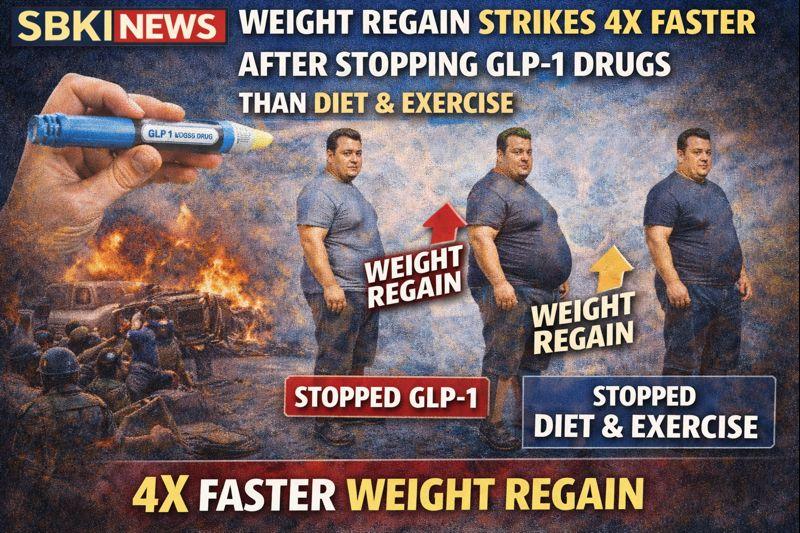
GLP-1 drugs like Ozempic and Wegovy deliver dramatic weight loss but trigger rapid regain upon cessation—four times faster than traditional diet and exercise programs. A landmark Oxford University study reveals users reclaim lost kilos at 0.4 kg per month, returning to baseline in under two years. Health benefits like improved cholesterol also reverse quickly.
GLP-1 Drugs
Study Details
Researchers analyzed 37 studies with over 9,300 participants, focusing on weight regain post-intervention. GLP-1 users, mainly on semaglutide (Ozempic/Wegovy) or tirzepatide (Mounjaro/Zepbound), shed nearly 15 kg on treatment but regained 10 kg within a year—projected full regain in 18 months.
In contrast, behavioral programs yielded slower loss but took four years for full regain. Post-drug regain averaged 0.3 kg/month faster, independent of initial loss amount. Cardiometabolic gains—blood pressure, cholesterol, blood sugar—reverted in 1.4-1.7 years.
Lead author Sam West, postdoctoral researcher at Oxford’s Nuffield Department of Primary Care Health Sciences, emphasized: “These medicines transform obesity treatment but are a starting point, not a cure.” Greater initial loss correlates with quicker rebound, yet drugs uniquely accelerate it.
GLP-1 Drugs
Why Regain Happens So Fast
GLP-1 agonists mimic gut hormones, curbing appetite and slowing digestion for sustained fullness. Stopping disrupts this: natural GLP-1 production may drop, sensitivity wanes, spurring overeating. Unlike lifestyle changes fostering habits, drugs don’t retrain behaviors.
Experts like Adam Collins from University of Surrey note chronic obesity’s role—regain plagues all methods, but GLP-1s amplify it. Prior trials, like STEP 1 for semaglutide, showed two-thirds regain in a year post-withdrawal.
GLP-1 Drugs
Comparison Table
| Aspect | GLP-1 Drugs (e.g., Ozempic) | Diet & Exercise Programs |
|---|---|---|
| Avg. Weight Loss | 15 kg | Less (unspecified) |
| Regain Rate | 0.4 kg/month; full in 18 mo | Slower; full in 4 years |
| Speed Multiple | 4x faster | Baseline |
| Health Reversal | 1.4-1.7 years | Gradual |
Real-World Implications
Over 15 million Americans use GLP-1s; global demand surges. Yet, discontinuation—due to cost ($1,000+/month), side effects (nausea, muscle loss), or supply shortages—risks yo-yo cycling, worsening metabolic health. Muscle atrophy during use compounds regain as fat.
Clinicians urge lifelong use or hybrid approaches: drugs plus coaching. “Behavioral habits persist post-diet,” West notes, unlike pharmacological dependence.
GLP-1 Drugs
Expert Perspectives
Endocrinologists view GLP-1s as tools for high-BMI patients (BMI>30), not standalone. UK’s NHS limits to severe obesity; US faces shortages. Critics warn of “rebound hell,” advocating maintenance doses.
Nutritionists stress: Sustainable loss needs diet (1,200-1,500 cal/day), exercise (150 min/week), sleep. GLP-1s buy time for habit-building.
GLP-1 Drugs
Broader Context
Obesity affects 1 billion worldwide; GLP-1s revolutionized care since 2021 approvals. Semaglutide trials: 15-20% body weight loss vs. 2-5% lifestyle alone. But 2022 STEP extension confirmed 2/3 regain off-drug.
India sees rising use amid 135 million obese; affordability barriers loom. Policy shifts may integrate drugs with public health campaigns.
Future Directions
Ongoing trials test taper strategies, combos with SGLT2 inhibitors. AI-driven personalization could mitigate regain. Patients: Monitor via DEXA scans, prioritize protein (1.6g/kg) to preserve muscle.
West’s BMJ meta-analysis (published January 2026) calls for long-term data as drugs evolve. Regain underscores obesity’s chronicity—victory demands persistence.
Muscle Loss Concerns
Rapid regain post-GLP-1 often manifests as fat, not muscle, due to sarcopenia during treatment. Studies show 40% of weight lost on semaglutide is lean mass, accelerating metabolic slowdown. Resistance training (3x/week) and 1.6g protein/kg bodyweight mitigate this, preserving basal metabolic rate for sustained results.
Patient Stories
Real users report “Ozempic face” and rebound hunger post-cessation. A 2025 survey found 68% regained over 80% of loss within 12 months, citing cost barriers ($1,200/month uninsured). Success cases blend drugs with therapy, yielding 5-year maintenance rates double lifestyle-alone.
Global Access Challenges
In India, GLP-1 adoption lags despite 50 million diabetics—generics like Rybelsus emerge, but rural access nil. WHO urges subsidized hybrids; US Medicare covers for diabetes, not obesity, fueling black markets.
Policy Recommendations
Experts advocate FDA-mandated post-market surveillance for regain. UK’s NICE proposes 2-year minimum therapy; behavioral apps (Noom) show 25% better retention when paired.
Preventive Strategies
Taper doses gradually over 6 months
Track via wearables (body comp, not scale)
Cognitive therapy for appetite cues
Micronutrient focus: magnesium, B12 deficiencies common
Long-term: Combo therapies (GLP-1 + metformin) cut regain 30%. Obesity demands ecosystem change—drugs catalyze, habits endure. sourced fromPULS
Stay informed, stay ahead – SBKI News, your trusted source for fearless regional and global coverage.