A Gujarat student who went to Russia on a student visa has alleged that he was blackmailed into joining the Russian army after being falsely implicated in a drug case, and has now sent an SOS video from Ukrainian custody appealing for help and warning other Indians to stay away from such offers. Identified as Sahil Mohammad Hussain from Morbi, he says he surrendered to Ukrainian forces soon after being sent to the frontline, and is pleading with Prime Minister Narendra Modi and the Indian government to negotiate his safe return while also claiming that hundreds of other foreigners have been trapped in similar schemes.
Student’s journey from Gujarat to the frontline
Sahil reportedly travelled to Russia in 2024 for higher education and worked part time with a courier company to support himself. In his video messages, he says financial stress and visa issues led him into the company of people involved in narcotics, after which Russian police allegedly framed him in a fabricated drug case that carried the prospect of a seven‑year prison sentence.
According to his account, jail authorities then offered him a “deal”: the charges would be dropped if he signed a contract to serve in the Russian military. Fearing long imprisonment in a foreign country, he agreed and was given around 15 days of basic training before being deployed to the frontlines of the Russia‑Ukraine war.
Capture in Ukraine and SOS appeal
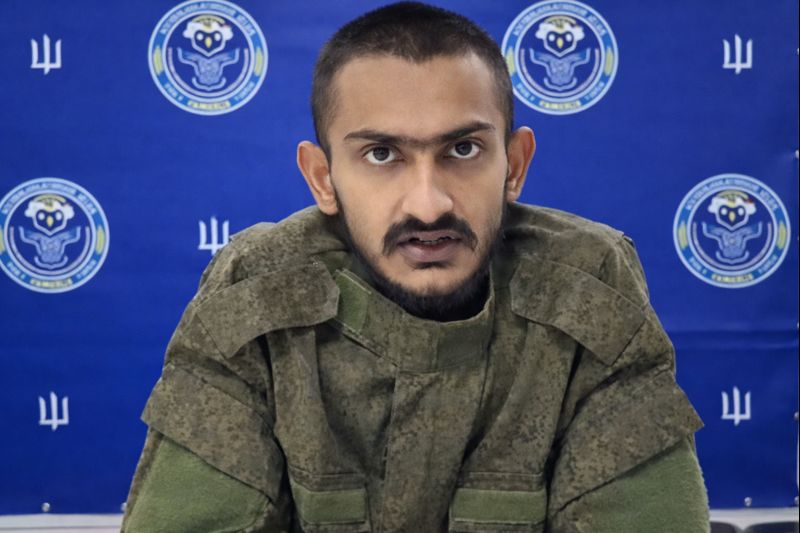
Sahil says that as soon as he reached the combat zone in Ukraine, he avoided fighting and surrendered immediately to Ukrainian forces. Ukrainian authorities later recorded videos of him, which were sent to his mother in Gujarat and shared publicly to highlight how foreign students and workers are allegedly being coerced into Russian military service.
In the clips, he appears in an olive‑green jacket from what he describes as a Ukrainian military jail, urging Indian youths not to accept any offers to join the Russian army, even if they are facing legal or financial pressure. He repeatedly asks the Indian government, PM Narendra Modi and External Affairs Minister S. Jaishankar to secure his release, saying, “I just want to come home” and stressing that he never committed any crime.
Claims of a wider pattern
Beyond his individual case, Sahil claims that at least 700 people have been jailed in Russia on drug case charges and then given the option of joining the army in exchange for having their cases dropped. While this specific number has not been officially verified, it aligns with broader reports of foreign nationals—often from Asia and Africa—being recruited into Russian forces under misleading or coercive circumstances.
India’s Ministry of External Affairs has separately acknowledged that scores of Indian nationals ended up in the Russian armed forces after being lured with promises of support jobs or high‑paying roles that turned out to involve front‑line combat. Many of them travelled on student, tourist or work visas, only to have their passports confiscated and be pressured into signing military contracts soon after arrival.
#Gujarat Student#Drug Case/sbkinews.in
Indian government’s response
Foreign Secretary Vikram Misri recently stated that Prime Minister Narendra Modi raised the issue of Indians in the Russian army directly with President Vladimir Putin during the latter’s visit to India. Misri said New Delhi is “actively engaged” in efforts to secure the early release of Indian citizens from Russian forces and has repeatedly urged Moscow to stop any recruitment of Indians for its military.
Official figures cited by Indian authorities indicate that over 120 Indians are believed to have joined or been drawn into the Russian armed forces, with a substantial number already repatriated but some still missing or unaccounted for. The government has also issued public advisories warning citizens not to accept military or suspicious job offers in Russia, stressing that such paths are “fraught with danger to life” and can leave individuals trapped in conflict zones.
Call for vigilance among Indian youth
Sahil’s case has intensified calls for stronger awareness campaigns among students and job‑seekers heading overseas, particularly to conflict‑affected regions or countries with opaque legal systems. Experts recommend that prospective migrants verify offers through official channels, avoid informal agents promising quick visas or high earnings, and register their details with Indian embassies so they can be traced and assisted in emergencies. For in-depth report read here.
Families of Indians reportedly stuck in Russia continue to protest and petition courts and ministries in India, seeking urgent diplomatic intervention. For many, Sahil’s emotional SOS from Ukraine has become a powerful reminder that shortcuts taken under pressure—especially those involving the military of a country at war—can carry life‑threatening consequences that are difficult to reverse.
For more important developments from the state, follow our Gujarat news latest updates section.