
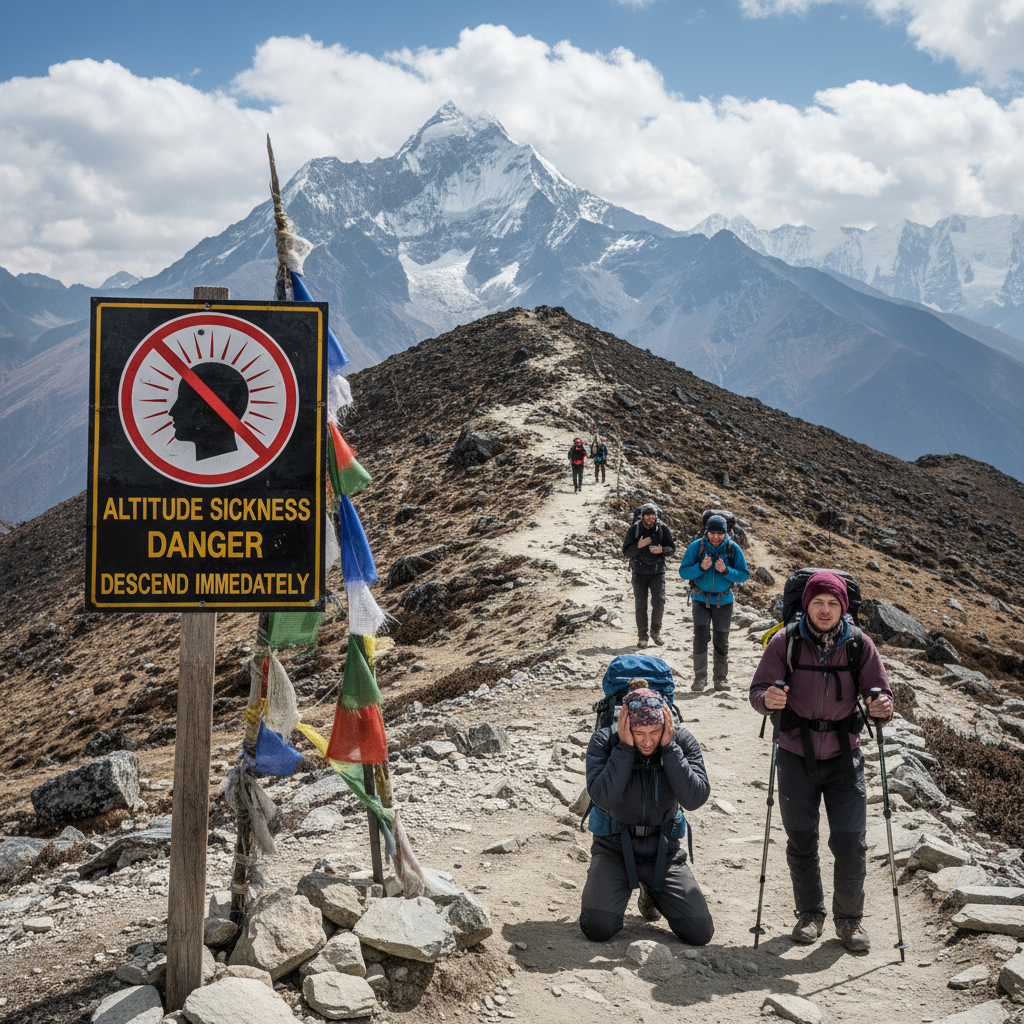
Kathmandu: A tragic wave of high-altitude sickness incidents has claimed the lives of four individuals in western Nepal, highlighting the persistent dangers faced by trekkers and porters in some of the world’s most demanding mountain terrains. The National Disaster Risk Reduction and Management Authority (NDRRMA) confirmed these fatalities, which occurred during separate trekking and porter expeditions across the high Himalayan regions of the Gandaki province.
According to official reports released by the NDRRMA, three of the deceased—identified as porters Dil Bahadur Gurung and Samga Ghale, and trekker Ram Bahadur Thapa—died in the Manang district, an area well-known for its stunning landscapes but also notorious for thin air and unpredictable altitude-related health challenges. Both Gurung and Ghale were employed as porters for a group of foreign trekkers traversing a high-altitude route. The pair reportedly developed acute symptoms of altitude sickness while carrying loads across a challenging trail and succumbed before medical help could arrive.
Thapa, a Nepali trekker who had recently completed his expedition in the same region, was later discovered dead in his hotel room. Authorities believe he was suffering from the aftereffects of prolonged exposure to the low-oxygen environment common in altitudes above 3,000 meters. His sudden death underscores the fact that altitude sickness can strike even after returning to lower elevations.
In a separate but similar tragedy, a fourth individual, Suraj Man Shrestha, lost his life in a hotel in the Annapurna Base Camp area of the Kaski district. He had reportedly shown symptoms of acute mountain sickness (AMS) while on a trek toward the iconic Annapurna sanctuary. Despite attempts to rest and recover, his condition deteriorated rapidly overnight, resulting in his untimely death on Saturday.
Local authorities and medical professionals in the region have reiterated that high-altitude sickness remains one of the most common causes of death among trekkers in Nepal’s northern mountainous districts. The condition occurs when the body fails to acclimatize properly to lower oxygen levels found at elevations typically above 2,500 meters. Symptoms often include headache, dizziness, shortness of breath, nausea, fatigue, and confusion, all of which can quickly escalate to life-threatening complications such as high-altitude cerebral edema (HACE) or pulmonary edema (HAPE).
Officials from the NDRRMA emphasized that the recent deaths have reignited debate about safety preparedness, training for local porters, and awareness campaigns for both domestic and international trekkers. The agency has been urging all trekking companies and mountaineering operators to ensure that their staff and clients are adequately acclimatized before ascending to higher camps. Portable medical oxygen kits, immediate descent protocols, and 24-hour health monitoring are being strongly recommended.
Manang and Kaski, both part of Nepal’s Gandaki province, are globally popular trekking destinations that attract thousands of adventure enthusiasts each year. Routes such as the Annapurna Circuit, Annapurna Base Camp, and Tilicho Lake trail are magnificent but also physically demanding, often pushing even experienced trekkers to their limits. In remote areas, medical facilities are sparse and rescue operations are hindered by difficult geography, harsh weather, and limited communication access.
Experts familiar with Himalayan tourism say that many local porters, who are the backbone of Nepal’s trekking industry, often shoulder excessive loads without proper equipment, insurance, or altitude training. This combination makes them particularly vulnerable to altitude-related complications. Several non-governmental organizations working in the region have called for mandatory health insurance, altitude awareness workshops, and better working conditions for porters.
NDRRMA’s spokesperson, in his official statement, extended condolences to the families of the victims and urged the trekking community to adhere strictly to safety advisories. The authority is reportedly coordinating with local administrations to review emergency response measures in remote districts such as Manang and Kaski to prevent similar tragedies in the future.
Medical professionals specializing in mountain medicine also stress the need for early diagnosis and prevention. They note that trekkers and expedition organizers must treat any sign of altitude sickness as serious. Gradual ascent, adequate hydration, rest days, and proper acclimatization protocols can significantly reduce risk. For individuals already showing symptoms, immediate descent remains the most effective treatment.
Tourism plays a vital role in Nepal’s economy, with trekking and mountaineering contributing substantially to local livelihoods. However, the recent string of fatalities casts a sobering light on the balance between adventure and safety. As Nepal gears up for the coming trekking season, experts believe stronger regulations, modern medical facilities, and better emergency coordination could save countless lives.
The Annapurna and Manang incidents serve as a stark reminder that the Himalayas, though breathtakingly beautiful, demand respect for their extreme conditions. For many locals who depend on tourism for income, the loss of fellow Nepalis is a painful tragedy that underscores the urgent need for collective responsibility across the trekking ecosystem—tourists, guides, porters, agencies, and governing authorities alike.
Nepal’s NDRRMA concluded its report by reaffirming its commitment to strengthening mountain safety governance and providing better public awareness on altitude risks. As investigations continue, both local and international attention now turns toward ensuring that such preventable deaths do not recur in future trekking seasons.
#High-Altitude Sickness#altitude illness in Himalayas#Manang trek tragedy#Annapurna Base Camp incident#Nepal News/sbkinews.in
For more detailed information on the recent altitude sickness fatalities in Manang, please visit the Rising Nepal Daily.
For more updates and in-depth news on global events, visit our World News section.