Bans Nimesulide Tablets/sbkinews.in
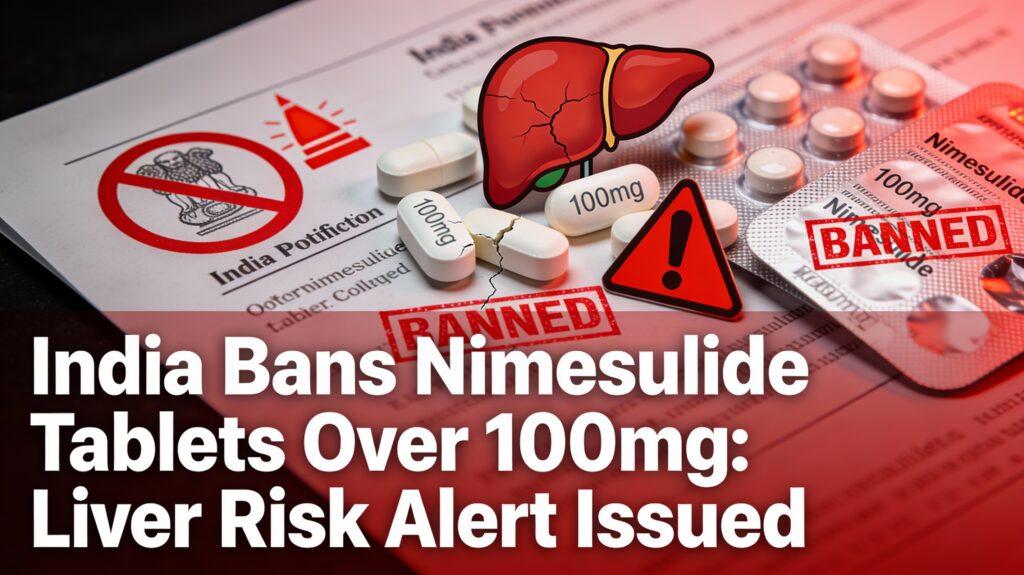
The Indian government has imposed an immediate ban on the production, sale, and distribution of Nimesulide tablets exceeding 100mg dosage, citing severe health risks including liver damage. This decision, effective from Monday, stems from recommendations by the Indian Council of Medical Research (ICMR) and addresses long-standing concerns over the non-steroidal anti-inflammatory drug (NSAID). Lower-dose variants remain available as safer alternatives for pain relief.
Government Notification and Rationale
Health Ministry’s notification invokes powers under the Drugs and Cosmetics Act, 1940, following consultations with the Drugs Technical Advisory Board (DTAB). It declares high-dose Nimesulide “prejudicial to human health” due to hepatotoxicity risks, especially in prolonged use. Manufacturers must recall existing stocks from markets, pharmacies, and hospitals nationwide. The ban targets tablets only; suspensions and pediatric formulations under 100mg are exempt.
ICMR’s evidence-based review highlighted acute liver failure cases linked to doses above 100mg, particularly in adults. Safer options like Ibuprofen, Diclofenac, and Paracetamol are recommended. This move aligns with global precedents—Nimesulide banned in USA, UK, and Australia since 2000s for similar pediatric liver issues. India’s prior 2011 pediatric ban now extends to adults.
Safer alternatives Nimesulide painkiller
Nimesulide’s Profile and Health Hazards
Popular for fever, arthritis, and menstrual pain, Nimesulide offered rapid action but at a cost: cytochrome P450 enzyme interference leads to idiosyncratic liver injury. Studies report 1-3% incidence of severe hepatotoxicity, with fatalities in vulnerable groups like elderly and alcoholics. Symptoms include jaundice, nausea, and abdominal pain, often reversible if detected early but fatal in 10% cases.
Post-ban, major brands like Nise (Dr. Reddy’s), Nimulid (Panacea Biotec), and Mesulide face stock withdrawals, potentially disrupting ₹500 crore market. Pharmacists must return high-dose packs; non-compliance invites penalties under Drugs Act. Doctors urge prescription audits, promoting WHO-listed alternatives to avoid OTC misuse.NDTV
Safer alternatives Nimesulide painkiller
Impact on Pharma Industry and Patients
Over 50 companies produce Nimesulide; high-dose segment claims 30% share. Firms pivot to low-dose syrups and combos, with R&D accelerating generics. Rural pharmacies in Uttar Pradesh, Delhi-NCR—your SBKI News focus—may see shortages initially, prompting awareness drives. Patient education campaigns emphasize consulting physicians before switching.
Positive ripple: reduced adverse drug reactions (ADRs), with CDSCO reporting 500+ Nimesulide-linked cases yearly. National Pharmacovigilance Programme gains teeth, fostering safer prescribing. Ayurvedic and homeopathic pain relievers may surge in demand amid ban.
Linked Initiative: Newborn Care Expansion in Uttar Pradesh
Amid health reforms, Uttar Pradesh Health Department gears up for Special Newborn Care Units (SNCU) upgrades with warmers, phototherapy machines, laryngoscopes, and neonatal ventilators. Currently, 120 SNCUs across district hospitals and medical colleges handle 1,800 beds, treating 9,000+ critical infants this fiscal. Admission rates hit 116%, prompting expansions where deliveries exceed 500 monthly.
Each SNCU mandates 12 beds for <1,800g preemies and preterm babies. Upgradation to Mother Newborn Care Units (MNCNU) integrates maternal-kangaroo care, addressing feeding gaps. Government targets 100% coverage by 2027, reducing neonatal mortality from 25/1,000 to UN SDG levels. Budget: ₹50 crore for equipment, training 5,000 nurses.
Safer alternatives Nimesulide painkiller
Regulatory Framework and Enforcement
Central Drugs Standard Control Organisation (CDSCO) oversees recalls via state inspectors, with fines up to ₹5 lakh and imprisonment for violations. Online platforms like 1mg, PharmEasy delist banned packs. ICMR’s pharmacoepidemiology unit monitors post-ban ADRs, ensuring evidence-based policy evolution.
This proactive stance echoes Ranitidine and Cipla’s FDC bans, prioritizing public health over commerce. Pharma associations welcome clarity, pledging compliance within 30 days. Global watchers note India’s maturing drug regulation, rivaling EU standards.
Safer alternatives Nimesulide painkiller
Expert Views and Public Health Gains
Hepatologist Dr. Vinay Pai warns, “High-dose Nimesulide’s risk-benefit ratio fails; alternatives suffice.” Pediatricians applaud, citing safer infant options post-2011 ban. Public campaigns via Doordarshan and social media target misuse in villages.
For Uttar Pradesh’s 50 lakh annual births, SNCU boosts save 20,000 lives yearly, synergizing with Nimesulide curbs for holistic child health. Aspirational districts like Chandauli prioritize units.
Safer alternatives Nimesulide painkiller
Future Outlook and Recommendations
Ban enforcement via AI-driven surveillance promises compliance; annual reviews possible if safer formulations emerge. Patients: read labels, avoid self-medication. Doctors: prescribe judiciously, monitor LFTs.
India’s health ecosystem strengthens—fewer ADRs, better neonatal outcomes. SBKI News tracks pharma reforms impacting Delhi, UP, Uttarakhand.