Indigenous Dengue Vaccine
Phase-3 trials nearly complete at KGMU and 18 other institutes; single-dose tetravalent shot promises protection against all four dengue strains amid rising cases.
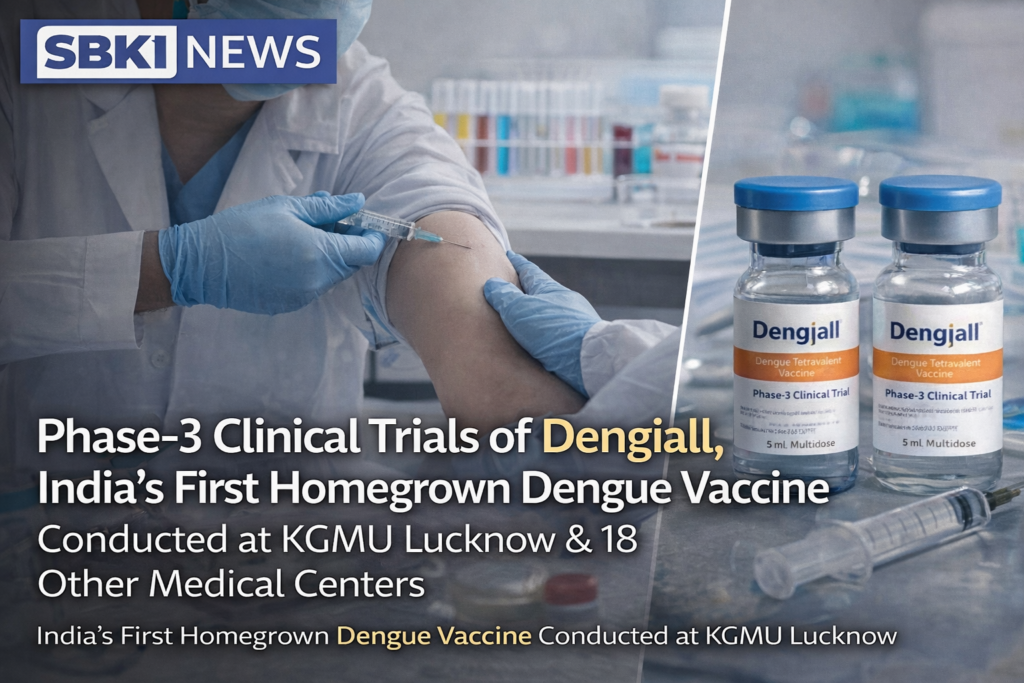
Phase-3 clinical trials of Dengiall, India’s first homegrown dengue vaccine, conducted at KGMU Lucknow and 18 other major medical centers.|by AI
India stands on the cusp of a medical breakthrough against dengue fever. The country’s first indigenous vaccine, Dengiall, has entered the final phase of its Phase-3 clinical trials across 19 leading institutions, including King George’s Medical University (KGMU) in Lucknow. Developed by Panacea Biotec in collaboration with the Indian Council of Medical Research (ICMR), this single-dose tetravalent vaccine targets all four dengue serotypes (DENV-1 to 4). Experts predict approval by year’s end following trial data submission to the Drugs Controller General of India (DCGI), offering hope amid seasonal epidemics claiming thousands of lives annually.
Vaccine Development: Trials and Technology
Dengiall’s journey began years ago under ICMR oversight. Phase-1 and Phase-2 trials established safety and immunogenicity. Now, Phase-3—the decisive efficacy stage—involves thousands of participants at KGMU and peers like PGIMS Rohtak. KGMU spokesperson Prof. KK Singh confirmed trials are in the “final lap,” with results expected by October 2026.
Unlike multi-dose foreign vaccines like Dengvaxia or Takeda’s Qdenga (requiring prior infection screening), Dengiall is a single-shot solution. It uses a chimeric live-attenuated platform licensed from the US National Institutes of Health (NIH), generating robust immunity across serotypes. This addresses dengue’s complexity: Sequential infections can worsen via Antibody-Dependent Enhancement (ADE), where antibodies from one strain exacerbate others. Tetravalent design mitigates this risk, a game-changer for India’s 100 million+ annual cases.
Panacea Biotec’s innovation ensures affordability and scalability. Trials monitor safety in endemic zones, with interim data showing promising antibody responses. DCGI approval post-analysis could greenlight production by December 2026, prioritizing high-burden states like Uttar Pradesh.
Expert Insights and Statements
Prof. KK Singh (KGMU): “Dengiall’s single-dose format sets it apart. It builds immunity against all four serotypes, tackling India’s biggest dengue challenge. Phase-3 completion paves the way for public rollout.”
ICMR Director (on Phase-3 launch): “This historic trial evaluates Dengiall’s real-world efficacy. It’s a milestone in India’s vaccine self-reliance, protecting citizens from dengue’s devastation.”
Panacea Biotec: “50% enrollment achieved; full data soon. Aimed at 4-60 age group, no pre-screening needed—ideal for mass campaigns.”
Health Minister JP Nadda (2024 statement): “Phase-3 start symbolizes our fight against dengue, highlighting India’s R&D prowess.”
Dengue Crisis in India: The Urgent Need
Dengue, transmitted by Aedes mosquitoes, surges in monsoons. India reports 200,000+ cases yearly, with Uttar Pradesh topping charts—Lucknow alone saw 5,000 infections in 2025. Severe forms like Dengue Hemorrhagic Fever kill 20,000 globally annually; India accounts for 15%. No specific antiviral exists; treatment is supportive.
Children and urban poor suffer most. Climate change expands Aedes range, complicating control. Existing vaccines (Sanofi’s Dengvaxia, limited to seropositive 9-16s) face ADE risks and logistics hurdles. Dengiall fills this void: Broad-spectrum, easy-to-deploy, Made-in-India.
UP’s 2026 outbreak (13 districts affected) underscores timing. KGMU trials amid local surges validate field efficacy.
Parallel News: UP Police IPS Transfers
Amid health hopes, Uttar Pradesh shuffled 27 IPS officers on Monday, including 13 SPs. Key moves: Shashank Singh to Mahoba SP, Vishwajeet Srivastava to Bahraich SP. Nripun Agarwal joins Lucknow Police Commissionerate; Rampur’s Ramanayan Singh to 49th PAC Battalion, Noida. Ninth PAC Battalion, Moradabad, gets new command. These aim to bolster law-order in sensitive districts ahead of year-end polls.
Background and Global Context
India’s vaccine ecosystem thrives post-COVID. ICMR-Panacea partnerships birthed Covaxin; Dengiall follows. Phase-3 spans multi-centric sites for diverse genetics, ensuring pan-India applicability. Global dengue vaccines: WHO-approved Qdenga (Takeda) launches 2026 here too, but Dengiall prioritizes local strains.
Challenges: Serotype dominance shifts (DENV-3 rising). Trials track long-term safety (2+ years). Cost: Expected ₹500-800/dose vs. imports at ₹2,000+.
Success stories: Rotavirus vaccine Rotavac slashed infant deaths 50%. Dengiall could mirror this.
Road Ahead: Rollout and Impact
Post-Phase-3 (October data), DCGI review takes 3-6 months—launch by December 2026. Universal Immunization Programme integration eyed for kids 5-15 in hotspots. Private markets simultaneous.
Govt targets 100 million doses Year-1. Monsoon 2027 campaigns via ASHA workers. Boosters? Single-dose design suggests 5-10 year protection.
UP Police transfers align with security for health drives. Challenges: Cold-chain logistics, misinformation.
Dengiall heralds self-reliance: From trial to jab, India leads. Expect fewer fevers, saved lives—dengue’s reign ends soon.
for more in depth click here
Heavy Rainfall, Hailstorms Batter Pune: What’s Causing the Unexpected Change in Weather?