Jaipur hospital fire/sbkinews.in
The tragic fire at Jaipur’s prominent SMS (Sawai Man Singh) Hospital has sparked nationwide outrage, highlighting glaring lapses in safety protocols and negligence in maintenance. The incident resulted in the heartbreaking loss of six lives, with several others critically injured, amid accusations that prior warnings about electrical issues were completely ignored, culminating in this devastating disaster.
The Night of the Tragedy: A Short Circuit Turns Deadly
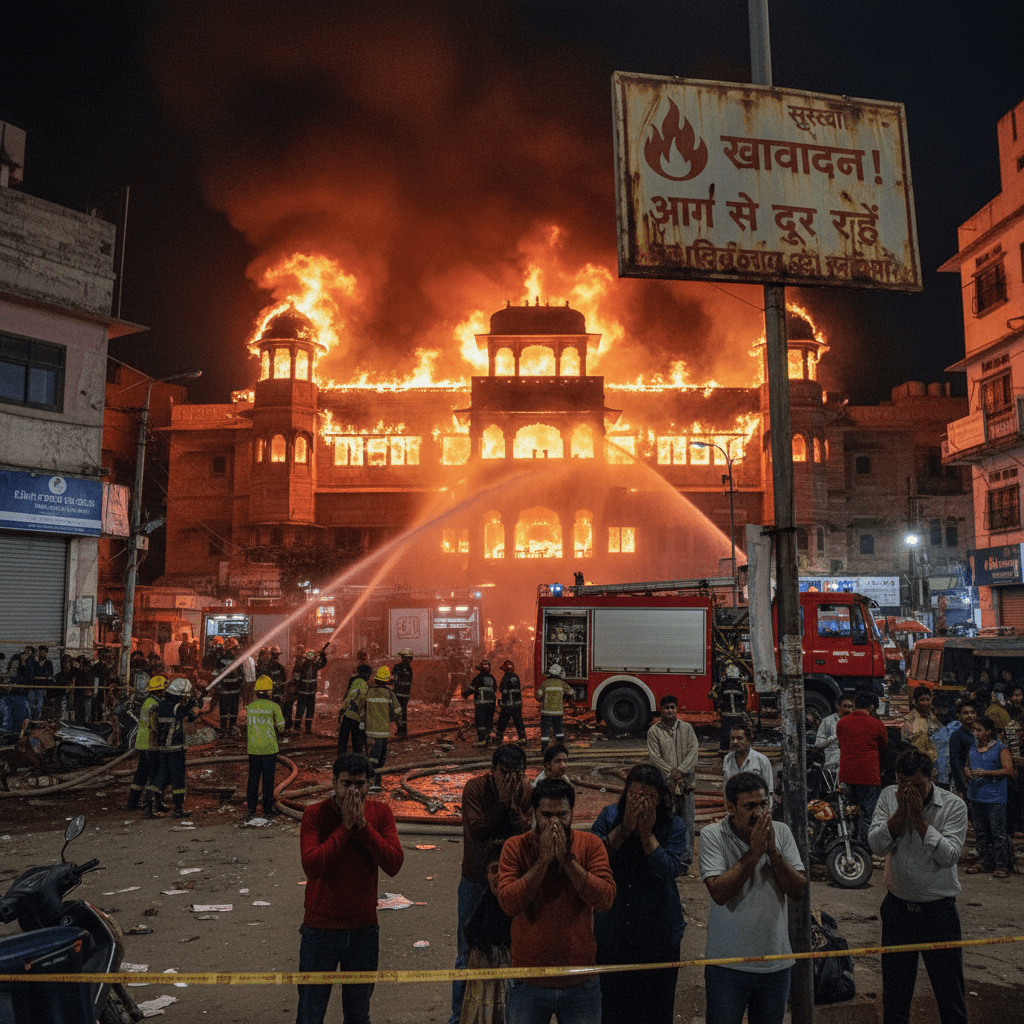
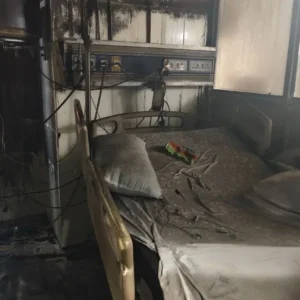
Late Sunday night, chaos erupted when a fire broke out in the ICU of one of Rajasthan’s largest government hospitals. As thick smoke spread rapidly through the trauma and semi-ICU wards, hospital staff and patients were caught off-guard. Responders reached the scene swiftly, but the severity of the fire, likely caused by an electrical short circuit, caused significant damage before firefighting efforts could contain it.
According to preliminary reports, the fire started in the storage area of the Neuro ICU, affecting 24 critically ill patients. Six of these patients succumbed despite the best resuscitative efforts, with casualties comprising two women and four men. Several other patients were rescued and evacuated to safer zones, but many remain in critical condition. The families of the victims allege that staff, despite being alerted to ongoing electrical issues beforehand, failed to act promptly, which has intensified demands for accountability.
Jaipur hospital fire
Warnings Ignored: A Systemic Lapse
A senior doctor from SMS Hospital, who requested anonymity, revealed that warnings about “current leakage” and electrical faults had been raised repeatedly months before the fire. These warnings pointed to exposed wiring, inadequate grounding, and aging electrical panels that posed serious safety hazards. Despite these documented concerns, hospital administrators and maintenance departments reportedly postponed repairs citing budget constraints and administrative hurdles.
This negligence underscores a broader issue prevalent across many hospitals in India: the failure to ensure compliance with fire safety and electrical safety standards. The doctor’s claims suggest a gross failure in risk management, where well-founded warnings were dismissed, leading to tragic consequences.
Jaipur hospital fire
The Aftermath and Immediate Actions
In response to the tragedy, the Rajasthan government took swift punitive measures. The hospital superintendent, Dr. Sushil Bhati, and trauma center in-charge, Dr. Anurag Dhakad, were removed from their positions. The contractor responsible for the hospital’s fire safety, SK Electric, faced cancellation of the tender, and an FIR was filed against it for negligence. The government also promised a comprehensive safety audit across all government hospitals in Rajasthan.
Chief Minister Bhajanlal Sharma announced a high-level inquiry headed by Iqbal Khan, Commissioner of Medical Education. The committee is tasked with investigating the causes of the fire, assessing existing safety infrastructure, and formulating strategies to prevent recurrence. Simultaneously, financial aid of Rs 10 lakh each was announced for the families of the deceased, emphasizing the state’s acknowledgment of its accountability.
Jaipur hospital fire
Analyzing the Safety Failures
Multiple reports, including from the Times of India and India Today, point to negligence and a lack of proper safety measures. The fire, suspected to have been triggered by electrical faults that were not addressed despite early warnings, highlights systemic failures in hospital infrastructure management. It is crucial that hospitals regularly conduct fire audits, maintain electrical systems, and ensure compliance with national safety standards.
The incident also raises critical questions about overall safety culture in India’s healthcare infrastructure. Despite existing guidelines from the Bureau of Indian Standards (BIS) and safety protocols, enforcement remains inconsistent. Hospitals must adopt modern safety practices, such as installing fire suppression systems, digital safety monitoring, and regular electrical audits, as part of their routine operational procedures.
Jaipur hospital fire
Power of Accountability and Transparency
Families of victims, civil society groups, and health experts are calling for transparency in the ongoing inquiry. Ensuring accountability among hospital management, safety inspectors, and regulatory bodies is vital to rebuilding public trust and preventing future tragedies. The Rajasthan government’s prompt actions are a step in the right direction, but systemic reforms are essential.
Public awareness also plays a crucial role. Patients and their families need to be informed about hospital safety standards and their rights to ensure proper safety measures are in place before admission.
Jaipur hospital fire
Broader Implications: A Wake-up Call for India
This incident reflects a broader challenge confronting India’s healthcare sector: infrastructure neglect combined with oversight loopholes. The Jaipur hospital fire is a stark reminder that safety cannot be compromised, especially in high-stakes environments like hospitals where lives are at stake daily.
As India advances towards achieving universal healthcare, emphasis on safety infrastructure must be prioritized. The tragedy underscores that safety is not merely an administrative compliance but a moral obligation. Stakeholders—including the government, hospital administrators, and safety regulators—must work collectively to reinforce safety standards, adopt preventative measures, and ensure robust monitoring.
Jaipur hospital fire
Final Thoughts
The Rajasthan hospital blaze is a tragic chapter that exposes the devastating consequences of ignoring safety warnings and infrastructural neglect. It underscores the urgent need for systemic reforms in hospital safety management, with strict enforcement of electrical safety protocols, regular audits, and accountability measures.
Moving forward, hospitals across India must prioritize foresight and proactive risk management. Safety should be embedded into hospital culture and operations. Only through rigorous adherence to safety standards, transparency in investigations, and accountability can the healthcare system restore public confidence and protect its most valuable resource—the lives of patients and staff.
This catastrophe must serve as a wake-up call—a compelling reminder that safety and vigilance are essential pillars of a resilient healthcare system. Hospitals must act decisively to prevent such tragedies, ensuring that no family endures such heartbreak again.