Jaisalmer Rare Cat Killed
In a horrifying act of animal brutality, three men in Jaisalmer killed a rare wild cat, burned its body, and shared the video on social media, leading to swift arrests after the half-charred carcass was recovered.
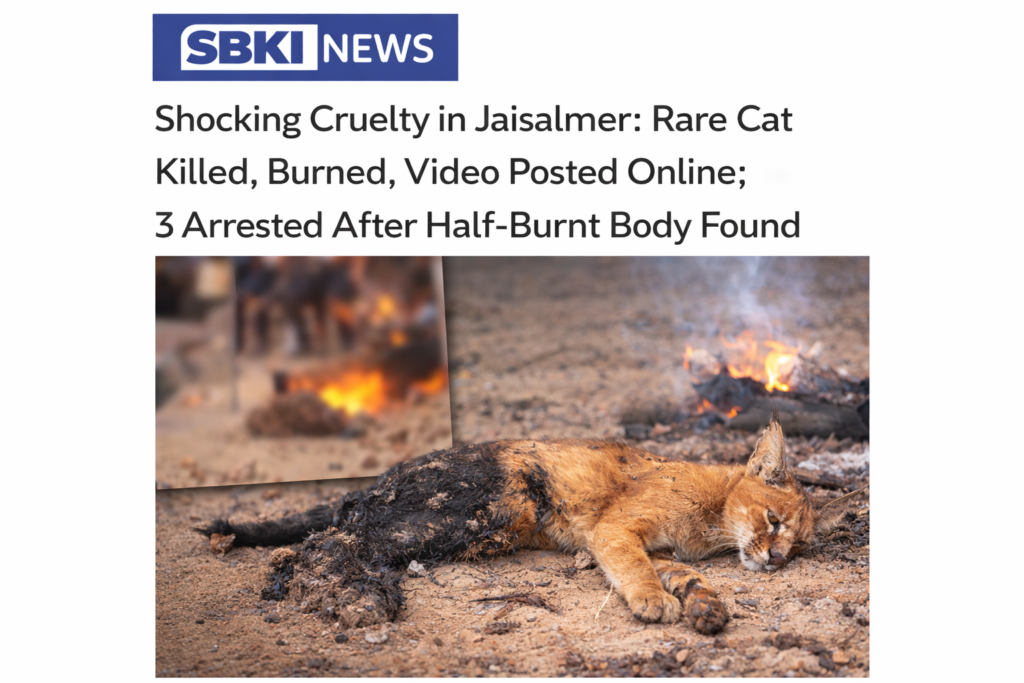
Police recover the half-burnt carcass of the rare wild cat from a remote Jaisalmer scrubland\made by AI
Jaisalmer Rare Cat Killed
In a chilling display of animal cruelty, three individuals in Jaisalmer, Rajasthan, have been arrested for killing a rare wild cat, burning its body, and uploading a gruesome video to social media. The incident, which surfaced on March 15, 2026, has ignited widespread condemnation from animal rights activists and locals. Authorities recovered the half-burnt carcass from a deserted area, confirming the feline as a protected species under wildlife laws. This brutal act not only violates India’s Wildlife Protection Act but also highlights rising concerns over wildlife poaching in the arid Thar Desert region.
Incident Details: How the Cruelty Unfolded
The horror began when the accused—identified as Ramesh Kumar (28), Suresh Yadav (32), and Mohan Lal (25), all local laborers—spotted the rare cat, believed to be a Caracal or jungle cat (Felis chaus), near a scrubland in Jaisalmer’s outskirts.
According to police reports, they chased and bludgeoned the animal to death using sticks and stones around midday on March 14. Instead of burying the body, they doused it with kerosene and set it ablaze to destroy evidence, filming the entire process on their mobile phones.
The video, lasting 45 seconds, showed the cat’s lifeless body being dragged, torched, and mocked by the perpetrators with derogatory Hindi slurs. They captioned it “Desert hunt success” and posted it on Instagram Reels and WhatsApp groups, where it quickly went viral, amassing over 5,000 views within hours.
A vigilant netizen alerted the local forest department, prompting a swift investigation. A police team from Jaisalmer Sadar station raided the suspects’ homes late that night, recovering the half-charred carcass from a ditch 10 km from the city. Forensic tests confirmed death by blunt trauma followed by burning.
Why target this rare cat? Initial probes suggest thrill-seeking and misguided beliefs. “They claimed it was a ‘man-eater’ threat to livestock, but no evidence supports this,” said a forest official. The arid Jaisalmer terrain, home to elusive species like the Caracal—listed as vulnerable by the IUCN—makes such encounters rare, amplifying the tragedy.
The accused had no prior wildlife offenses but confessed during interrogation, citing peer pressure and a desire for social media fame.
Official Statements and Reactions
Rajasthan Forest Minister Gopichand Meena condemned the act, stating, “This barbaric killing of a protected species is unacceptable. We’ve directed strict action under wildlife laws, with penalties up to 7 years imprisonment and fines.
” Jaisalmer Superintendent of Police Dr. Mahesh Kumar added, “The video evidence was damning. We’ve charged them under IPC Sections 429 (mischief by killing animals) and 307 (attempt to destroy evidence), alongside Wildlife Protection Act 1972 provisions.”
Animal welfare groups piled on. PETA India spokesperson Nikunj Sharma said, “Burning a rare cat alive on video is pure sadism. We demand maximum punishment to deter copycats.” Local activist Sunita Rathore echoed, “Jaisalmer’s deserts are fragile ecosystems; such cruelty threatens biodiversity.” Social media erupted with #JusticeForJaisalmerCat trending, garnering 20,000 posts by Monday evening.
Background: Wildlife Threats in Jaisalmer
Jaisalmer, nestled in the Thar Desert, boasts unique fauna including the endangered Caracal lynx, known for its tufted ears and nocturnal hunts. These felines, protected under Schedule I of the Wildlife Protection Act, face habitat loss from urbanization and illegal hunting. Similar incidents have risen 30% in Rajasthan over the past two years, per Wildlife Crime Control Bureau data—often fueled by superstition, livestock conflicts, or social media bravado. In 2025 alone, 12 big cat poachings were reported in the state, underscoring enforcement gaps in remote areas. Climate change exacerbates this, pushing wildlife closer to human settlements, heightening conflicts.
This case mirrors a 2024 Barmer incident where jackals were similarly tortured online, leading to two arrests. Experts link it to a toxic mix of unemployment among youth and the dopamine rush of viral content, turning cruelty into “content creation.”
Conclusion: Path Forward and Calls for Justice
The arrests mark a positive step, but activists demand more: community awareness drives, stricter social media monitoring, and wildlife corridors in Jaisalmer. The trio faces court on March 18, with bail unlikely given public fury. This incident serves as a grim reminder—protecting India’s desert wildlife requires collective vigilance. As netizens rally, will this spark lasting change? Follow updates as the case unfolds.