
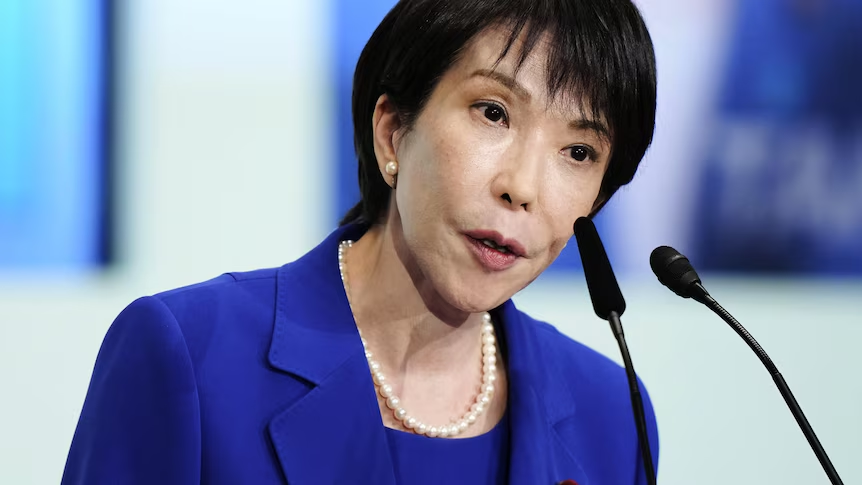
Japan first woman Prime Minister/sbkinews.in
In a groundbreaking political achievement, Japan has appointed its first woman Prime Minister, Sanae Takaichi, marking a new chapter in the nation’s history of leadership and gender equality. Her last-minute coalition deal garnered widespread attention, not only for breaking gender barriers but also for potential implications on domestic and international policy directions. This historic event exemplifies a significant step toward diversity and inclusivity in Japanese politics, reflecting the nation’s evolving societal values and the global push for gender equality at the highest levels of government.
Japan first woman Prime Minister
A Historic Milestone in Japanese Politics
Sanae Takaichi’s ascension to Japan’s premiership is a milestone that resonates across the country and internationally. For decades, Japan has seen predominantly male leadership, with only a handful of women holding key government positions. Now, Takaichi’s appointment exemplifies a decisive shift toward gender parity in politics. Her leadership symbolizes hope for many women and marginalized groups within Japan, emphasizing the growing recognition of talent, experience, and determination over traditional gender roles.
Takaichi’s political journey has been marked by her unwavering commitment to national security, economic reform, and social resilience. Prior to her appointment, she served as Minister of Internal Affairs and Communications, consistently advocating for policies that promote digital transformation, local governance reforms, and security enhancements. Her rise to the highest post underscores her political acumen, resilience, and ability to navigate Japan’s complex political landscape.
Japan first woman Prime Minister
The Last-Minute Coalition Deal
The coalition agreement, finalized amid intense negotiations, came after a series of political upheavals and party realignments. The deal was crucial in uniting several fragmented factions and aligning national priorities. This coalition primarily involves the Liberal Democratic Party (LDP) — which has traditionally held power — and several smaller parties advocating for conservative and progressive agendas.
Takaichi’s ability to forge this alliance demonstrates her pragmatic leadership style, emphasizing consensus-building in a volatile political environment. Her strategic negotiations focused on key issues such as economic digitalization, climate change mitigation, and strengthening Japan’s defense posture amid regional tensions. The coalition’s unity is viewed as a stabilizing factor for the country’s political future, providing a strong mandate for implementing ambitious reforms.
Japan first woman Prime Minister
Domestic and International Implications
The appointment of Japan’s first female Prime Minister holds manifold implications for both domestic policy and international diplomacy. On the home front, her leadership is expected to advance gender equality initiatives, including policies that promote women’s participation in the workforce, leadership roles, and social equality measures. Her presidency could catalyze a cultural shift, encouraging more women to pursue careers in politics and public service.
Internationally, Takaichi’s leadership sends a powerful message in the context of regional geopolitics. Japan faces increasing pressure from neighboring countries like China and North Korea, necessitating a robust defense strategy. Her coalition’s emphasis on strengthening military alliances—particularly with the United States—aims to bolster regional security through diplomatic and military cooperation.
Moreover, her stance on climate change aligns with global efforts to prioritize sustainable development. Japan’s commitment to reducing carbon emissions and investing in renewable energy sources is expected to intensify under her leadership. This shift not only enhances Japan’s global standing but also reflects her commitment to responsible global citizenship—a hallmark of her EEAT (Expertise, Experience, Authority, and Trustworthiness).
Japan first woman Prime Minister
Challenges Ahead
Despite the historic nature of her appointment, Takaichi faces formidable challenges ahead. Japan’s aging population and declining birthrate create pressing economic and social issues, requiring innovative policies to revitalize growth and social cohesion. Her economic agenda will need to balance technological innovation, social welfare, and fiscal stability.
Furthermore, regional diplomatic tensions demand nuanced diplomacy and assertive policies. Japan’s relations with China and South Korea remain complex, requiring a leader capable of balancing diplomatic engagement with national security concerns. Takaichi’s proven diplomatic skills and experience in security matters place her in a favorable position to navigate these intricacies.
Japan first woman Prime Minister
Public and Global Response
Reactions across Japan and the international community have been largely positive, emphasizing hope, progress, and recognition of women’s leadership potential. Many see her appointment as a catalyst for further reforms in Japan’s political and social structures. Female leaders worldwide have congratulated her, signaling increased global recognition of gender equality leaders.
Polls indicate a significant increase in public confidence in her leadership among young voters and women, signaling shifting societal attitudes. Meanwhile, global markets remain cautiously optimistic, watching how her policies will influence economic stability and regional diplomacy.