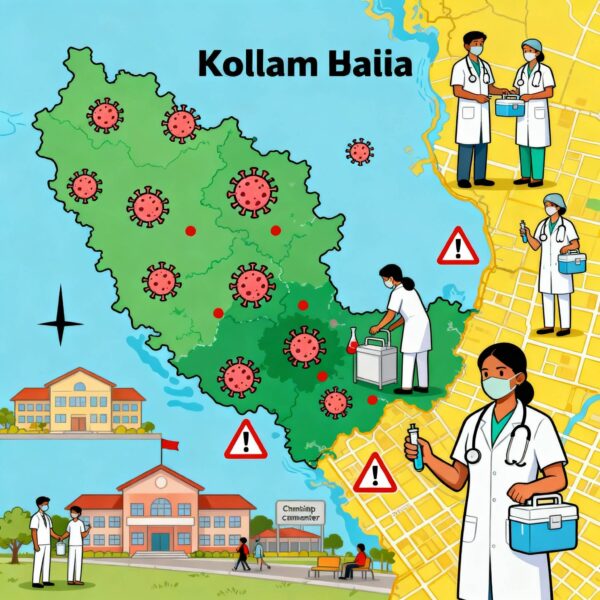
Kollam district chickenpox alert/sbkinews.in
Kollam district in Kerala is witnessing a rapid surge in chickenpox cases, prompting the local health authorities to declare a high alert and intensify efforts to contain the outbreak. As of October 17, nearly 97 cases have been confirmed, marking an unusual spike in infections typically seen during summer months but now surfacing during the monsoon-ridden season. This outbreak raises significant concerns over public health safety, especially for vulnerable groups, including children, the elderly, pregnant women, and individuals with weakened immune systems.
Kollam district chickenpox alert
Understanding the Chickenpox Outbreak in Kollam
Chickenpox (varicella) is a highly contagious viral infection caused by the varicella-zoster virus. The disease mainly spreads through respiratory droplets from coughing or sneezing and direct contact with infected skin lesions. During the current outbreak, residential areas in Kollam town, characterized by closely packed housing, have become hotspots for clustered infections.
Previously, the cases were isolated and limited, but recent weeks have seen clusters emerging aggressively, indicating accelerated community transmission. The fluctuating climatic conditions of the rainy season, which are believed to weaken general immunity and facilitate virus survival, have likely contributed to this trend.
Kollam district chickenpox alert
Symptoms, Risks, and Complications
Clinically, chickenpox manifests as a mild rash accompanied by fever, fatigue, and itching, primarily in children but can be severe in adults. The disease typically resolves on its own within two to three weeks. However, serious complications may occur, especially among high-risk populations, including bacterial infections of the skin, pneumonia, and encephalitis—a severe brain inflammation.
Pregnant women infected with chickenpox risk complications affecting both mother and fetus, requiring immediate medical attention. Elderly and immunocompromised patients also face increased risks, emphasizing the importance of vaccination and early diagnosis.
Kollam district chickenpox alert
Response from Health Authorities
The District Medical Office (DMO) in Kollam has swiftly initiated targeted vaccination drives and awareness campaigns, urging residents to prioritize immunization, including children who may be transitioning to communal living environments such as hostels.
Vaccination against chickenpox is highly effective but, unfortunately, is not included in the universal immunization program in India. Nonetheless, the vaccine is available at most hospitals and clinics. The DMO emphasized that parents must ensure timely vaccination, as it significantly reduces disease severity and transmission.
Healthcare workers and local volunteers are conducting door-to-door awareness programs, educating communities about hygiene practices, symptom recognition, and when to seek medical care. Additionally, isolation protocols have been recommended for infected individuals to prevent further spread.
Kollam district chickenpox alert
Public Health Measures and Hygiene Advice
Authorities have stressed the importance of personal hygiene and environmental cleanliness in controlling the outbreak. Preventive measures include:
Avoiding close contact with infected individuals.
Frequent hand washing with soap and water.
Covering mouth and nose while coughing or sneezing.
Regular disinfection of frequently touched surfaces.
Reporting symptoms promptly to local healthcare providers.
Community cooperation with these health advisories is crucial to limiting further infections and protecting vulnerable groups.
Kollam district chickenpox alert
Potential for Virus Reactivation and Long-Term Outlook
The varicella-zoster virus, after causing chickenpox, remains dormant within nerve cells. This dormant virus can reactivate years later as shingles (herpes zoster), especially in older adults or immunocompromised patients. The increase in primary infections may translate to a future rise in shingles cases, further underscoring the importance of ongoing surveillance and vaccination.
The current response in Kollam includes not only immediate outbreak containment but preparations for long-term monitoring to safeguard public health comprehensively.
Comparison with Other Recent Outbreaks
The recent surge in Kollam mirrors outbreaks reported in other districts of Kerala and neighboring states. While traditionally chickenpox outbreaks peak in late winter or early spring, unusual weather patterns and viral mutation dynamics contribute to shifting seasonal trends.
Healthcare providers, especially pediatricians, have reported an increase in chickenpox-related hospital admissions during unexpected periods, reflecting changing epidemiological patterns. This evolving situation calls for adaptable healthcare strategies and timely public communication.
Kollam district chickenpox alert
Community Impact and Healthcare Preparedness
The rapid spread has strained local healthcare facilities and forced some schools and institutions to consider temporary closures or enhanced preventive measures. Parents remain anxious about protecting their children amid reports of severe cases. Hospitals are enhancing capacity for isolation wards and treatment facilities.
Local authorities continue to engage with state-level health departments and the National Centre for Disease Control (NCDC) to coordinate resources and expert guidance. Collaboration with private medical institutions ensures availability of vaccines and treatment at affordable costs.
Kollam district chickenpox alert
Call for Awareness and Responsible Action
As the chickenpox outbreak in Kollam intensifies, health experts urge calm but proactive behavior from the public. Maintaining awareness about symptoms, adhering to vaccination schedules, and following health advisories can help mitigate the impact.
Community participation alongside timely government response forms the backbone of effective epidemic control. Empowering individuals with knowledge and resources is key to curbing this surge and preventing future outbreaks.