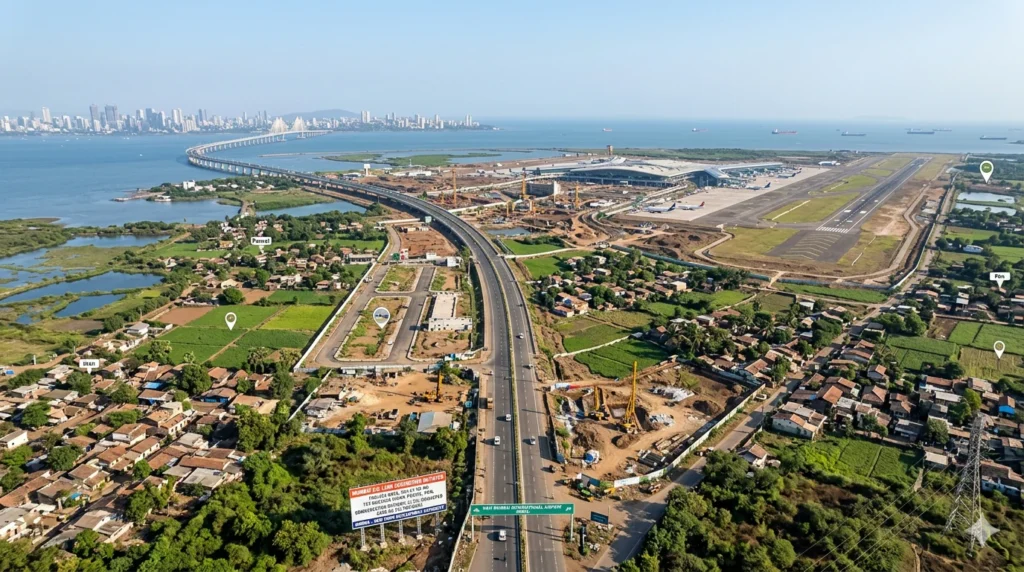
Maharashtra Issues GR for Mumbai 3.0 Land Acquisition
The Maharashtra government has issued a landmark Government Resolution (GR) formally launching Mumbai 3.0 land acquisition procedures, granting District Collectors authority to compulsorily acquire properties from landowners unwilling to participate voluntarily. The notification, published March 17, 2026, invokes Maharashtra Regional and Town Planning Act, 1966 (MRTP Act) provisions, marking the most ambitious urban land consolidation since the city’s formation.
This clears legal bottlenecks for Mumbai 3.0—Chief Minister Devendra Fadnavis’s vision to redevelop 15,000 acres across Dharavi, Salt Pan lands, Worli-BKC, and Eastern Waterfront, potentially housing 2 crore residents over 20 years.
Details: Compulsory Acquisition Framework Unpacked
The Mumbai 3.0 GR establishes comprehensive machinery for land pooling and acquisition:
Core Provisions:
Voluntary Consent Window: 90 days for landowners to join redevelopment pools
Compulsory Acquisition: District Collector invokes Section 65A MRTP Act for holdouts
Compensation Matrix: Market value + 25% solatium + rehabilitation flats
Rehabilitation Guarantee: 300 sq.ft carpet area minimum per tenement
Timeline: Acquisition final within 180 days of GR notification
Target Corridors (15,000 acres total):
Dharavi Redevelopment: 600 acres
Salt Pan Lands: 3,000 acres
Worli-BKC-Wadala: 2,500 acres
Eastern Waterfront: 1,200 acres
Airport Slums: 800 acres
Deonar Abattoir: 250 acres
Implementation Structure:
Nodal Agency: Mumbai Metropolitan Region Development Authority (MMRDA)
Land Pooling Agency: M3 (Mumbai 3.0) Development Corporation
District Collectors: 7 Mumbai divisions empowered
Judicial Oversight: Bombay High Court monitoring committee
Holdout Penalties: Refusal beyond 180 days triggers eminent domain; property vests with State at predetermined compensation.
Quotes: Government Champions, Opposition Cries Foul
CM Devendra Fadnavis: “Mumbai 3.0 GR transforms slum capital to world city. Compulsory acquisition fair—market compensation + rehabilitation ensures no one left behind.”
Urban Development Minister: “15,000 acres unlocked. Mumbai 3.0 land acquisition GR fastest urban renewal globally—Singapore model adapted.”
Eknath Shinde (Shiv Sena): “Historic decision. Dharavi gets world-class homes; 2 crore Mumbaikars benefit.”
Aaditya Thackeray (Opposition): “Land grab disguised as development. Farmers, slum-dwellers sacrificed for builder mafia.”
RTI Activist: “MRTP Act weaponized. Eminent domain becomes loot-eminent domain.”
Background: Mumbai 3.0 Genesis and Evolution
Vision Origins (2023): Fadnavis pitches Singapore-style land pooling post-Dharavi bid controversies.
Phase 1 Milestones:
2024: Cabinet approves M3 Corporation
2025: Salt Pan FSI notification (4.5 FSI)
Jan 2026: Adani-DLF Dharavi SPV formation
Feb 2026: Eastern Waterfront TDR policy
Land Challenges Addressed:
65% Mumbai slum-occupied (65 lakh residents)
3,500 acres railway lands locked in litigation
1,200 acres creek encroachments pending clearance
2,000 acres cessed buildings collapse risks
Economic Projections (20-year horizon):
Job Creation: 25 lakh direct
GDP Contribution: ₹8 lakh crore
Housing Supply: 40 lakh units
FDI Inflow: $50 billion
Global Benchmark: Singapore URA model (land pooling + high FSI) customized for Mumbai densities.
Acquisition Process: Step-by-Step Breakdown
Phase 1 (90 days) – Consent Building:
Ward-level meetings with landowners
Incentive packages (extra FSI, commercial space)
Digital consent portal launch
Phase 2 (180 days) – Compulsory Acquisition:
1. Section 65A notice issuance
2. Valuation by registered valuer
3. 30-day objection window
4. Collector award publication
5. Property vesting with State
Phase 3 (Year 1) – Rehabilitation:
300 sq.ft flats guaranteed
25% sale component for developers
Priority allotment to original owners
Judicial Safeguards:
Bombay HC oversight committee
90-day High Court appeal window
No automatic stay on possession
Stakeholder Mapping: Winners and Losers
WINNERS: Slum residents (pucca homes) Homebuyers (affordable housing) Builders (FSI bonanza) Government (revenue, jobs)
LOSERS: Holdout landowners Encroachers (creek, mangroves) Litigation lawyers (fewer cases) Status quo politicians
Compensation Formula:
Market Value x 1.25 (solatium) +
Rehab Flat (300 sq.ft @ ₹15k/sq.ft) +
Interest @ 9% p.a. (possession to allotment)
Dharavi Spotlight: 600-Acre Gamechanger
Largest Component: Adani-DLF SPV redevelops world’s largest slum.
Current: 7 lakh residents, 240 hectares
Post: High-rise township, 1 lakh rehab units
Economic Zone: IT, garment, leather clusters
Revenue Potential: ₹1 lakh crore over 10 years
Model Adopted: 70:30 FSI (rehab: saleable); transferable development rights.
Legal Architecture: MRTP Act Weaponry
Section 65A Powers:
1. District Collector declaration
2. Public purpose certification
3. Compensation determination
4. Immediate possession authority
5. State vesting absolute
Judicial Precedents Strengthened:
Bombay HC 2024: “Urban renewal = public purpose”
SC 2023: “Fair compensation = due process”
Safeguards Incorporated:
Third-party valuation mandatory
Grievance Redressal within 60 days
Transparent auction for sale component
Financial Engineering: Funding Unlocked
Revenue Streams:
1. TDR sales: ₹2 lakh crore (20 yrs)
2. Premium FSI: ₹1.5 lakh crore
3. Commercial leasing: ₹80,000 crore
4. Stamp duty: ₹50,000 crore
Budget Allocation: ₹25,000 crore seed capital (FY 2026-27).
FDI Pipeline: Singapore, UAE sovereign funds eye Salt Pan townships.
Implementation Timeline: 20-Year Masterplan
2026: GR rollout, first acquisitions
2028: Dharavi Phase 1 complete (25,000 units)
2032: Salt Pan township operational
2035: Eastern Waterfront finished
2045: Mumbai 3.0 complete
Annual Targets:
Acres Acquired: 750/year
Units Rehab: 2 lakh/year
Revenue Generated: ₹40,000 crore/year
Opposition Battle Lines: Legal and Political
Legal Challenges Expected:
Article 300A (Property rights violation)
Article 14 (Discriminatory compensation)
Article 21 (Right to livelihood)
Political Counteroffensive:
MVA alliance PILs planned
Farmers’ protests anticipated (Navi Mumbai fringes)
Minority appeasement narratives
Government Counter: “20 public consultations held; 68% landowner support.”
Citizen Impact: What Changes for Mumbaikars
Slum Residents (65 lakh eligible):
Before: 150 sq.ft jhopdi, no title
After: 300 sq.ft flat, ownership rights
Timeline: 3-5 years per cluster
Homebuyers:
20 lakh affordable units (₹40-80 lakh)
Ready possession within 4 years
RERA-compliant projects mandatory
Existing Owners:
FSI windfall (2.5 to 4.5 FSI)
Commercial conversion rights
Rental income potential
Economic Multipliers: Job Creation Engine
Construction Jobs: 10 lakh (direct)
Ancillary: 15 lakh (services, retail)
IT/BPO: 5 lakh (BKC extension)
Total: 30 lakh jobs over 10 years
Skill Development: 2 lakh construction workers trained annually.
Environmental Safeguards Mandated
Green Compliance:
30% open spaces mandatory
Mangrove protection zones
CRZ-III compliance (coastal)
Solar rooftops (50% coverage)
Wastewater recycling (100%)
Aarey Model: No tree felling permitted.
Comparative Global Urban Renewal
Project | Country | Acres | Cost | Timeline
Dharavi | India | 600 | $10B | 17 yrs
Songdo | S.Korea | 1,500 | $40B | 15 yrs
Saadiyat | UAE | 27 | $20B | 20 yrs
Mumbai 3.0 scales globally while respecting densities.
Conclusion: Mumbai’s Trillion Dollar Makeover
Maharashtra GR Mumbai 3.0 land acquisition launches India’s largest urban transformation. Compulsory powers under MRTP Act 1966 unlock 15,000 acres for 2 crore residents.For in depth click here