
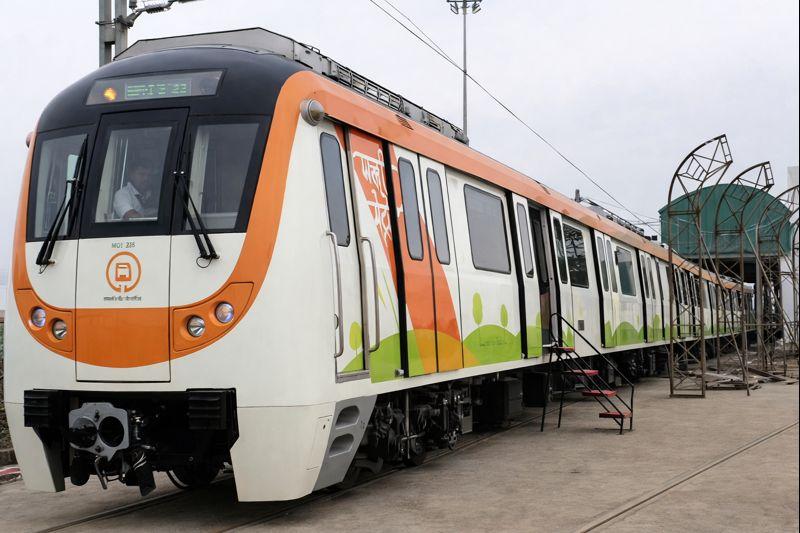
Maharashtra has released state equity of Rs 100 crore for key Maharashtra metro rail corridors in Pune and Nagpur, giving a timely financial push to two of its most important urban transport projects. The fresh infusion, cleared by the state government for the 2025–26 financial year, will support ongoing construction on Pune’s fully underground Swargate–Katraj stretch and Phase‑II of the Nagpur Metro.
Fresh equity for Pune Metro
For the Pune Metro Rail Project, the government has approved Rs 40 crore as part of its equity share for Corridor 2A, the Swargate–Katraj route. This corridor is designed as a fully underground metro line and carries a total project cost of around Rs 2,954.75 crore, reflecting the higher expense of tunnelling and sub‑surface stations in a dense urban environment.
The state is responsible for Rs 397.83 crore of that project cost as equity. With the latest tranche, cumulative state disbursements towards this corridor alone have reached Rs 100 crore in the current year, signalling that the government is keen to keep work on schedule and avoid funding‑related delays. Officials say the corridor is critical for decongesting Pune’s core city areas, connecting major residential pockets with business and educational hubs.
Nagpur Metro Phase‑II gets Rs 60 crore
On the Nagpur side, the Metro Rail Project Stage‑2 has received a state equity allocation of Rs 60 crore. This stage is being implemented by Maharashtra Metro Rail Corporation Ltd (MahaMetro) as a Special Purpose Vehicle (SPV) under a joint funding model that includes equity and loans from both the Central and State governments.
The total state equity commitment for Nagpur Metro Stage‑2 stands at roughly Rs 998.20 crore. With the latest release, the cumulative equity disbursed for this phase has now touched Rs 577 crore, more than half the requirement. Stage‑2 is being executed under a coordination agreement signed on 29 September 2023 among the Centre, the state and MahaMetro, and covers extensions aimed at connecting fast‑growing suburbs with the existing network.
To stay updated on key decisions of the state government, keep visiting our Maharashtra news page.
Why this funding matters now
The fresh equity arrives at a crucial time when cost escalations, land‑acquisition challenges and interest‑rate pressures are affecting infrastructure projects nationwide. Steady state‑level contributions help the SPV draw down multilateral loans and central assistance on time, since many release schedules are linked to matching state equity.
For commuters, the timely infusion increases the likelihood that priority sections will open as planned, easing traffic congestion in both Pune and Nagpur. Urban transport experts note that underground and elevated metro systems can significantly cut travel time, reduce pollution from private vehicles and support more compact, transit‑oriented development along the corridors—benefits that depend heavily on projects being completed without long pauses.
Role of MahaMetro and funding structure
MahaMetro, a joint venture of the Government of India and the Government of Maharashtra, is responsible for planning, building and operating metro projects in cities such as Pune and Nagpur. Its funding model typically blends central and state equity with long‑term loans from agencies like EIB, AFD, KfW or domestic financial institutions. State equity acts as a risk‑sharing mechanism and demonstrates local commitment, which in turn helps secure favourable financing terms.
In both Pune and Nagpur, the Centre and the state share project costs broadly in a 50:50 pattern for equity, while loans cover the remaining capital requirement. Fare revenue, property development income and commercial tie‑ups are expected to support operations and debt servicing once the full network is functional.
Economic and urban‑planning impact
Enhanced metro connectivity in Pune and Nagpur is expected to yield multiple economic benefits. Businesses gain access to a wider labour pool as commute times shrink, while retail and office spaces near stations typically see higher demand. Property values along completed corridors often appreciate, though planners caution that this should be accompanied by inclusive housing policies to prevent displacement of lower‑income residents.
From an environmental perspective, successful metro corridors can substitute thousands of daily car and two‑wheeler trips, reducing fuel consumption and emissions. Given that both Pune and Nagpur struggle with rising vehicular traffic and air‑quality concerns, faster progress on these projects aligns with Maharashtra’s broader climate and sustainability goals.
Accountability and next steps
While the latest equity release is a positive signal, citizen groups and transport analysts stress the need for transparent project monitoring. They call for regular public updates on milestones, revised timelines, station‑area planning and integration with buses, suburban rail and non‑motorised transport. Good last‑mile connectivity and affordable fares will be critical if the projects are to achieve ridership levels that justify the large capital outlay. For in-depth report read here.
For now, the state’s Rs 100‑crore infusion underlines its commitment to seeing the Pune and Nagpur metro systems through to the next stage of development. As tunnelling progresses in Pune and new viaducts rise in Nagpur, the coming years will reveal whether this financial momentum translates into reliable, commuter‑friendly mass transit for two of Maharashtra’s most important urban centres.