
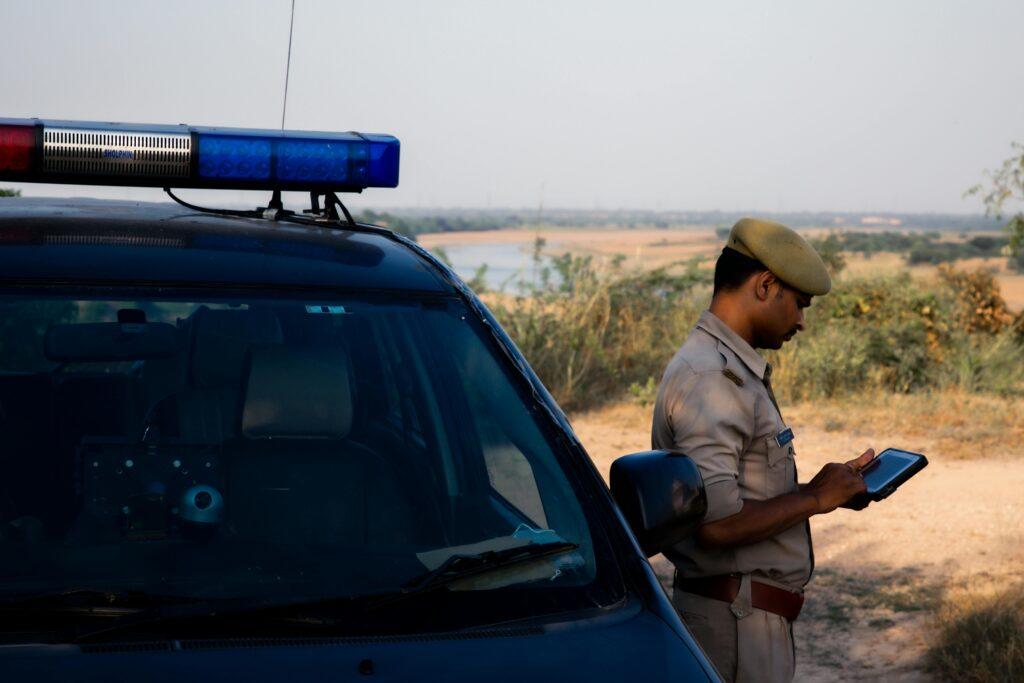
Maharashtra has announced a major reform in traffic enforcement, deciding that only police personnel equipped with body-worn cameras will be authorised to issue challans for traffic violations in the state. The move, unveiled by Chief Minister Devendra Fadnavis in the Legislative Council, aims to bring greater transparency, reduce disputes between motorists and traffic police, and curb allegations of harassment or corruption during on-road checks.
Bodycams mandatory for issuing challans
Devendra Fadnavis informed the House that traffic police across Maharashtra will be progressively equipped with body-worn cameras, and that only those officers wearing these devices will be allowed to issue e-challans. The system will be rolled out in phases, beginning with major cities such as Mumbai, Pune and Nagpur, before expanding to other urban and semi-urban areas.
Legislators had raised concerns about the current practice of officers using personal mobile phones to record videos or capture images while issuing challans, which often led to questions about authenticity and misuse. Responding to these objections, the Chief Minister assured that Maharashtra will follow the Goa model, where only police personnel with officially sanctioned body-worn cameras can legally issue traffic challans.
Addressing concerns of transparency and accountability
The decision comes against the backdrop of frequent complaints from motorists about alleged high-handedness or selective targeting by traffic police, especially in big cities. By mandating bodycams, the government aims to create an objective record of every challan-related interaction, which can be used to resolve disputes and verify whether procedure was followed correctly. Footage from these devices can also serve as evidence in case of accidents, hit-and-run incidents or assaults on police personnel, strengthening both enforcement and officer safety.
Opposition and ruling-party MLAs had jointly pressed for a more accountable system after receiving numerous representations from citizens and transport unions. Many lawmakers welcomed the announcement, pointing out that digital video records will protect honest officers from false allegations while simultaneously discouraging any misuse of power.
Policy framework and implementation timeline
Devendra Fadnavis stated that a dedicated framework will be developed within six months to govern the use, data storage and retrieval of footage from body-worn cameras. A committee led by a senior officer will study global and inter-state best practices regarding bodycam deployment, data privacy, equipment maintenance and disciplinary provisions in case recordings are tampered with or switched off during duty. Based on the committee’s recommendations, the government plans to notify a detailed policy within three months of receiving the report. Read in-depth report click here.
The Chief Minister underlined that procurement and deployment will take place in phases, depending on budget allocations and logistical readiness. Training modules will be prepared to familiarise traffic personnel with the operation of bodycams, handling of devices, and legal standards for admissibility of recorded evidence. The Home Department is also expected to coordinate with technology providers and data centres to ensure secure storage and restricted access to video archives.
Parallel focus on road and infrastructure issues
On the same day, the Legislative Council also discussed road infrastructure challenges, particularly flood-damaged roads in Solapur Zilla Parishad and other regions. Rural Development and Panchayati Raj Minister Jaykumar Gore informed members that the state government has approached the Centre for funds to repair 105 roads damaged by heavy rains and flooding earlier in the year. Proposals have been submitted through the relief and rehabilitation department, and supplementary financial demands placed before the state finance department to expedite approvals.
Gore added that Zilla Parishads would plan repair work based on fund availability and prioritise stretches critical for connectivity, including small bridges and culverts that were badly affected by excessive rainfall. These updates underscored that traffic safety in Maharashtra is being addressed through a combination of technological reforms in enforcement and investments in better road infrastructure.
What the reform means for motorists
For ordinary road users, the bodycam-linked challan rule promises a more structured and verifiable enforcement process. Motorists stopped for violations in coming months can expect that the interaction will be recorded, and they may later access or reference the footage if they wish to contest a challan through appropriate channels. Experts say this could also encourage better behaviour on both sides—drivers may be less likely to argue aggressively or attempt bribes, while officers will know that their conduct is under continuous review.
Transport analysts believe Maharashtra’s decision could set a benchmark for other states facing similar complaints about arbitrary enforcement. If implemented rigorously with clear data protection safeguards, the bodycam initiative has the potential to modernise traffic policing, rebuild public trust and contribute to safer roads across the state.
For more developments on governance, policing and civic issues, follow our dedicated Maharashtra news coverage.