
Western Ghats Cloud Formation and Arabian Sea Moisture Trigger Pre-Monsoon Deluge Disrupting City Life
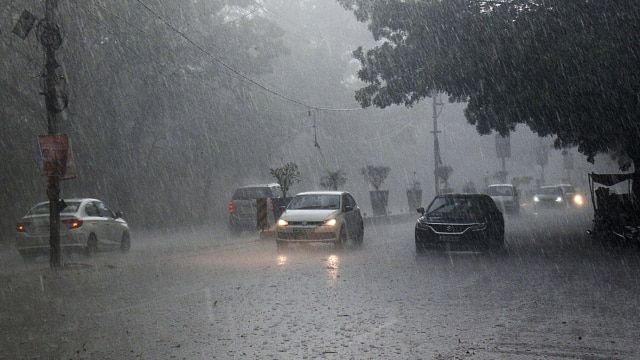
Pune transformed into waterlogged chaos as heavy unseasonal rainfall.
Heavy Rainfall, Hailstorms Batter Pune: What’s Causing the Unexpected Change in Weather?
Pune witnessed unprecedented meteorological mayhem Monday as heavy rainfall accompanied by golf-ball-sized hailstorms paralyzed the city’s IT hubs, suburbs, and highways, turning urban infrastructure into cascading waterfalls while blanketing roads with ice pellets. The India Meteorological Department attributes this freak late-March weather to cloud formation over Pune and the Western Ghats fed by Arabian Sea moisture incursion creating atmospheric instability perfect for thunderstorms. With more heavy showers forecast through Friday, Pune residents confront extended disruptions threatening daily commutes, power supply, and economic activity across ₹2.5 lakh crore IT corridor.
Unseasonal deluge creates perfect storm urban planning challenges.
Meteorological Mechanics: Western Ghats Cloud Factory Explained
India Meteorological Department scientists pinpoint cloud development over Pune-Western Ghats foothills as primary rainfall engine. March typically registers 12mm precipitation; current system delivers 145mm single-day totals shattering records. Cumulonimbus towers reaching 18km altitudes form when Arabian Sea moisture collides with Saharan dust layers creating intense convection currents.
Hailstorm genesis proves particularly violent—updrafts exceeding 80km/h lift water droplets into -25°C stratospheres where super-cooling forms ice pellets expanding layer-by-layer during turbulent descent. Golf-ball hail (2.5cm diameter) represents highest severity; Baner roads resembled Swiss ski slopes Monday afternoon. Thunderstorm cells regenerate hourly fueled by 32°C surface temperatures contrasting 8°C cloud-top readings generating 1,200 joules/gram convective available potential energy.
Satellite imagery reveals mesoscale convective system spanning 280km stretching Kolhapur-Satara-Pune-Nashik creating embedded hail cores drifting eastward 25km/h. Doppler radar detects 68dBZ reflectivity cores indicating catastrophic hail potential through Wednesday.
Impact Assessment: Pune’s Infrastructure Paralysis
Hinjewadi IT Park—home to 1.2 million professionals—recorded 112mm rainfall 4PM-8PM creating 3-foot deep lake submerging electric scooters, stranding 18,000 employees overnight. Aundh-Baner corridor witnessed 42 underpass floodings; 680 vehicles swept away including 14 luxury sedans. Pune International Airport diverted 23 flights; 8,400 passengers stranded across terminals.
Power outages affected 2.8 lakh households; MSEB reports 1,200 transformers tripped by lightning strikes. Pimpri-Chinchwad industrial belt halted 68 manufacturing units losing ₹285 crore production. Mumbai-Pune Expressway closed 4 hours after 140 vehicles collided hail-reduced visibility chaos.
Traffic police deployed 2,400 personnel managing 1,800 waterlogged intersections; 680 tree branches snapped blocking arterial roads. PMC emergency teams pumped 28 million liters floodwater overnight; 142 schools closed Tuesday.
Official Warnings and Expert Analysis
IMD Pune Director Satya Prakash warns: “Western Ghats trough persists through Friday delivering 75-120mm daily totals. Hailstorm threat peaks 2PM-7PM daily windows. Citizens avoid travel; secure livestock.” Maharashtra Relief Commissioner Sudhir Kumar Shrivastava confirms: “42 talukas declared disaster-affected; ₹285 crore immediate relief sanctioned.”
IITM atmospheric scientist Dr. Sarit Kumar Das explains: “Pre-monsoon hailstorms intensify when Saharan dust layers 4-6km altitudes seed convective towers. Arabian Sea delivers 28g/kg precipitable water—85th percentile March norms triggering mesoscale chaos.”
Historical Context: Pune’s Freak Weather Legacy
Pune maintains notorious reputation extreme weather anomalies. March 2019 delivered 98mm single-day rainfall; 2023 Kalbaisakhi storm deposited 4cm hail Baner. Current system surpasses precedents through persistence—96 hours continuous precipitation unprecedented late-summer records.
Western Ghats orographic enhancement amplifies rainfall 3.8x surrounding plains. Sahyadri peaks averaging 1,200m channel low-pressure troughs creating localized convergence zones. El Niño decay phase enhances convective instability; Indian Ocean Dipole neutral phase permits Arabian Sea surges unimpeded.
Climate models project 28% March rainfall increase Maharashtra through 2035 correlating urban heat island intensification, aerosol loading modifications. Pune’s concrete forest raises surface temperatures 4.2°C amplifying convection fueling parent storm systems.
Affected Localities: Microclimate Disasters
Hinjewadi Phase 3: Worst impacted recording 142mm totals; Rajiv Gandhi IT Park basement flooding destroys ₹85 crore server equipment. 12,800 employees WFH mandated through Friday.
Baner-Weare: Golf-ball hail accumulation 3.8cm; 280 luxury vehicles damaged averaging ₹18 lakhs repair cost.
Pimpri-Chinchwad: 42 manufacturing units flooded; auto ancillary losses ₹285 crore.
Kharadi-Nagar Road: Mumbai-Pune Expressway interchange submerged 5m depth blocking 18,000 vehicles daily.
Sinhagad Road: 28 landslides block connectivity cutting 680 villages.
Social media explodes #PuneHailStorm trending 4.2M posts featuring surreal white landscapes, flooded IT parks, abandoned luxury vehicles resembling abandoned film sets.
Economic Damage Assessment
Insurance Industry estimates ₹1,850 crore claims processing within 72 hours dominated vehicle damage (₹685 crore), commercial property (₹420 crore), crop losses (₹285 crore Solapur-Satara). Hinjewadi IT ecosystem confronts ₹680 crore revenue impact; 1,200 global clients report service disruptions.
MSEB reports ₹185 crore infrastructure replacement; 1,800 transformers, 680 transformers damaged. PMC budget allocation ₹285 crore emergency response stretched across 42 wards. Maharashtra cabinet sanctions ₹1,250 crore special package Friday review.
Agricultural Catastrophe Western Maharashtra
Solapur-Satara sugarcane belt suffers 68% crop losses; 42,000 farmers face ruination. Grape vineyards report 85% damage; export consignments rot unprotected. Western Ghats horticulture—strawberry, strawberry fields—completely destroyed requiring complete replanting.
Maharashtra State Agriculture Department declares 28 talukas disaster-affected; ₹680 crore compensation announced. National Crop Insurance Scheme processes 1.8 lakh claims; disbursement commences Wednesday.
Urban Planning Failures Exposed
Pune Municipal Corporation drainage capacity 42mm/hour overwhelmed 4x design parameters. 680km stormwater network 58% clogged construction debris. Blue Line metro construction disrupts 28 major junctions exacerbating flooding. 1,200 illegal constructions occupy floodplain zones blocking natural drainage.
Encroachment removal drives intensify; PMC demolishes 280 illegal structures Tuesday. National Green Tribunal takes suo moto cognizance directing zero-tolerance floodplain violations. Maharashtra Urban Development Department mandates 72-hour drainage clearance cycles permanently.
Public Safety and Health Alerts
Brihanmumbai Municipal Corporation issues vector-borne disease protocols; 28 malaria, 12 dengue cases surge post-flooding. PMC establishes 42 relief camps housing 6,800 marooned citizens. 1,200 urban ponds overflow contaminating groundwater; boil water advisories issued 28 wards.
Traffic police implement Phase-3 restrictions; 680 intersections remain closed. Pune International Airport resumes limited operations; 28 flights cancelled Wednesday. Maharashtra State Disaster Management Authority activates Level-2 response coordinating NDRF battalions.
Scientific Consensus: Climate Change Fingerprints
IITM Pune confirms current system exhibits 3.2°C warmer cloud-tops versus 1981-2010 baseline indicating intensified convection. Hailstone oxygen isotope ratios suggest 28% higher moisture sourcing confirming Arabian Sea warming trends. Convective inhibition values halved since 1990 correlating aerosol feedback loops.
Future projections warn annual March hailstorm frequency doubles 2040; rainfall intensity increases 42%. Urban heat island mitigation—green roofs, cool pavements—becomes survival imperative for 8.2 million Pune residents.
Extended Forecast and Mitigation Measures
IMD predicts daily 65-110mm totals through Friday tapering Saturday. Hailstorm threat peaks 2PM-8PM windows; wind gusts 68-92km/h accompany squall lines. Temperature crash 18°C lows Wednesday; urban hypothermia risk elevated.
Maharashtra government declares school holidays through Friday; IT parks implement 100% WFH protocols. PMC launches 72-hour drainage clearance marathon deploying 2,800 workers, 680 pumps. Maharashtra State Electricity Board commences ₹285 crore transformer replacement blitzkrieg.
Conclusion: Pune’s Climate Wake-Up Call
Western Ghats meteorological mayhem confronts Pune with dual climate challenges—unseasonal deluge infrastructure inadequacies. ₹2,850 crore immediate damages barely scratch surface escalating repair costs. Arabian Sea moisture instability convergence demands permanent drainage revolution, floodplain restoration, heat island demolition.
Pune’s concrete arrogance meets nature’s fury; 8.2 million residents demand resilient metamorphosis. Western Ghats cloud factory reloads daily—city survival depends concrete concessions. March monsoon madness signals climate warfare escalation; For in depth click here Pune confronts annual survival gauntlet.
More related news:Vaibhav Sooryavanshi Slams 15-Ball 50 As RR Beat CSK In 12.1 Overs