
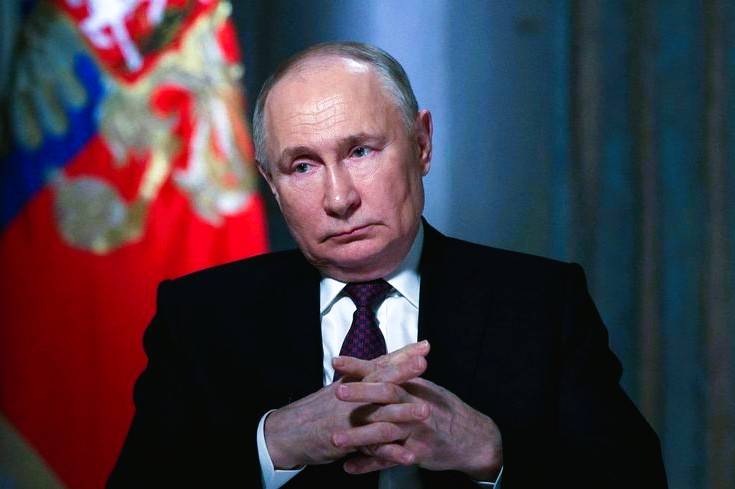
Putin’s India visit: Russian President Vladimir Putin is set to visit India on December 5 for the 23rd India-Russia Annual Summit. His arrival is being viewed as a major diplomatic event, coming at a time when global political and economic shifts are reshaping international alignments. The visit will mark Putin’s first trip to India since December 2021 and is expected to reset the trajectory of bilateral cooperation between Moscow and New Delhi amid the ongoing Russia-Ukraine conflict.
Jaishankar’s Moscow Visit Sets the Stage
Ahead of this high-profile meeting, India’s External Affairs Minister S. Jaishankar will be in Moscow on Monday to attend the Shanghai Cooperation Organization (SCO) ministerial meeting. Although the visit is officially for the multilateral forum, it carries deeper significance. Diplomatic sources indicate that Jaishankar’s trip also aims to fine-tune the agenda for the upcoming Modi-Putin summit.
During his discussions in Moscow, Jaishankar is expected to speak extensively with Russian Foreign Minister Sergey Lavrov on bilateral as well as global matters. The focus will be on preparing a comprehensive draft agenda centered on defense ties, energy cooperation, and trade expansion. The outcome of these discussions will shape the framework for Putin’s visit to New Delhi.
Strategic Importance of the Visit
Putin’s visit holds far-reaching implications for both India and Russia. For India, maintaining strategic autonomy remains a key principle in foreign policy, particularly amid increasing polarisation between Western nations and Russia over the Ukraine crisis. The visit underscores the resilience of India-Russia relations that have withstood global geopolitical turbulence.
For Russia, India is an indispensable partner in Asia, offering a vital channel for engagement with the broader Indo-Pacific region. As Western sanctions continue to restrict Russian access to global markets, strengthening economic ties with India could provide Moscow with new avenues for trade diversification and technological collaboration.
Focus on Bilateral Trade and Cooperation
The 23rd India-Russia Annual Summit will prioritize the expansion of bilateral trade, which has grown sharply in recent years, primarily due to discounted crude oil imports. India has become one of the largest importers of Russian oil, helping to stabilize its domestic energy market while providing Russia with a steady revenue stream despite international sanctions.
Beyond energy, the two nations are expected to enhance cooperation in defense production, space technology, and nuclear energy. Discussions are underway on joint manufacturing of military equipment under India’s ‘Make in India’ initiative, highlighting the transition from a buyer-seller relationship to one of co-development and co-production.
Key Agreements Expected
Officials have hinted that several memorandums of understanding (MoUs) may be signed during the summit. These agreements are likely to cover:
Energy security: Long-term partnerships in crude oil and liquefied natural gas (LNG) supply.
Defense cooperation: Joint development of military platforms and modernization projects.
Trade facilitation: Mechanisms to ease payment settlements using local currencies.
Technology collaboration: Partnerships in space, IT, and innovation-led sectors.
India and Russia are also exploring new shipping routes through the Northern Sea Route and the International North–South Transport Corridor (INSTC), which could significantly reduce transit time and costs for goods movement between the two nations.
Global Reactions and Geopolitical Context
International observers are closely tracking Putin’s trip to India, viewing it as a test of how nations navigate partnerships in an increasingly divided world. The United States and European nations have maintained pressure on India to limit its engagement with Russia, especially in defense and energy sectors. However, New Delhi has consistently upheld its position of pursuing national interest while advocating dialogue and diplomacy as the only viable path to resolving the Russia-Ukraine conflict.
#Putin’s India visit/sbkinew.in
China, another key player in the region, will also closely monitor the outcomes of the summit. India’s growing influence within the Global South and its active role in BRICS, SCO, and G20 have reinforced New Delhi’s importance as a balancing power in global affairs. Putin’s visit, therefore, not only strengthens bilateral ties but also reflects a broader geopolitical realignment in Asia.
The Indo-Russian Partnership: Past and Future
India and Russia share a historic partnership spanning over seven decades. From defense collaborations to energy cooperation and educational exchanges, their relationship has continually evolved. As the world transitions into a multipolar order, this partnership is set to take on new dimensions.
Experts believe the December summit will mark a new phase in India-Russia relations focusing on diversification, innovation, and sustainability. Both countries aim to elevate their economic engagement beyond hydrocarbons by investing in renewable energy, metallurgy, pharmaceuticals, and digital technology. For more details, refer to The Hindu.
Conclusion
Vladimir Putin’s visit to India on December 5 symbolizes more than a diplomatic event—it underscores the enduring value of strategic partnership in a volatile world. With discussions expected to yield agreements in trade, energy, and defense, the 23rd India-Russia Summit will reinforce New Delhi’s commitment to a balanced, multi-vector foreign policy. As global eyes watch closely, the outcome of this visit could redefine the contours of regional stability and economic cooperation across Eurasia.
For more updates on global developments, including the latest on international summits and diplomatic visits, visit our World News section.