Rajasthan Weather
A sudden hailstorm turned parts of western Rajasthan’s desert white, creating scenes that looked almost like snowfall. At the same time, strong dust storms, rain, and violent winds disrupted life in Jaipur and the Ajmer–Beawar region.
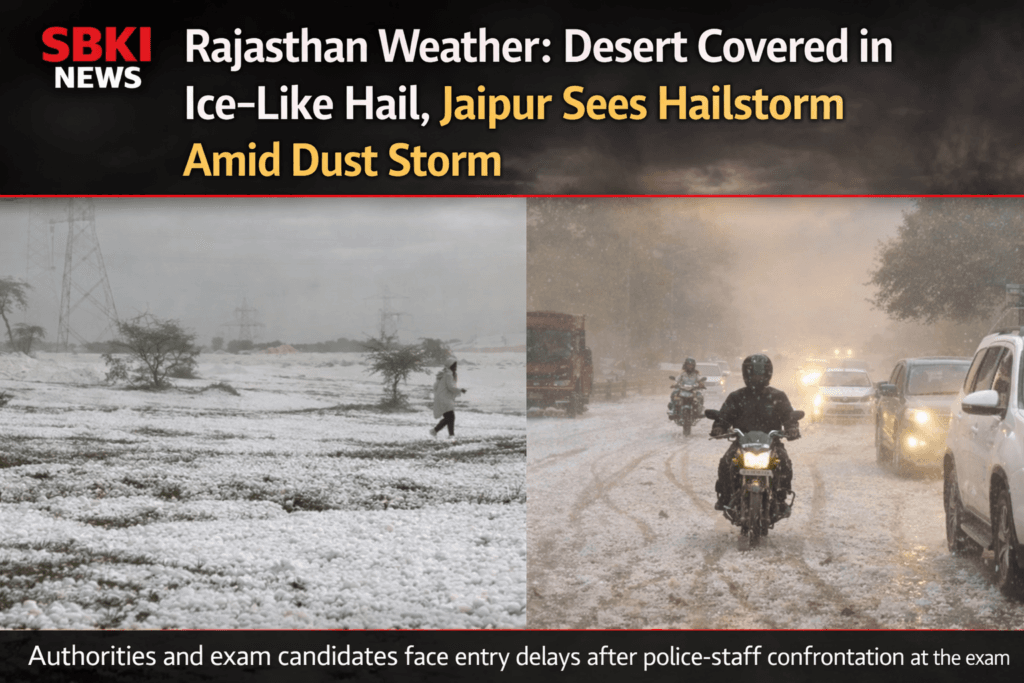
A thick layer of hail covers sand dunes in western Rajasthan, briefly turning the desert landscape white after an intense storm.
Unusual Weather Stuns Rajasthan
Residents across several parts of Rajasthan witnessed a rare and dramatic weather shift after a sudden hailstorm covered sections of the desert with a white sheet of ice. The unusual sight, captured in photos and videos, quickly spread across social media, with many comparing the desert landscape to a snowy hill station.
The weather system did not stop there. The state capital Jaipur was hit by a strong dust storm followed by rain and hail, forcing many people to rush indoors as winds swept through the city. Meanwhile, the Ajmer–Beawar belt experienced powerful gusts that uprooted trees and blew away tin sheds, leaving visible damage in several villages and roadside areas.
While the visuals from the desert looked striking, the sudden storm caused concern for farmers and residents dealing with damaged crops and disrupted daily routines.
Hailstorm Turns Desert White
In western districts like Jaisalmer and Bikaner, the storm arrived suddenly with heavy hail falling for around 15–20 minutes. By the time it stopped, the sand dunes and open desert patches were covered with a thin layer of white hailstones.
For a short period, the desert landscape appeared almost like it had been dusted with snow. Locals said such scenes are extremely rare in this region, especially in April when temperatures usually begin climbing toward peak summer heat.
Children and residents were seen taking photos and videos of the unusual sight before the hail slowly melted under the evening warmth.
Dust Storm and Rain Lash Jaipur
At the same time, the storm system moved toward central Rajasthan and hit Jaipur with strong winds and dust storms. Visibility dropped as dust filled the air, followed by sudden rainfall and hail in several parts of the city.
Motorists slowed down as gusty winds rattled vehicles on the road. Some areas also experienced minor disruptions due to fallen branches and debris scattered across streets.
Residents described the storm as brief but intense, with thunder, strong winds, and hail arriving almost without warning.
Strong Winds Cause Damage in Ajmer–Beawar Region
The impact was stronger in the Ajmer–Beawar region where wind speeds reportedly crossed 60–70 km per hour. In several locations, trees were uprooted and electricity poles were damaged.
Tin sheds used for shops, roadside eateries, and farm structures were blown away in some villages. Roads were temporarily blocked by fallen branches and scattered debris.
Local residents also reported broken window panes and minor damage to parked vehicles after hailstones and flying debris struck buildings.
Electricity supply was affected in some pockets as damaged power lines required immediate repairs.
Farmers Worry About Crop Loss
While the white desert scenes went viral online, the storm brought concern for farmers across western Rajasthan.
Standing crops such as guar, mustard, and cumin were hit by hail in several agricultural areas. Farmers said hailstones damaged plants and flattened crops in some fields, raising fears of reduced harvest.
Agriculture experts warned that even a short hailstorm can significantly affect crops that are close to harvest, especially in dry regions where farmers depend heavily on seasonal yields.
In some villages, harvested grains stored in open threshing yards were also soaked by rain and hail.
Officials Respond to Storm Damage
Officials from the state weather department said the unusual weather was caused by a western disturbance moving across north-western India. When the disturbance interacted with warm surface air, it triggered sudden thunderstorms and hail formation.
Authorities also confirmed that repair teams were sent to affected areas in Ajmer and Beawar to restore electricity and clear fallen trees from roads.
Local administration officials advised farmers to avoid storing harvested crops in open fields and to keep track of weather alerts during the coming days.
Changing Weather Patterns
Weather experts say such sudden storms are becoming more common during the pre-monsoon transition period in April. Over the past few years, Rajasthan has witnessed unexpected dust storms, hail events, and thunderstorms even before the summer heat reaches its peak.
Many climate researchers believe rising temperatures and shifting wind patterns are contributing to these unpredictable weather conditions.
The viral images of hail covering the desert have become a reminder of how quickly weather can change in regions traditionally known for extreme heat and dryness.
Weather Outlook and Safety Advice
According to forecasts, the immediate risk of another major hailstorm appears low, but scattered thunderstorms and gusty winds may still affect parts of western and central Rajasthan in the coming days.
Authorities have issued basic safety advice for residents:
- Avoid parking vehicles under large trees during strong winds.
- Stay indoors during thunderstorms and close windows and doors.
- Keep away from tin-sheet roofs or loose structures during storms.
- Farmers should store harvested crops in covered storage areas.
For now, life in the affected areas is gradually returning to normal, though the sudden storm has left many residents surprised by the dramatic transformation of Rajasthan’s desert landscape.
for more in depth report click here
Read Also : Earthquake Kills 8 in Afghanistan; Tremors Felt in Delhi-NCR, North India