
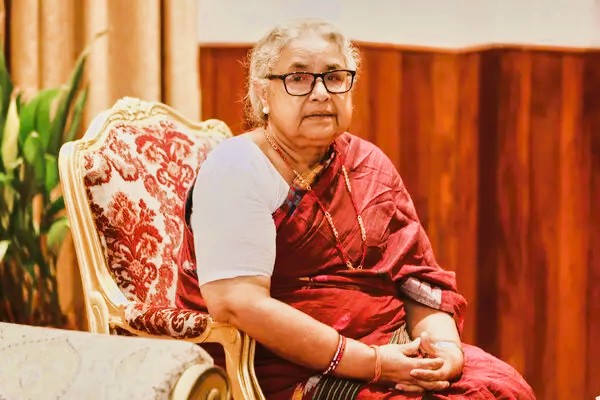
Nepal first woman PM/Sbkinews.in
Kathmandu, September 14, 2025 — In a move hailed by many as historic, Nepal has a new interim Prime Minister: Sushila Karki, the country’s first woman to assume the top post, took office amid promises of reform, accountability, and a transitional mandate. Her ascent comes after widespread public unrest, intense protests, and the resignation of former Prime Minister K. P. Sharma Oli.
Political Context and Prelude
Over the past week, Nepal has been convulsed by large-scale protests led predominantly by Gen Z youth activists. Initial anger was sparked by a sweeping ban on social media platforms, which the government imposed under claims of maintaining public order and oversight. But the backlash quickly evolved beyond that trigger. Demonstrators voiced longstanding grievances: corruption, nepotism, lack of economic opportunity, and political stagnation. Many young people felt that political elites were unresponsive to the struggles of ordinary Nepalis, particularly in rural areas and among marginalized communities.
As protests intensified, security forces confronted demonstrators; these clashes led to tragic loss of life. More than 50 people were reportedly killed, with over 1,300 injured across the country—even after authorities lifted the social media ban.
Faced with mounting pressure, Prime Minister K. P. Sharma Oli tendered his resignation. Parliament was dissolved soon after. In response to the crisis, President Ram Chandra Poudel, in consultations with the army and influential actors, appointed Sushila Karki as interim prime minister on September 12, 2025. Her government is charged with holding Nepal together during a transitional period and arranging fresh elections.
Nepal first woman PM/Sbkinews.in
Sushila Karki’s Profile
Sushila Karki, 73, is a jurist, author, and former Chief Justice of Nepal. In 2016–2017, she made history as the country’s first female Chief Justice. Throughout her judicial career, she became known for her strong stances against corruption and for upholding the rule of law—even in politically sensitive cases.
Her legal background, perceived impartiality, and reputation for integrity made her a consensus choice among protestors and many political actors seeking an interim figure without overt partisan baggage. It is noteworthy that Karki is independent of major party structures—this, more than anything, seems to have guided her selection in this moment of crisis.
Nepal first woman PM/Sbkinews.in
Taking Office: Key Statements and Promises
After being sworn in, Ms. Karki delivered her first address to the nation from her temporary workspace—her full official office had been damaged during the protests, which saw the prime minister’s office and other state buildings set ablaze.
Her message was emphatic and carefully calibrated:
“My team and I are not here to taste power.” She stressed that her government would not linger beyond its mandate and that it was committed to restoring democratic norms rather than consolidating authority.
She pledged that this interim government would hand over control to a newly elected parliament within six months.
Those responsible for incidents of vandalism and arson during the protests would be investigated.
She promised that the victims of the protests would be officially declared martyrs, and financial aid would be extended to families of the deceased and the injured.
Karki recognized that the protests were not just about social media or single policy decisions. She said they reflected a broader demand for economic equality, transparency, and eradicating corruption—themes that will guide her government’s agenda.
Nepal first woman PM/Sbkinews.in
Mandate, Challenges, and Road Map
Karki’s interim government faces a delicate balancing act. It must restore stability, address justice and accountability, rebuild public trust, and set the stage for free and fair elections—as scheduled for March 5, 2026, following the dissolution of parliament.
Key challenges include:
Restoring law and order without overreach. The state must investigate violations from both sides, ensure justice for victims, and reassure citizens who have already suffered.
Managing the economy, which is under strain. Youth unemployment, inflation, and supply chain disruptions during unrest are issues that need immediate attention.
Addressing corruption—not just in rhetoric but through institutional reform. Many protestors want legal mechanisms that hold officials accountable, enforce checks on power, and ensure transparency in governance.
Addressing political legitimacy and constitutional issues. Some parties have already raised concerns about the constitutionality of dissolving parliament, of the interim government’s scope, and of processes followed. Navigating these concerns in a way that does not reignite conflict will be essential.
Nepal first woman PM/Sbkinews.in
International & Domestic Reaction
Domestically, Karki’s appointment has generally been received with cautious optimism—particularly among youth activists who feel the protests have finally translated into political change. Many citizens hope her tenure will mark a turning point for governance in Nepal.
Internationally, countries like China have already extended congratulations, noting their respect for Nepal’s sovereign process and emphasizing cooperation under established bilateral principles.
At the same time, regional watchers and analysts are closely observing whether Nepal’s interim government can uphold constitutional norms, secure civil liberties, and avoid a slide into further instability. The eyes of civil society, the media, and foreign partners are on Kathmandu.
Nepal first woman PM/Sbkinews.in
Significance
Sushila Karki’s appointment is historically significant on multiple fronts. She is Nepal’s first woman to serve as Prime Minister in any capacity. Her selection—a jurist with a track record of legal activism—symbolizes a shift in political culture, which protesters and many citizens feel has long had too little accountability. The fact that her mandate is explicitly temporary and transitional is intended to reassure those wary of power grabs.
Perhaps equally important is the role young people—especially “Gen Z”—have played in this political moment: not only as protestors but as agenda-setters. Their demands seem to have shaped much of the early policy voice of the interim government. Whether this influence endures remains to be seen.
Nepal first woman PM/Sbkinews.in
What to Watch Next
As Sushila Karki settles into her role, a few critical developments will be key to evaluate her government’s effectiveness:
Cabinet Formation: Who she appoints, how inclusive the cabinet is (in terms of geography, gender, expertise, political affiliation), and whether it reflects the reformist urges of the protests.
Transitional Legislation & Reforms: Whether legal steps are taken to address corruption, social justice, accountability, and whether victims receive compensation and recognition.
Security and Civil Liberties: How state forces behave in coming weeks—especially their handling of protests, disorder, or dissent—and whether human rights are respected.
Election Preparations: Setting up a credible framework for elections in March 2026—ensuring fair voter registration, clear electoral laws, free campaign space—and ensuring political parties accept the legitimacy of the process.
Economic Recovery: Measures to alleviate inflation, unemployment, and hardship among those hit hardest during the protests and ongoing instability.
Nepal first woman PM/Sbkinews.in
Conclusion
Sushila Karki’s assumption of office as interim Prime Minister is a watershed moment in Nepal’s recent political history. Her public pledge—“not here to taste power”—captures the mood of a populace weary of political showmanship and eager for genuine change. Her six-month mandate is short but laden with outsized expectations. If she can marry her reputation for integrity with effective governance, she may help Nepal emerge more inclusive, transparent, and responsive to its citizens than before.
However, the road ahead is fraught with challenges: ensuring constitutional propriety, maintaining unity across fractures, handling justice and retribution without inflaming tensions, and restoring hope among those who have lost trust in political institutions.
For sbkinews.in readers, Karki’s premiership offers both hope and a test: can Nepal turn a protest into sustainable reform? Only time will tell. But for now, the country has a leader who, at least in words, seems determined not to drink from the intoxicating cup of power—but to hand it back to the people.