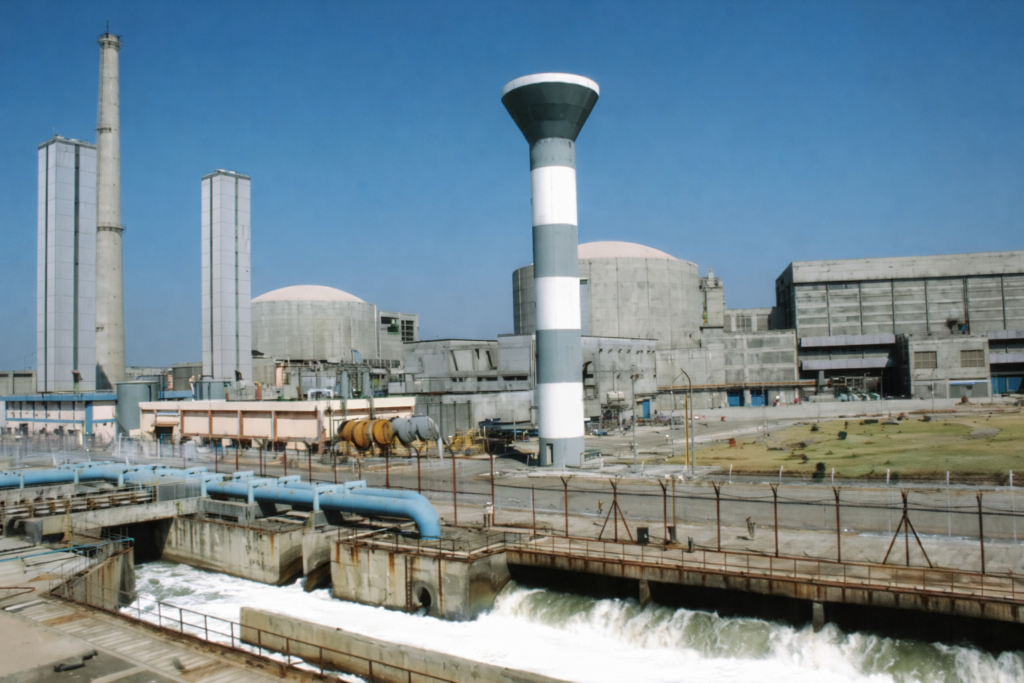
Tarapur Nuclear Revival
Palghar/Mumbai, Feb 18, 2026 – India’s nuclear energy sector scores a historic win with Tarapur Atomic Power Station (TAPS) Unit 1 back online after a groundbreaking indigenous refurbishment. The 160 MW boiling water reactor, Asia’s pioneering unit, now generates clean power post a six-year upgrade using homegrown tech. This makes India the first Asian nation to fully extend an old reactor’s life without foreign aid, boosting Atmanirbhar Bharat in clean energy.
Operated by Nuclear Power Corporation of India Limited (NPCIL), TAPS-1 was shut in 2020 for comprehensive modernization. Engineers deployed advanced 3D laser scanning, corrosion-resistant materials, upgraded turbines, generators, digital monitoring, and enhanced safety systems. “This revival exemplifies Indian scientific prowess,” said officials, projecting decades more reliable output amid coal dependency concerns.
Milestone in Nuclear Revival: TAPS-1 Leads the Way
Commissioned in 1969 alongside TAPS-2, these were Asia’s earliest commercial reactors with a typical 40-50 year lifespan. Indian innovators extended it via indigenous upgrades: new piping, state-of-the-art control rooms, and robust safety protocols. Unit 1 now feeds 160 MW to the national grid, enough for millions of homes, cutting fossil fuel reliance.
Unit 2’s refurbishment nears completion, set to reconnect soon. The dual revival adds over 300 MW clean baseload power, aligning with India’s 2070 net-zero goals. Experts hail it as a model for global ageing reactors, proving desi tech rivals international standards.
Tech Triumph: Key Upgrades Detailed
The six-year project tackled every facet:
Structural Revamp: 3D laser scanning for precision mapping; anti-corrosion coatings.
Power Boost: Turbine-generator overhauls for optimal 160 MW efficiency.
Safety First: Advanced digital monitoring, fail-safes, and radiation controls.
Digital Edge: Modern control rooms with AI-driven analytics.
No foreign tech was needed – a pure Make in India feat. This slashes import costs and builds NPCIL’s expertise for 20+ ageing plants nationwide.
| Upgrade Aspect | Before | After | Impact |
|---|---|---|---|
| Lifespan | 40-50 years | Extended 20-30 years | Sustainable power |
| Capacity | Degraded | 160 MW stable | Grid reliability |
| Tech Source | Mixed | 100% Indigenous | Atmanirbhar boost |
| Safety Systems | Analog | Digital + AI | Zero-incident ops |
Clean Energy Leap: Broader Implications
TAPS revival fortifies India’s nuclear ambitions, targeting 22 GW by 2031. It reduces coal’s 70% grid share, curbing emissions. “Swachh Urja gets a nuclear push,” PM Modi tweeted, linking to green growth.
For Maharashtra, Palghar benefits: jobs for 500+ engineers, local economy surge. Nationally, it inspires refurbishments at Rajasthan, Madras Atomic Stations. Globally, eyes turn to India as exporter of life-extension tech.WNN
Stay UPdate with SBKI News