Therapeutic Plasma Exchange
Lucknow’s King George’s Medical University pioneers TPE, rescuing 25 critical patients from toxic chemicals. Balrampur man Ramesh among latest survivors.
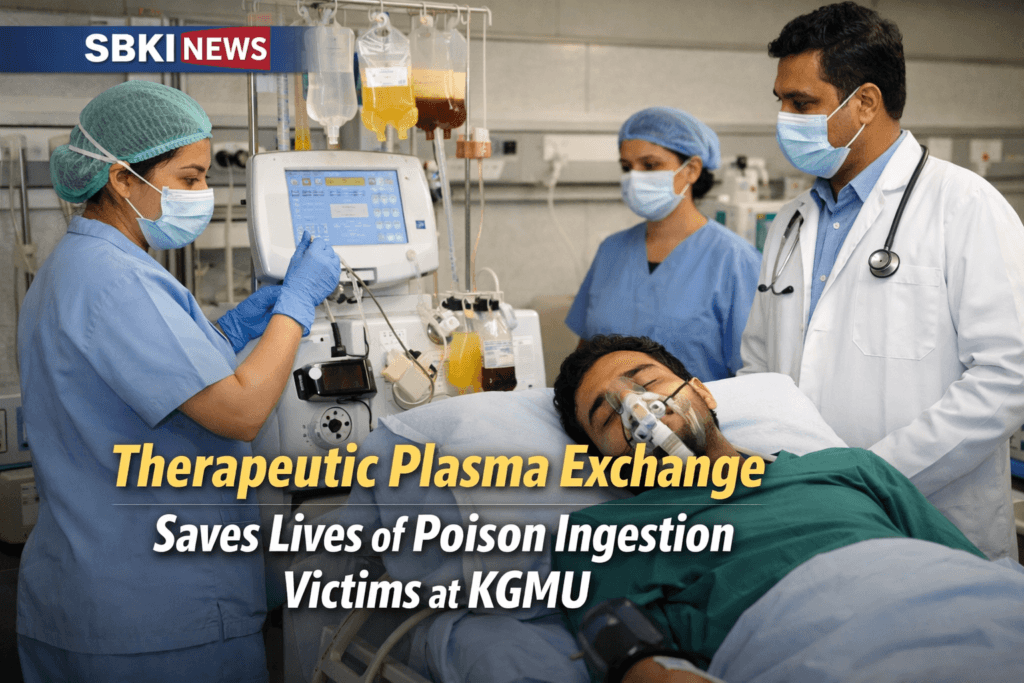
Life-saving therapeutic plasma exchange at KGMU removes toxins, reviving poison victims.
Lucknow: In a remarkable medical breakthrough, doctors at King George’s Medical University (KGMU) are saving lives using an advanced treatment called Therapeutic Plasma Exchange (TPE). The procedure has already helped dozens of patients who were brought to the hospital after consuming poisonous substances, either accidentally or in suicide attempts.
One such patient was Ramesh, a resident of Balrampur district. After consuming a toxic chemical in an attempt to end his life, he was first taken to a local hospital. However, due to the seriousness of his condition, doctors there referred him to KGMU in Lucknow. By the time he arrived, his condition had worsened and doctors feared serious damage to vital organs.
At KGMU, doctors decided to use Therapeutic Plasma Exchange. Within a few sessions of the treatment, the poison was gradually removed from his bloodstream and his health began to improve. Today, Ramesh is recovering and has been given a second chance at life.
According to doctors at the hospital, KGMU has successfully treated 25 patients suffering from severe poisoning using this technique so far. The success rate of the treatment has crossed 90 percent, making it one of the most promising medical interventions for poisoning cases in the state.
What is Therapeutic Plasma Exchange?
Therapeutic Plasma Exchange, commonly known as TPE, is a medical procedure that helps remove harmful toxins from a patient’s blood. The treatment is performed using a specialized apheresis machine.
During the procedure, blood is taken from the patient through a catheter. The machine then separates the blood into two components — blood cells and plasma. Plasma is the liquid part of blood that often carries toxins, harmful antibodies, or chemicals.
Doctors remove the contaminated plasma and replace it with fresh plasma or a protein solution such as albumin. The purified blood cells are then returned to the patient’s body. This process helps eliminate toxic substances quickly and reduces damage to organs such as the liver, kidneys, and brain.
Experts say each session of Therapeutic Plasma Exchange typically lasts between two to four hours. Depending on the severity of poisoning, patients may require multiple sessions.
Doctors Explain the Life-Saving Treatment
According to Prof. Tulika Chandra, head of the Blood Transfusion Department at KGMU, the treatment has proven extremely effective in critical poisoning cases.
She explained that many patients who consume toxic chemicals or pesticides suffer severe organ damage because toxins circulate rapidly through the bloodstream. Traditional treatments sometimes fail to remove these toxins quickly enough.
“TPE allows us to remove the poisonous substances directly from the blood. By replacing the contaminated plasma, we can reduce the toxic load in the body and give the organs a chance to recover,” she said.
Another senior doctor at the institute, Prof. Himanshu, who heads the Infectious Diseases Department, highlighted the importance of early treatment.
He said many poisoning cases in Uttar Pradesh involve organophosphate pesticides, which are commonly used in agriculture. These chemicals are extremely dangerous and can quickly affect the nervous system.
“If the patient reaches the hospital within about 10 hours of consuming such pesticides, the chances of survival with TPE can rise to nearly 90 percent,” he explained.
Growing Success Stories at KGMU
Since the therapy was introduced at KGMU last year, doctors have treated 25 critically ill patients with the procedure.
Hospital records show that around 60 percent of these cases involved suicide attempts, while the remaining 40 percent were accidental poisonings.
One of the earliest cases involved a man from Lucknow who had consumed phosphorus. His condition was extremely serious, but after three sessions of plasma exchange he recovered and was discharged.
In another case, a 22-year-old woman was admitted after consuming rat poison. Doctors immediately began TPE sessions, which successfully cleared the toxins from her body and stabilized her condition.
Doctors also treated a farmer who had been exposed to the pesticide endosulfan. The toxic exposure had triggered multiple organ complications, but timely plasma exchange helped reverse the damage.
Medical experts say these cases demonstrate how effective the therapy can be when used in time.
Rising Poisoning Cases in Uttar Pradesh
Health experts say the need for advanced treatment like TPE is growing in Uttar Pradesh.
Every year, the state records tens of thousands of poisoning cases, many of them linked to agricultural chemicals. In rural areas, pesticides are easily available and unfortunately often used in suicide attempts.
Doctors say conventional treatments, including stomach washing and medications, are sometimes not enough when toxins enter the bloodstream in large quantities.
Dialysis is occasionally used, but it does not always remove all types of toxins effectively. Therapeutic Plasma Exchange, however, directly targets the plasma where many poisonous substances circulate.
Cost and Accessibility
While TPE is considered a sophisticated medical treatment, KGMU has made efforts to keep it affordable.
In many private hospitals, a single plasma exchange session can cost ₹20,000 or more. At KGMU, the treatment is available at a subsidized cost of around ₹5,000 per session, making it accessible to more patients.
Doctors say this initiative has made KGMU one of the few government hospitals in Uttar Pradesh where such advanced treatment is available for poisoning cases.
Challenges and Need for Awareness
Despite the success of the therapy, doctors say awareness among the public remains limited. Many patients reach hospitals late, missing the critical window in which treatment is most effective.
Medical professionals are urging people to seek immediate medical help if poisoning is suspected. Quick action can significantly improve survival chances.
Experts also stress the need for stronger mental health support systems to prevent suicide attempts involving toxic substances.
Looking Ahead
KGMU is now planning to expand the use of Therapeutic Plasma Exchange and train more doctors across the state. The university is also exploring ways to make the technology available in other government hospitals.
Researchers at the institute are studying new techniques to make the procedure even more cost-effective and accessible.
Doctors believe that if implemented widely, TPE could significantly reduce deaths caused by poisoning in Uttar Pradesh.
For patients like Ramesh, the treatment has already made a life-changing difference.
“I was brought here when my condition was very serious,” he said after recovering. “The doctors at KGMU saved my life. I feel like I have been given a second chance.”
Medical experts say such stories show how modern medical innovation, when combined with timely treatment and dedicated healthcare professionals, can turn even the most critical situations into stories of hope.
for more in depth report click here
Read also : Bomb Attack Kills Two Children, Firing Claims Two More in Manipur Violence