Uttarakhand High Court
Nainital High Court orders state to update probe into Kotdwar clash FIRs while scrutinizing viral hero’s bank inflows from public support.
Uttarakhand High Court bench during hearing on Mohammad Deepak case
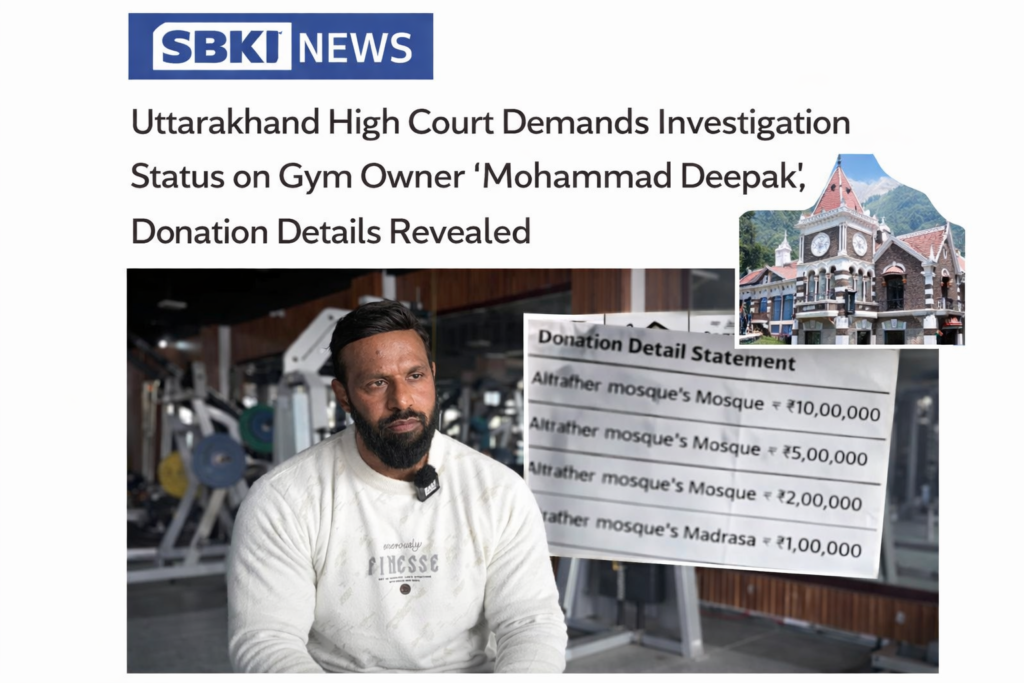
The Uttarakhand High Court has directed authorities to submit a detailed status report on investigations linked to gym owner Deepak Kumar, known as ‘Mohammad Deepak’ after a bold viral standoff. This stems from a January 2026 Kotdwar incident where he defended an elderly Muslim shopkeeper against alleged Bajrang Dal activists. The court also mandated Deepak to disclose all donations received in his bank account post-viral fame.
Incident Details
On January 26, 2026, in Kotdwar, Pauri Garhwal, a mob reportedly from Bajrang Dal confronted Vakeel Ahmed, an elderly shopkeeper using ‘Baba’ in his shop name, deeming it inappropriate. Deepak Kumar, a local gym owner, intervened, challenging the group in a video that exploded online: “The shop is 30 years old, will you change the name?” When pressed on his identity, he declared, “My name is Mohammad Deepak.” This act of defiance led to FIRs against him and associate Vijay Rawat, filed by Kamal Prasad, alleging derogatory language, phone snatching, and threats on January 28.
Deepak approached the High Court seeking FIR quashing, police protection for his family amid death threats, and a departmental inquiry against officers for inaction on his complaint against the mob. Justice Rakesh Thapliyal’s bench heard the plea on March 16-17, 2026, noting multiple FIRs from the clash, including against unnamed mob members. The state must now clarify probe progress on all fronts, including why Deepak’s complaint lingered.
Court Statements
The bench remarked pointedly: “You get your instructions on how much money has been credited to your account,” directing Deepak to file an affidavit detailing total donations. Deepak volunteered transparency, citing small inflows of ₹100-₹500 since the video’s virality, to prove his good faith. No direct quotes from state counsel appear yet, but instructions demand specifics on FIR statuses and police inaction. Advocate Navnish Negi represented Deepak.
Background Context
The clash highlights simmering communal tensions in Uttarakhand, where names and religious symbols often spark vigilantism. Deepak’s gym saw membership drops post-incident, but viral support brought financial aid from admirals, including Supreme Court seniors. Kotdwar, a town near Haridwar, frequently witnesses such disputes; protesters reportedly hailed from Dehradun and Haridwar, self-identifying as Bajrang Dal members. Deepak’s pseudonym ‘Mohammad Deepak’ symbolized interfaith solidarity, amplifying the video’s reach.
This case echoes broader patterns of social media-fueled confrontations turning legal battles. Post-January 26, FIRs proliferated: one against Deepak for the January 28 retort, others against the initial mob. Public donations underscore how viral heroism can fund defense, raising accountability questions. Deepak’s plea also flags family safety amid backlash.
Case Developments
The hearing revealed Deepak’s dual challenges: legal jeopardy from counter-FIRs and scrutiny over crowdfunding. Court ordered state reports on unnamed persons’ probes from the shopkeeper clash and Deepak’s own case. It questioned police handling of his threats complaint. Deepak must itemize bank credits, potentially totaling significant sums from micro-donations. Matter listed for March 18-19, 2026.
Emerging Implications
Communal flare-ups like Kotdwar’s expose fault lines between tradition, identity, and law. Deepak’s intervention spotlighted minority protections, but FIRs suggest narrative flips. Donations add a financial transparency layer, rare in such petitions.
What Lies Ahead
Next hearing promises state compliance on probes, possibly revealing investigative lags or biases. Deepak’s affidavit could clarify support scale, influencing public perception. Outcomes may set precedents for viral incident probes, protection pleas, and crowdfunding disclosures in sensitive cases. Watch for quashing decisions, inquiry orders, or escalated security. Full transparency might defuse tensions or ignite further debate.