Uttarakhand News
Uttarakhand High Court rejects plea to dismiss FIR against Mohammad Deepak over alleged fake Hindu identity; directs him to avoid provocative social media posts amid rising religious tensions.
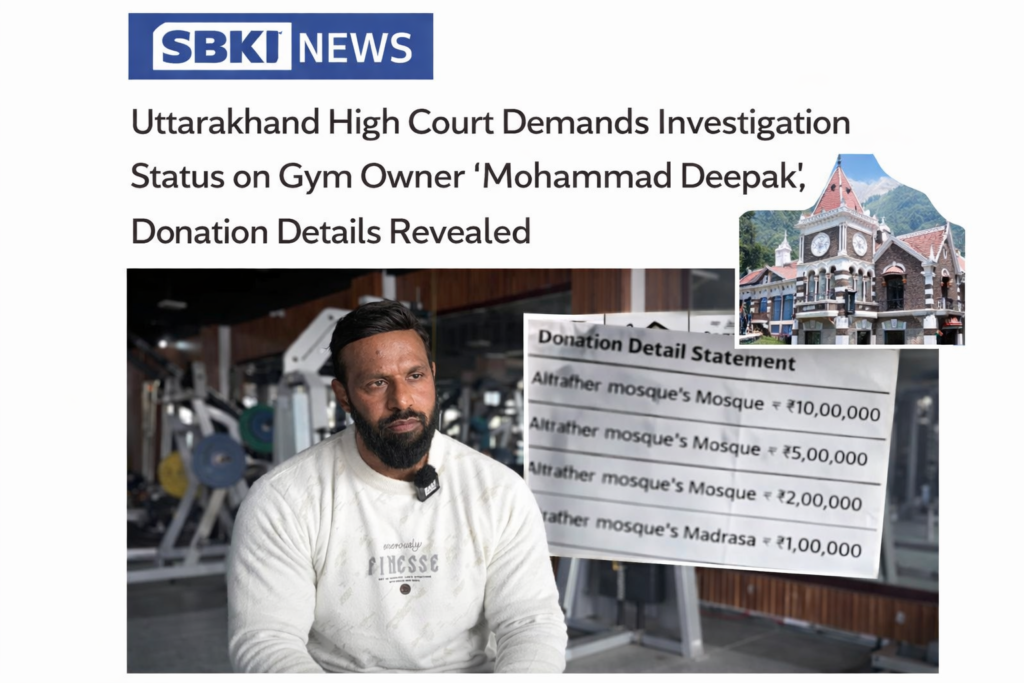
Uttarakhand High Court premises in Nainital, where Justice Pankaj Puri delivered the ruling on the controversial FIR against Mohammad Deepak
What Happened: Court Rejects FIR Quash Plea
In a significant ruling, the Uttarakhand High Court on March 20, 2026, refused to quash an FIR registered against Mohammad Deepak, a resident accused of adopting a Hindu name to provoke communal discord. Justice Pankaj Puri not only dismissed Deepak’s petition but also imposed a strict directive: he must refrain from posting on social media platforms until further orders. The decision stems from complaints that Deepak, originally named Deepak Singh, used his altered identity to spread inflammatory content online, fueling debates on religious conversions and fake identities in Uttarakhand.
This development highlights the court’s firm stance against misuse of social media for communal provocation, especially in a state sensitive to religious harmony issues. The FIR, lodged under sections of the Indian Penal Code (IPC) for promoting enmity between groups, was filed at Kotdwar police station in Pauri Garhwal district last month.
Details: Why and How the Case Unfolded
The controversy erupted when locals in Kotdwar accused Mohammad Deepak of changing his name from Deepak Singh to ‘Mohammad Deepak’ deliberately to masquerade as a Muslim while posting Hindutva propaganda on platforms like X (formerly Twitter) and Facebook. Complainants alleged his posts incited Hindu-Muslim tensions by falsely portraying himself as a convert to Islam who was “reclaiming Hindu pride,” leading to real-world unrest including protests.
Police investigation revealed over 50 social media posts from Deepak’s accounts between January and March 2026, containing communally charged rhetoric. Key evidence included screenshots of him using phrases like “From Mohammad to true Hindu warrior,” which authorities deemed as deliberate misinformation. The FIR invoked IPC Sections 153A (promoting enmity) and 505 (public mischief), alongside IT Act provisions for online offenses.
Deepak approached the High Court seeking to quash the FIR, arguing it was a “frivolous case” motivated by political vendetta. However, Justice Puri, after reviewing the evidence, observed: “The petitioner’s actions appear calculated to exploit religious sentiments.” The court mandated Deepak deposit a surety bond and barred him from any social media activity, with violations attracting contempt proceedings. This order sets a precedent for handling social media misuse in sensitive religious cases across India.
Key Quotes and Statements
Justice Pankaj Puri (Uttarakhand HC): “Such antics on social media cannot be tolerated when they risk communal harmony. The petitioner shall abstain from platforms to prevent further mischief.”
Kotdwar Police SHO Rajendra Kumar: “Deepak’s posts were not innocent; they sparked local clashes. We’re monitoring compliance with the court’s social media restraint order.”
Deepak’s Counsel, Advocate Sanjay Joshi: “We respect the order but will challenge it in higher forums; this stifles free speech.”
Local BJP Leader Vikram Singh: “Court’s decision vindicates our concerns over fake identities fueling conversions and hatred.”
No official statement from Deepak himself was available post-ruling, but sources indicate he’s complying pending appeal.
Background and Context: Rising Tensions in Uttarakhand
Uttarakhand, often called “Devbhoomi” for its Hindu pilgrimage sites, has witnessed heightened scrutiny over religious conversions and social media propaganda since the 2021 anti-conversion law. The state amended its Freedom of Religion Act in 2024 to impose stricter penalties, including life terms for forced conversions, amid reports of over 1,200 cases in five years.
Mohammad Deepak’s case fits a pattern: In 2025, similar FIRs targeted 15 individuals for “love jihad” propaganda via fake profiles. Nationally, social media restraint orders have surged—Supreme Court data shows 300+ such directives in 2025 alone amid elections and riots. This ruling aligns with Uttarakhand CM Pushkar Singh Dhami’s push for “digital hygiene,” including AI monitoring of communal posts. Critics, including opposition parties, argue it curbs dissent, but supporters hail it as essential for peace in a border state prone to Pakistan-linked radicalization fears.
The case also spotlights name-change controversies; India’s gazette notifications saw 20% rise in religious name shifts post-2024, per government records, often linked to online activism.
Conclusion: Implications and What’s Next
The Uttarakhand HC’s denial to quash the FIR against Mohammad Deepak underscores judicial intolerance for social media as a tool for communal provocation. With the social media restraint order in place, Deepak faces restricted online presence, potentially appealing to the Supreme Court within 30 days.
Looking ahead, this could inspire stricter guidelines nationwide, especially with 2026 state elections looming. Police vow increased surveillance, while activists urge balanced enforcement to protect free speech. For Uttarakhand residents, it signals zero tolerance for fake identities stoking divisions—peace remains paramount.
for more in depth click here
SBKI Newscontinues to bring you verified, fact‑based coverage of legal and social developments across Uttarakhand and India