Vikramshila Setu in Peril
Protective shields around three key pillars of Vikramshila Setu in Bhagalpur have crumbled under Ganga’s relentless force, sparking widespread alarm over another potential Bihar bridge catastrophe and urgent calls for government intervention.
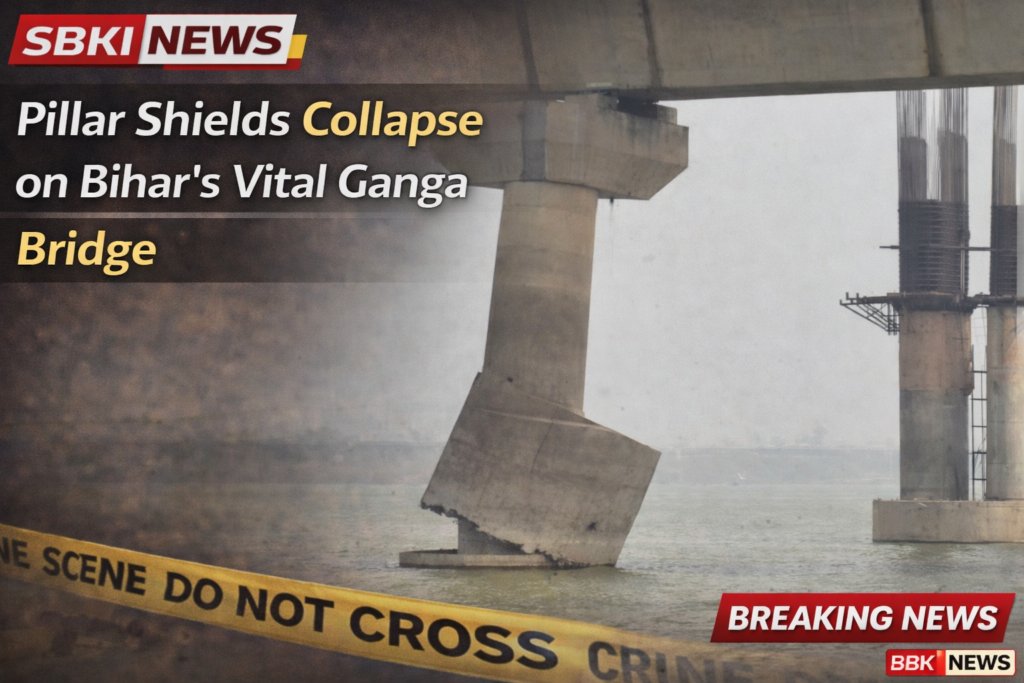
Viral image reveals collapsed pillar protection walls on Vikramshila Setu
What Happened
On March 20, 2026, shocking viral videos exposed a dire threat to Vikramshila Setu, one of Bihar’s most crucial river bridges spanning the mighty Ganges in Bhagalpur district. The footage, rapidly shared across social media platforms, showed the complete collapse of a protective false wall around pillar number 17, with pillars 18 and 19 suffering severe damage—over 50% erosion in one case and loose hanging sections in another. These shield walls, engineered to deflect river currents, debris, and silt away from the main pillars, have failed spectacularly, leaving the bridge’s core structure perilously exposed.
Daily commuters—students rushing to colleges, traders hauling goods to markets, and patients en route to hospitals—were horrified as the news broke. The 4.5-km-long bridge, a lifeline connecting Bhagalpur to the Kosi-Seemanchal region, continues to ferry thousands of vehicles, including heavy trucks, despite the visible peril. Bhagalpur District Magistrate Pranav Kumar promptly announced the formation of a nine-member expert committee, including engineers from the Road Construction Department (RCD), to conduct a thorough structural audit within 48 hours. Traffic has not been halted yet, but locals are baying for an immediate shutdown to prevent a tragedy.
This isn’t an isolated scare; the bridge’s expansion joints have reportedly widened to as much as 6 inches in spots, a telltale sign of mounting stress from overuse and environmental battering. Eyewitnesses described hearing ominous cracking sounds during recent high tides, amplifying the sense of impending doom.
Why and How It Happened
The collapse stems from years of unchecked erosion by the Ganga’s ferocious currents, exacerbated by floating debris, silt buildup from monsoons, and relentless traffic overload. Positioned mid-river, pillars 17, 18, and 19 bear the brunt of the river’s fury during peak flows. The protective walls, constructed from concrete and designed as sacrificial barriers, were meant to absorb impacts and prevent scour around the main pillars. However, neglect in routine desilting and repairs allowed accumulated damage to snowball.
Experts attribute the failure to a combination of factors: subpar maintenance protocols, where patchwork fixes replaced comprehensive overhauls; excessive loading from 24/7 heavy vehicular traffic far beyond the bridge’s original design capacity of the 1980s; and climate change-induced flooding patterns that have intensified Ganga’s erosive power. Monsoon debris—logs, plastic waste, and sediment—repeatedly slams into the shields, weakening them incrementally. Recent inspections revealed hairline cracks propagating unchecked, culminating in the dramatic wall failures observed last week.
Bihar’s geography amplifies these risks; the state sits on the floodplains of multiple mighty rivers, where bridges like Vikramshila endure cyclic punishment. Poor construction quality in ancillary works, possibly linked to corruption, has been flagged in past audits, mirroring failures in other state projects. Engineers warn that without immediate hydrodynamic modeling and retrofitting, pillar integrity could compromise within months, especially as summer currents pick up.
Key Quotes and Statements
Bihar Road Construction Minister Dilip Kumar Jaiswal sought to calm nerves, asserting confidently, “Vikramshila Setu is absolutely safe for all traffic movement. These are minor issues with peripheral walls, not the main structure. Panic is unwarranted.” Yet, his reassurance rang hollow against opposition fire.
Former Bhagalpur MLA Ajit Sharma lambasted the Nitish Kumar government: “This is criminal negligence! For 20 years in power, they’ve turned Bihar’s lifeline into a death trap. How many more warnings before a collapse claims lives?” Local engineer Rajesh Kumar added gravity: “Damaged debris keeps striking the exposed pillars repeatedly. Without urgent reinforcement, the entire span risks catastrophic failure.”
Commuters voiced raw fear online: “We cross daily with families—it’s terrifying,” posted one trader on X. A student lamented, “From school to college, this bridge is our only way. Shut it now!” Public outrage swelled, with comments on Times of India articles decrying, “Corruption eats our infra alive—who pays when it falls?”
Background and Context
Commissioned in 1982 by then-Prime Minister Indira Gandhi, Vikramshila Setu—named after the famed ancient Vikramshila University ruins nearby—marked a engineering marvel at the time, slashing travel time between north and south Bihar shores from hours by ferry to mere minutes. Stretching 4,470 meters with 32 piers, it symbolized progress for eastern Bihar’s 20 million residents, boosting trade, education, and healthcare access.
Yet, Bihar’s bridge saga is a chronicle of despair. Since 2023, over 15 major spans have crumbled, including the shocking 2024 spate of 12 collapses attributed to shoddy materials, illegal sand mining, and floods. The recent ₹2.87 crore Gopalganj bridge fiasco in early March 2026 led to three engineers’ suspensions, underscoring systemic rot. Vikramshila itself underwent emergency repairs in 2016 after similar erosion scares, but half-measures prevailed. State audits reveal Bihar spends disproportionately on new builds over maintenance, with RCD budgets skewed amid political priorities. Flood-prone Ganga bridges nationwide face parallel woes, but Bihar’s scale—home to 200+ river crossings—dwarfs others. Climate shifts, overloading, and graft form a toxic triad.
What Next: Path to Safety and Accountability
The expert committee’s report, due imminently, will dictate immediate steps: likely temporary barricades, desilting via dredging machines, and carbon fiber wrapping for pillars. Long-term, a full load assessment and parallel six-lane bridge are mandated, with costs projected at ₹500-800 crore. Chief Minister Nitish Kumar has directed round-the-clock monitoring via CCTV and sensors.
Opposition parties, including RJD and Congress, demand a high-level judicial probe into maintenance lapses, threatening statewide protests if traffic isn’t rerouted. Civil society pushes for a Bihar Bridges Authority with independent oversight. Funding from the Union Road Ministry under PM Gati Shakti could accelerate fixes, but delays risk marooning Seemanchal’s economy—agriculture, fisheries, and migration hubs.
Ultimately, this crisis spotlights Bihar’s infra paradox: ambition outpaces execution. Prioritizing engineering audits, anti-corruption vigilance, and climate-resilient designs is non-negotiable. Citizens must stay vigilant, reporting anomalies via apps, while media amplifies accountability. Averting disaster here could blueprint salvation for Bihar’s beleaguered bridges, securing a stable future for generations. Only decisive action now will restore faith in this engineering giant teetering on the brink.
For more in depth click here
Also read this
Rajasthan Oxygen Truck Flips on Pothole‑Riddled Thane Road; Driver Seriously Injured near Bhiwandi