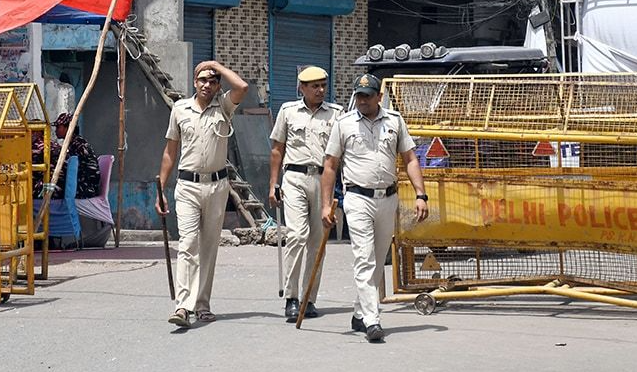
AIIMS New Delhi reportedly cancelled a mid-semester MBBS biochemistry exam after students hid a phone in a washroom and used AI tools like ChatGPT to find answers. Later, the institute held a re-exam, and there weren’t many public reports of punishment.
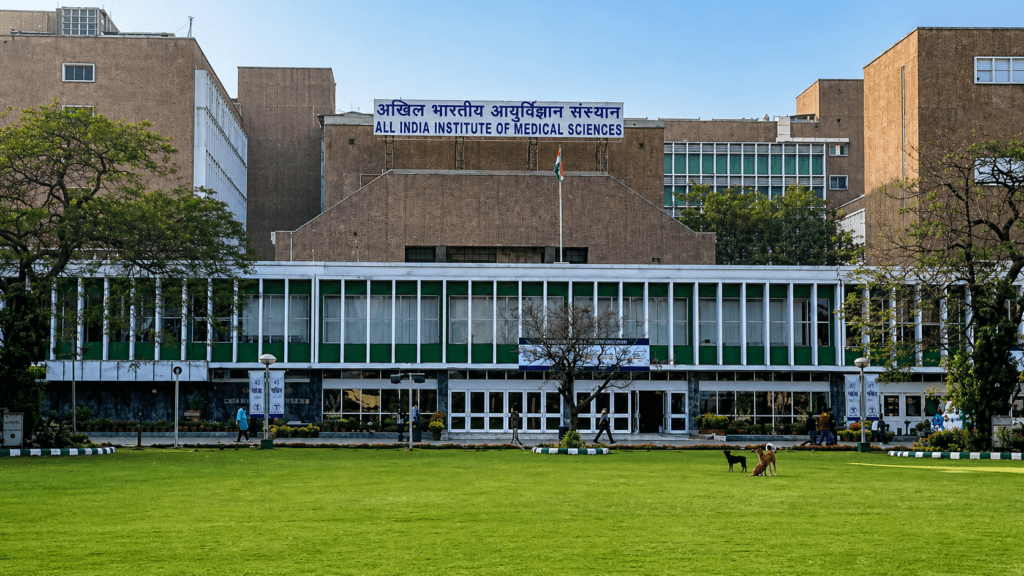
AIIMS New Delhi campus, where a mid-semester MBBS exam was said to have been cancelled because students were said to have used a hidden phone and AI tools to cheat.
AIIMS Delhi Cancels MBBS Exam
The All India Institute of Medical Sciences (AIIMS), New Delhi, has reportedly cancelled an MBBS mid-semester examination after a cheating method involving a hidden mobile phone in a washroom and AI tools came to light. The incident allegedly took place during a biochemistry paper, and the institute later decided to conduct a re-examination for the affected students.
In a major embarrassment for one of India’s most prestigious medical institutions, the case has raised fresh concerns about exam integrity, student discipline, and the growing misuse of artificial intelligence in academic settings.
What Happened
According to media reports, the alleged cheating was discovered during an MBBS biochemistry exam when faculty noticed several students repeatedly asking to use the restroom. The pattern reportedly made staff suspicious, and checks later revealed that a mobile phone had been hidden inside a toilet or washroom area, which students allegedly used to access answers through ChatGPT or similar AI tools. Medical Dialogues has covered the full story.
Reports suggest that around 50 to 60 students may have been involved in the method, though this figure has not been officially confirmed by AIIMS in the material available here. The institute reportedly cancelled the paper and arranged a re-exam, while public reports say no strict punitive action has been announced so far.
How The Cheating Allegedly Worked
The alleged method was simple but highly concerning. Students are said to have used the standard exam restriction loophole: since mobile phones and internet access are banned inside examination halls, a phone was hidden outside the hall, in or near a washroom, and used during repeated restroom visits.
Once the phone was found, students allegedly used it to search for answers and even access AI tools such as ChatGPT. In practical terms, this turned the washroom into an unauthorised “control room”, making the case more serious than a routine copying incident.
A reported statement from AIIMS media in charge, Dr Reema Dada, said that a student’s phone had been left in the toilet and later used by others and that once the matter surfaced, the administration was informed and the exam was rescheduled. That statement is important because it shows the institute acted quickly once the suspected breach became visible.
Reported Statements
AIIMS media in-charge Dr Reema Dada reportedly said, “A student’s mobile phone was left in the toilet. The same mobile phone was used by other students. She said that as soon as the matter came to light, the administration was informed and a decision was immediately made to reschedule the exam.”
A media report also said the institute cancelled the exam and decided to conduct a re-examination for the students involved, though no strict punitive action was publicly reported in the available coverage.
In another related AIIMS matter, a student at AIIMS Rishikesh was reportedly caught hiding a mobile phone inside a slipper during a security check, showing that mobile-based cheating attempts are becoming more inventive.
Background And Context
AIIMS Delhi is considered one of India’s most competitive and respected medical institutions, so any allegation of cheating naturally attracts national attention. Medical education is especially sensitive because students are training for careers where accuracy, ethics, and discipline matter directly to patient safety.
The larger issue is not only about one exam but also about how quickly technology can be misused when supervision weakens. AI tools like ChatGPT are useful for learning, but when used inside a closed-book exam, they become a shortcut that can damage the credibility of the result. Yeh issue kaafi important hai because it touches both academic fairness and the future trust people place in medical professionals.
Timeline
During the MBBS biochemistry paper: Students reportedly kept asking to use the washroom repeatedly.
After suspicious movement increased: Faculty checked the matter more closely.
Phone discovered: A mobile phone was reportedly found hidden in a washroom or toilet area.
AI use alleged: Students allegedly used the device to access ChatGPT and search for answers.
Exam cancelled: AIIMS reportedly cancelled the paper and scheduled a re-exam.
Why This Matters
This is important because cheating in a medical institution is not just an academic offence; it can signal a deeper weakness in professional ethics. If future doctors are seen bypassing rules during exams, people naturally begin asking how strongly those same values will hold later in clinical practice.
The incident also shows how AI is changing the cheating landscape across India. Earlier, students relied on handwritten notes or copied sheets, but now a hidden smartphone can connect to instant-answer tools in seconds. That means exam bodies, especially in India, may need tougher checks, stricter toilet-monitoring protocols, and better digital awareness.
For ordinary Indian families, especially those pushing children toward medical careers, this story feels unsettling. AIIMS is supposed to represent merit, hard work, and trust, so a cheating allegation there lands with much more force than in an ordinary college. Also Read: Shocking Delhi Court Remands IRS Officer’s Daughter Killer to 4-Day Police Custody
India Angle
In India, the pressure around professional exams is intense, and medical seats are among the most competitive in the country. That pressure can push some students toward desperate shortcuts, but this case shows the danger of crossing the line.
From a student-parent perspective, the reaction is simple: “Itna competition hai, phir bhi cheating?” The answer is that competition alone does not justify misconduct, and institutions like AIIMS have to protect merit carefully. Hindi-speaking readers, especially aspirants across Delhi, Uttar Pradesh, Bihar, Rajasthan, and beyond, will see this as a warning that exam systems must keep evolving.
The case also adds to a broader national debate about AI use in education. India is rapidly adopting ChatGPT-style tools in classrooms, coaching, and self-study, but the rules around their fair use are still catching up. That gap creates confusion, and sometimes misuse.
Analysis
From an SEO and news perspective, this story has all the ingredients that drive strong search interest: AI, cheating, AIIMS, MBBS, and Delhi. But beyond the headlines, the more serious point is that institutions cannot treat such cases as isolated embarrassment.
The alleged method suggests planning, coordination, and awareness of surveillance gaps. If multiple students were involved, then the problem is not just one rogue candidate but a possible group-level breach of exam discipline. That is why the re-exam decision makes sense, but it also raises a second question: should stronger penalties follow in order to deter future attempts?
In my view, AIIMS and similar institutions may now need a two-layer approach. First, improve physical exam controls, including more rigorous restroom protocols and surprise checks. Second, create clear AI-use policies so students understand where learning support ends and cheating begins. Yeh balance zaroori hai because AI itself is not the villain; misuse is.
What Next
The immediate next step is likely the re-examination for the affected students, as reported by the media. After that, the institute may review its exam security procedures and decide whether individual students should face discipline beyond the cancellation of the paper.
If formal internal findings confirm deliberate cheating, the case could become a reference point for how India’s top medical colleges handle AI-enabled misconduct. It may also push other institutions to review their own exam systems before similar incidents appear elsewhere.
A wider policy response is also possible. Medical universities, boards, and regulators may start drafting clearer anti-AI cheating rules, especially for high-stakes exams where fairness is essential. If that happens, this incident could end up shaping academic rules far beyond AIIMS.
Conclusion
The alleged cheating incident at AIIMS New Delhi is a sharp reminder that technology can be helpful in classrooms but damaging inside an exam hall. A hidden phone, repeated washroom visits, and AI-assisted answers have together created a story that goes far beyond one cancelled paper.
For AIIMS, the re-exam may solve the immediate problem, but the larger challenge is restoring confidence in the system. For students across India, the message is clear: short-term shortcuts can lead to long-term damage. In a field like medicine, where trust matters above almost everything else, this lesson is especially important.
Written By A. Jack