A deadly ammonia gas leak at a seafood processing factory in Tamil Nadu’s Tiruvallur district has claimed two lives and left more than 60 workers hospitalized, raising serious questions about industrial safety standards and worker protection in India.
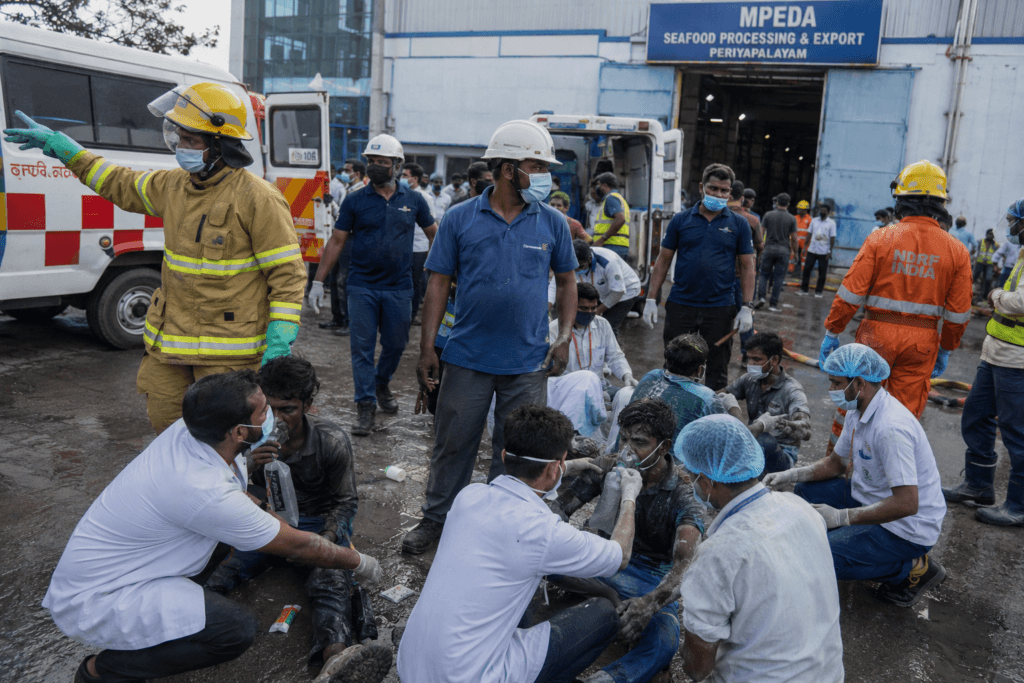
Emergency responders and medical teams assist workers following a major ammonia gas leak at a seafood export facility near Periyapalayam in Tamil Nadu.
Two workers died and over 60 others were hospitalized in an ammonia gas leak incident at St. Peter’s Paul Seafoods Exports Private Limited in Kannigaipair near Periyapalayam in Tiruvallur district in Tamil Nadu on Sunday. It happened on the factory’s weekly holiday, when some 120 migrant workers were staying on the company campus in accommodation provided by management.
The leak started in the seafood processing section of the plant and soon spread throughout the building, officials and police sources said. Workers reported severe breathing problems, dizziness and irritation. Some reportedly bled from the nose and mouth, a sign of exposure to a large dose of the toxic gas. Emergency services, medical staff and disaster response teams were swiftly mobilized to control the situation and rescue workers affected.
The incident has once again brought the industrial safety practices to the fore and raised concerns over the welfare of migrant workers working in hazardous industries across India.
How the Incident Happened
Initial investigations suggest that ammonia gas was released from a refrigeration or processing system used to preserve seafood products. Ammonia is used for industrial refrigeration because it is efficient and cost-effective. However, it can become very dangerous when released into the atmosphere, especially in closed environments.
The leak quickly spread through worker housing areas within the factory campus, officials said. Many were on the weekly holiday so several were exposed before they could evacuate.
Scenes of panic were described by emergency workers as workers fled their dormitories gasping for air. Soon dozens of patients with respiratory distress, eye irritation, nausea and other symptoms related to exposure to ammonia were admitted to nearby hospitals.
One of the workers died while being treated at a private hospital. Later reports confirmed a second death, raising the toll of the tragedy. Nine seriously ill workers were taken to Government Stanley Medical College Hospital in Chennai for specialized treatment.
The exact technical cause of the leak has not yet been disclosed by the authorities. But investigators are looking into whether faulty equipment, poor maintenance, poor monitoring systems or breaches in safety protocols contributed to the accident.
Official Response and Rescue Operations
When informed about the leakage, Periyapalayam police, fire and rescue services, and revenue and health department personnel rushed to the spot.
Rescuers evacuated workers in the area and established a safety perimeter around the facility. Medical teams conducted rapid assessments and rushed victims to nearby hospitals.
The district administration called in the National Disaster Response Force (NDRF) when it realized the seriousness of the incident. In response, a specialized Chemical, Biological, Radiological and Nuclear (CBRN) response unit of NDRF’s 4th Battalion based in Arakkonam was deployed.
The 30-strong team was equipped with the very latest in gas detection instrumentation, as well as protective clothing, breathing apparatus and special rescue equipment. Their mission was to measure the concentration of toxic gas, ensure the leak was contained, prevent further exposure and assist local authorities in rescue operations.
A case has been registered by the police and a detailed investigation has been started into the incident. The officials are expected to look into safety records, equipment maintenance logs and compliance with industrial safety norms.
Statements and Reactions
The authorities have not yet made an official statement but have confirmed that the incident is serious and said there will be a full investigation.
The main aim was to secure the area quickly and prevent any more workers being exposed to dangerous concentrations of gas, said one senior rescue official involved in the operation.
Experts in industrial safety warn that ammonia leaks can turn deadly within minutes if detection systems fail or emergency response measures are not taken in time.
“Industrial refrigeration systems need to be monitored at all times,” said a workplace safety consultant. A small mistake in maintenance can have big consequences. “Worker safety, especially in plants with employees on the factory floor, should never be compromised.”
Relatives of the affected workers have also demanded accountability and better safety measures to prevent such incidents in the future.
Background
Ammonia is a colorless gas that has a strong pungent odor and is widely used in refrigeration systems, fertilizer manufacturing, chemical processing and food industries .
Ammonia is a good refrigerant, but it can be dangerous if it escapes into the atmosphere. May irritate eyes, nose, throat, and lungs upon exposure. Serious respiratory distress, chemical burns, unconsciousness and death may occur from high concentrations.
There have been a number of industrial accidents involving toxic gases in India over the years. The most famous is the 1984 Bhopal Gas Tragedy, which brought to light the horrific impacts of poor industrial safety.
More recently, chemical leaks in other industrial zones have raised new alarms over workplace safety standards, emergency preparedness, and regulatory enforcement.
The Periyapalayam episode is another chapter in the story of industrial accountability and worker protection.
Timeline of Events
The ammonia leak reportedly began in the seafood processing unit Sunday morning. Workers living on site soon began to show symptoms of breathing problems and other toxic gas-related symptoms.
Emergency services were notified and rescue operations were initiated. The injured workers were rushed to nearby hospitals and the area was cordoned off by authorities.
As the scale of the incident became clear, the NDRF’s special CBRN team was flown from Arakkonam. Medical teams treated victims throughout the day, and critical patients were flown to Chennai for advanced treatment.
Authorities later confirmed two deaths and more than 60 hospitalizations. Police later registered a case and started an investigation into the circumstances of the leak.
Why This Matters
This tragedy matters because it lays bare the continuing vulnerabilities of India’s industrial infrastructure.
Factories dealing with dangerous chemicals have great responsibilities. Even minor safety failures can cause injuries, deaths, damage to the environment and economic disruption.
The incident also raises the question of the welfare of migrant workers. Many of the workers affected are from Assam, Odisha and Jharkhand. These workers often have to travel long distances in search of work and are heavily reliant on employers for accommodation and security.
Yeh issue bahut important hai kyunki laakhon industrial workers poora India ke factory compound mein rehte hain. Where safety systems fail, the workers are exposed not only in working hours but also during resting periods in residential accommodations.
The tragedy is a reminder that worker welfare is more than wages and jobs; it must include safe living and working conditions.
Why Indian Readers Should Pay Attention
For readers in India, this incident is more than a simple local accident in Tamil Nadu. It also mirrors broader challenges facing the country’s rapidly growing industrial and manufacturing sectors.
India is making its mark as a global manufacturing hub with initiatives like ‘Make in India.’ “As industries expand, the need to uphold world-class safety standards becomes more crucial.
Migrant workers work in many factories across the country and they play a significant role in the economic development. It is a legal obligation and a moral responsibility for them to be safe.
The Periyapalayam tragedy points to the need for better inspections, better worker training, improved leak detection systems and frequent safety audits.
If India wants to be the global manufacturing leader then industrial safety needs to be a priority and not an afterthought.
Analysis
This episode looks at an evergreen issue in India’s industrial sector from a journalistic and SEO point of view—the trade-off between growth and the safety of workers.
Authorities acted swiftly after the leak, but questions linger about prevention. While emergency response is critical, the goal should always be to prevent such incidents from occurring.
The problem is made even more sensitive by the fact that over 120 workers live on the factory premises. The safety planning, emergency evacuation procedures, and ongoing risk assessments for housing workers near industrial facilities need improvement.
For me, that tragedy should be a wake-up call to both regulators and private companies. Modern industries have sophisticated monitoring systems that can detect a leak early on. Now, the emphasis should be on how to implement and sustain these technologies consistently.
It will also be important for the investigation to be transparent. The public needs clear answers about what happened, how it happened and who will be held accountable if negligence is found to be at fault.This story also covered by The news india
What Next?
The authorities will carry out a detailed forensic and technical investigation of the seafood processing plant. Investigators are likely to look at refrigeration systems, maintenance logs, safety compliance documentation and emergency preparedness measures.
If violations are found, the company could face legal action, penalties, or regulatory sanctions.
The workers concerned will be given medical treatment, and authorities will monitor their recovery. Depending on the findings of investigations, compensation packages for victims and their families may also be announced.
At a higher level, state and central regulatory agencies could see this incident as an opportunity to review industrial safety practices at similar facilities.
Experts are also expected to call for stricter enforcement of safety standards on dangerous chemicals and worker housing.
Conclusion
The ammonia gas leak at St. Peter’s Paul Seafoods Exports Private Limited near Periyapalayam has been a harsh reminder of the dangers involved in industrial operations with hazardous substances. The fallout from safety failures that could have had devastating consequences included the deaths of two workers and the hospitalization of more than 60 others.
Emergency crews and medical responders flooded the area to contain the situation and save lives, but the big questions linger on what caused the leak and whether it could have been avoided.
As investigations go on, accountability, worker welfare and better safety enforcement must be the focus. Industrial growth and economic development are important, but they should never come at the expense of human lives.
The Tiruvallur tragedy is not a local incident but a national reminder that workplace safety must be at the center of India’s development journey.