Narendra Modi’s BJP wins a historic election in West Bengal, ending the Trinamool Congress’s long rule and changing the political landscape in India. The result will put more pressure on the opposition and give the party more national momentum.
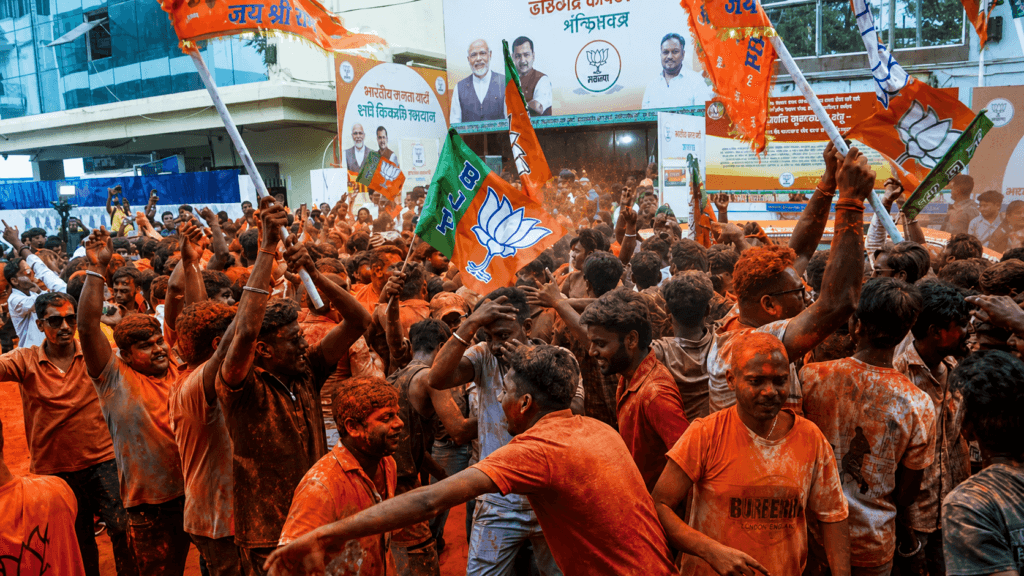
BJP supporters are happy because the party won its first assembly election in West Bengal, a state that has long been seen as a stronghold for the opposition.
Narendra Modi’s Bharatiya Janata Party (BJP) has won West Bengal for the first time in a major election breakthrough that is likely to have wide-reaching consequences for Indian politics. The victory marks the end of 15 years of Trinamool Congress (TMC) rule in one of the country’s most politically important states, with the BJP projected to secure a strong majority in the 294-member assembly.
The outcome is being seen as a major setback for opposition politics in India and a clear sign that the BJP’s influence continues to expand beyond its traditional strongholds. For many political observers, yeh result sirf ek state election nahi hai — it is a signal of how power is shifting across the country.
How the Win Happened
It didn’t happen overnight that the BJP won in West Bengal. Political analysts say that it was the result of a long-term plan that the party had been working on for years. They had been steadily growing their presence on the ground and making their campaign machinery better. The party also benefited from people being against the TMC because it was heavily involved in day-to-day governance and local politics. The Guardian has covered this story.
One important thing was that the BJP was able to change how people saw it as an outside force that was threatening Bengali culture. This time, the campaign was said to be more organized, run more smoothly, and better in line with the way things are in local politics. The party’s message, along with Prime Minister Narendra Modi’s popularity, seems to have helped build support among a wide range of voters.
Another major element in the background was the controversial revision of West Bengal’s electoral roll through a special intensive revision exercise, or SIR. More than 2.7 million voters were removed from the list under the stated aim of purging illegal entries, but critics argued that the process disproportionately affected Muslims and minorities, who generally do not support the BJP. The government denied the allegations, but the controversy added tension to an already highly charged campaign. For more latest news, read our India News section.
Modi Hails ‘People’s Power’ After Historic Bengal Win
Narendra Modi said in a statement that the West Bengal assembly elections “will be remembered forever” and that “people’s power has prevailed.” He also said that the BJP’s politics of good governance had won and bowed to the people of West Bengal.
Political analyst Rahul Verma described the result as the culmination of a “seven-year project” by the BJP leadership and its cadre. He said anti-incumbency against the TMC, dissatisfaction with its interference in everyday life, and the BJP’s strong organizational presence all played important roles in the outcome.
Verma also said the victory would not have happened without a consolidation of the Hindu vote. His assessment suggests that the BJP’s support base in Bengal has matured into a more disciplined electoral force, rather than depending only on campaign rhetoric.
West Bengal’s Political Shift and BJP’s Rise
For a long time, West Bengal has been one of India’s most important states in terms of politics. It has long been a place where people fight over ideas, politics, and strong local party structures. The TMC, led by Mamata Banerjee, ruled the state for 15 years and was a strong opponent of Modi and his religious nationalist agenda.
Banerjee was one of the most vocal critics of the BJP and had become a key figure in national opposition politics. So, her loss in such a big state is not just a local one; it also weakens a major voice against the BJP and makes it harder for the opposition to challenge Modi on a national level.
The BJP has also been winning more and more in other states, so the win in West Bengal is part of a larger trend. The party also won the election in Assam on the same day, giving it power in 20 of the 28 states. That kind of spread shows how much the BJP has grown since Modi became prime minister in 2014.
Key Timeline of BJP’s Historic West Bengal Win
2010s: Trinamool Congress builds a long period of rule in West Bengal under Mamata Banerjee.
2014 onward: BJP begins expanding nationally under Modi’s leadership.
2024: BJP suffers a setback in the general election and loses its outright parliamentary majority.
This election cycle: BJP wins West Bengal for the first time and is also re-elected in Assam.
Now: Analysts say the result restores momentum for the BJP and weakens the already fractured opposition further.
West Bengal Win Strengthens BJP’s National Grip
This is important because West Bengal is not just a small symbolic win; it is one of India’s biggest and most politically powerful states. A BJP government there changes the balance of power in eastern India and gives the party more power over how people think about politics in India as a whole.
It also matters for the opposition, which is already struggling with infighting, weak coordination, and repeated electoral setbacks. Every major defeat makes it harder for opposition parties to present themselves as a credible alternative to Modi’s leadership. Yeh point kaafi important hai because Indian politics often turns on momentum, not just individual state wins.
The outcome could also have an effect on future policy discussions, campaign plans, and building alliances across the country. If the BJP can win Bengal, it will send a strong message that even strongholds of the opposition are no longer safe.
What It Means for Indian Politics
This is a big political story for Indian readers because it affects the whole country, not just one state. The BJP’s success in West Bengal shows that its political messages have become better at adapting to the area’s unique culture and language.
At the same time, the voter roll revision issue will probably keep people talking in India. Concerns regarding inclusion, equity, and electoral transparency persist, particularly when a significant number of voters are purged from the register shortly before an election. This issue doesn’t just affect West Bengal; it affects trust in the system all over India, which is a big democracy.
BJP’s Win Signals a Major Political Shift in India
I read that this win makes the BJP look like the most powerful party in the country, but it doesn’t make things easier going forward. Unemployment, economic pressure, and outside shocks can still make voters angry in the years to come. The party may seem unbeatable right now, but Indian politics has shown time and time again that people’s moods can change quickly when things get worse.
The opposition, on the other hand, has a bigger problem than just losing one election. If it wants to get better, it needs a clearer message, stronger local leadership, and better coordination. If that doesn’t happen, each loss will make the next one more likely.
What Happens Next After BJP’s Bengal Win
The next step will be about running things, not partying. The BJP must now show that its victory in Bengal can lead to stable government, efficient administration, and keeping promises.
This win will probably help Modi’s position on the national level and give the BJP more confidence going into future elections. It could also put more pressure on opposition leaders to get back together, rethink their strategy, and make stronger regional alliances.
There will probably also be continued scrutiny of the voter roll revision process and claims that it influenced the election environment. If those concerns grow, they may become part of a wider debate about electoral fairness in India.
Conclusion
The BJP’s first win in West Bengal is a big deal that changes the way people talk about politics in India. It ends a long period of TMC rule, makes Modi’s national rule stronger, and makes the opposition’s crisis even worse.
This is more than just the results of an election; it’s also a sign of how Indian politics is changing. The BJP has grown, but the real test will be whether it can turn this historic win into long-term public trust.