
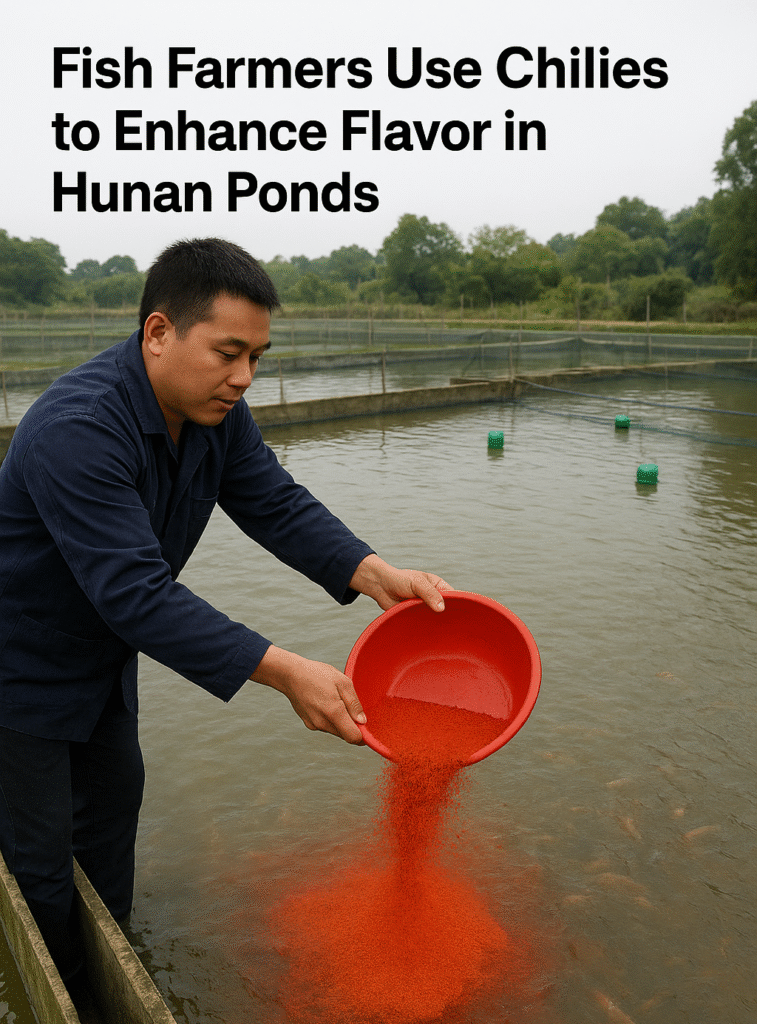
In a surprising turn of aquaculture practices, fish farmers in China’s Hunan province have started adding green chilies to fish ponds—an experiment that is not only unusual but also drawing worldwide curiosity. The fishermen claim that feeding green chilies to fish improves their flavor, making them more appealing to consumers. This unconventional chili-fed fish feeding method has sparked debate among scientists, food experts, and environmental regulators.
According to local reports, one large-scale fish farmer in Hunan feeds nearly 5,000 kilograms of fresh green chilies to his fish stock every single day. The practice began as a small experimental idea but has now spread across various regions, creating a stir in the aquaculture community. Fishermen believe that the spicy component of chili, known as capsaicin, makes the fish tastier and more marketable.
Why Are Chilies Being Added?
The reasoning behind this practice lies in capsaicin—an active compound that gives chilies their heat. Farmers claim that it stimulates intestinal activity in fish, improving digestion and nutrient absorption. “Capsaicin enhances metabolism in fish, allowing them to grow faster while maintaining better texture,” said one Hunan pond owner. Supporters argue that the process leads to a greater yield with improved taste and quality.
Additionally, some fish farmers find that the consumption of chilies reduces disease outbreaks in ponds. It’s believed that capsaicin may have antioxidant and antimicrobial properties, which can lower bacterial infections in aquatic environments. Although this hasn’t been fully verified by scientific studies yet, the practical results reported by some farmers are encouraging.
The Debate Over Nutrition vs. Taste
The shift from traditional fish feed to chili-based supplementation marks a clear divergence from standard aquaculture nutrition protocols. Fisheries experts around the world express divided opinions. While the idea of improved taste might appeal to consumers, nutritionists warn that excessive use of non-traditional feed could alter the nutrient composition of fish meat.
“Feeding fish spicy compounds changes their natural feeding behavior,” explained aquaculture scientist Dr. Tang Weiming from Hunan Agricultural University. “We need to study whether capsaicin affects liver function or other metabolic processes in fish before promoting this as a sustainable practice.”
Despite such caution, many pond owners remain enthusiastic. For them, the market demand for flavorful fish outweighs concerns about nutritional balance. Consumer preference in some regions of China increasingly favors fish with richer, spiced undertones, and farmers are quick to adapt.
Market Appeal and Economic Impact
The economic advantage of chili-fed fish has already become evident. Some local markets report that fish raised on chili-based diets sell at higher prices due to their improved flavor profile. Restaurants in Hunan and neighboring provinces are marketing these fish as premium products, describing them as “naturally seasoned” or “spice-enhanced.”
The global curiosity surrounding this trend has fueled media attention and spurred discussions about food innovation versus tradition. Other countries with strong aquaculture sectors, such as Vietnam and Thailand, are reportedly observing the practice closely to evaluate potential applications.
Fish farmers argue that the cost of adding green chilies to feed is offset by faster growth rates and higher selling prices. At present, one kilogram of chili-fed fish can fetch 20–25 percent more in the local market compared to conventionally raised fish.
Science Behind the Practice
Capsaicin affects cold-blooded animals differently than mammals. In fish, small doses may act as a metabolic stimulant, helping them digest fats and proteins more effectively. Researchers from the Chinese Academy of Fishery Sciences have begun preliminary studies to measure whether such feeding patterns influence the biochemical composition of fish tissue.
Interestingly, some early results indicate that the fish show adaptive tolerance to spicy feed over time, meaning they no longer react negatively after prolonged exposure. However, questions remain about whether capsaicin residue remains in the edible portion of the fish—and if that poses any health risks to consumers.
Ethical and Environmental Concerns
While the idea of feeding fish spicy food may sound harmless, environmental groups have expressed concern about sustainability and potential ecosystem impact. The mass dumping of chili waste into water bodies could alter pond pH levels or introduce unwanted organic matter, disrupting natural aquatic balance.
Local governments in Hunan have started drafting basic guidelines for chili-fed aquaculture, emphasizing regulated feeding amounts and waste management. If managed scientifically, authorities believe the trend could evolve into an eco-friendly and economically beneficial innovation. But for now, the practice remains under observation and debate.
The Future of Spicy Fish Farming
Whether this method becomes a long-term aquaculture revolution or fades as a temporary experiment will depend largely on ongoing research. Analysts predict that if scientifically validated, it could open new opportunities for functional aquaculture—where natural additives are used to enhance both growth performance and taste. Also, according to a report by hindustan times here.
From an economic perspective, chili-fed fish represent an intersection of culinary creativity and scientific exploration. As global food producers search for sustainable solutions to meet rising seafood demand, unconventional methods like this one might play a surprising role in shaping the future of aquaculture.
For more updates on global trends and international stories, visit our World News section.