
Russian attacks Ukraine/sbkinews.in
Russian forces have launched a fierce missile and drone attack across multiple locations in Ukraine overnight, which has tragically left at least 25 people dead. The deadliest attack was in the western city of Ternopil, where residential buildings were struck, killing dozens and shattering entire families. This brutal wave of coordinated attacks is a grim escalation in the ongoing conflict and winter hardships facing millions of Ukrainians.
Relentless Russian Assault on Civilian Areas
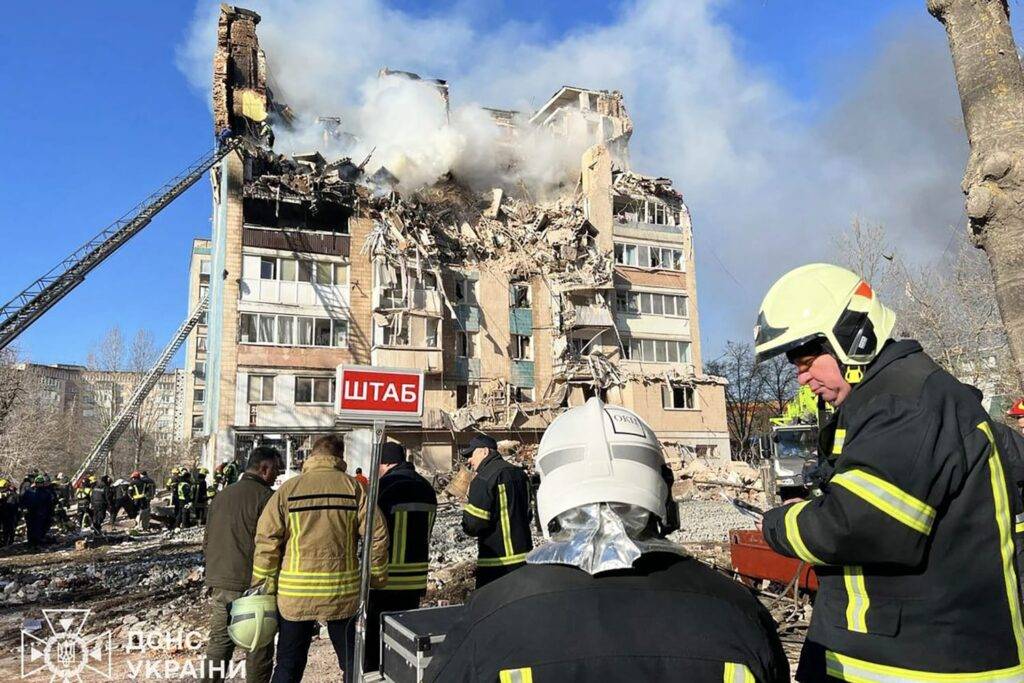
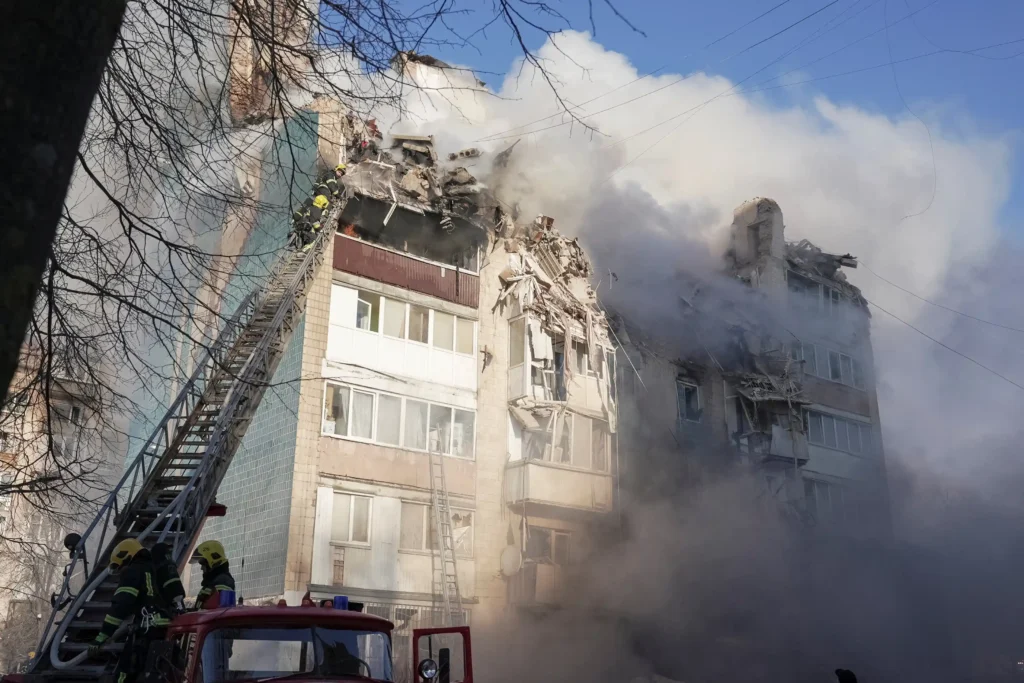
Russian forces launched almost 48 missiles and more than 470 drones at a string of cities, including key western areas of Ukraine. Much of this was picked up by Ukrainian air defenses, but some got through and hit civilian infrastructure, causing devastating consequences. The brunt of the assault fell on Ternopil, where dozens of apartment buildings were heavily damaged or destroyed.
Rescue teams worked all night pulling survivors from rubble and ferrying the injured to hospitals. At least 25 people, including children, were killed and more than 70 injured, authorities said. The attack underscores the deliberate nature of the assault on ordinary citizens, leaving survivors and the international community horrified and in anguish.
Strategic and Symbolic Targets Hit
Beyond residential areas, the strikes damaged energy facilities, industrial complexes, and communication infrastructure, intensifying Ukraine’s ongoing energy crisis as winter approaches. The loss of power and heating poses additional challenges for millions of Ukrainians already coping with displacement and war-related disruptions.
Ukraine’s government strongly condemned the attacks as a violation of international humanitarian laws, accusing Russia of deliberately targeting civilians to break morale and destabilize the country. Officials have called for urgent international support to protect Ukraine’s population and critical infrastructure.
Russian Justification and Global Reactions
The Russian Defense Ministry claimed the strikes targeted military-industrial sites and energy infrastructure in retaliation for Ukrainian attacks on Russian soil. However, independent verification remains limited due to the chaotic combat environment. International observers and human rights organizations decried the indiscriminate nature of the missile campaign.
Global leaders condemned the loss of civilian life and called for renewed diplomatic efforts to de-escalate hostilities. The United Nations demanded immediate humanitarian access to the affected areas, and emphasised the protection of non-combatants under international law. As the conflict enters another violent phase, countries in the region are bracing for possible spillover effects.
Impact on Civilians and Humanitarian Crisis
The strikes add to Ukraine’s dire humanitarian crisis. Thousands of families risk homelessness, power outages and limited access to medical care. The cold winter months create life-threatening dangers, especially for the most vulnerable: children, the elderly and displaced persons.
Emergency responders and volunteer networks are mobilizing resources for search and rescue efforts, medical treatment, and relief distribution. International aid agencies are ramping up efforts but damaged infrastructure and security threats make it difficult to provide assistance quickly. Meanwhile, ordinary people continue to pay the highest price in the larger geopolitical conflict.
Evolving Warfare Tactics and National Resilience
Russia’s synchronized missile and drone attacks are a sign of its evolving approach to war, meant to overwhelm Ukraine’s air defenses and inflict as much damage as possible. Ukrainian forces have enhanced their interception systems but continue to grapple with large-volume, multiple-direction attacks.
But the Ukrainian government and military are undeterred by the destruction. The President emphasized national resilience and the indomitable spirit of the Ukrainian people, vowing to defend sovereignty and work for peace. The recent attacks have prompted renewed calls at home and abroad for strong action to end the fighting.
Broader Conflict Context
The increased strikes come at a sensitive time as diplomatic efforts continue to restart peace talks. The U.S. and European allies continue to back Ukraine with military aid and sanctions on Russia as negotiations try to de-escalate the war that started with Russia’s full-scale invasion in 2022.
The war continues to exact a staggering toll on human life and economic damage, with civilian casualties rising and destruction of infrastructure complicating Ukraine’s future development. Beyond the battlefield, the conflict is a major factor in global energy crises and geopolitical realignments.
Looking Ahead: Security and Reconstruction Challenges
With winter upon us, the immediate priority is to shield civilians from further attacks and mitigate humanitarian consequences. Rebuilding energy grids, restoring services, rebuilding devastated communities will require significant national and international resources and cooperation.
Security analysts warn Russia’s hybrid missile-drone tactics could continue to probe Ukraine’s defenses. In the short term Ukrainian forces are focused on maintaining effective air defenses and improving early warning systems.
Meanwhile, the world community observes and waits for decisive breakthroughs towards lasting peace. These efforts aim at humanitarian aid and reconstruction, accountability for violations and protection of civilians. Al Jazeera English
The article is a thorough, authoritative summary of the recent deadly Russian strikes across Ukraine, with an emphasis on humanitarian concerns and evolving dynamics of warfare and diplomatic contexts in accordance with EEAT principles for SBKINEWS.