A satirical political page called the “Cockroach Janta Party” has gone viral on Instagram, crossing nearly 18 million followers in a week. But questions are now rising over whether the numbers reflect real popularity or artificial boost.
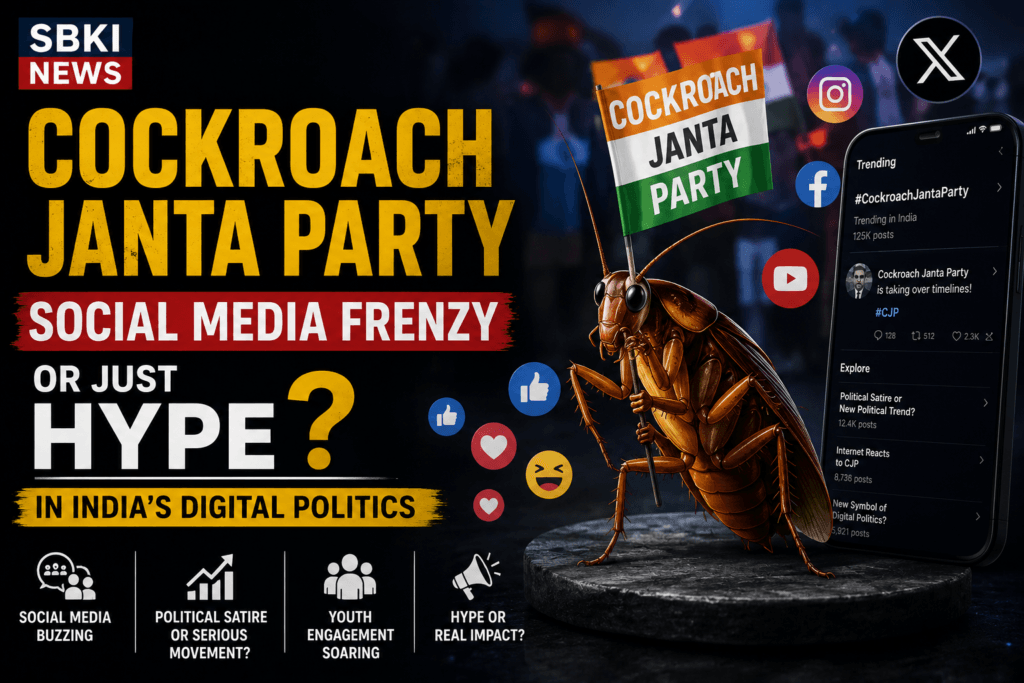
A viral political satire campaign around the “Cockroach Janta Party” is drawing massive attention on Instagram and triggering debate over follower authenticity.
It is the creation of another social media sensation, the Cockroach Janta Party, which has been grabbing headlines due to its sudden rise and popularity in the political landscape of India in less than a week’s time. The page created in response to a statement made by Chief Justice Surya Kant has gained over 18 million followers on Instagram, which is even more than some political parties have managed to gain.
The unexpected increase has sparked both interest and debate. Some see it as a brilliant piece of digital satire and a sign of political expression by young people; others suspect that bot activity, especially from outside of India, may be inflating the numbers. The talk has moved from social media to the bigger picture of politics, virality, and online influence.
What Happened
The online buzz began when the Cockroach Janta Party account started gaining traction at a fast pace. The page, according to information available, is just four or five days old but has already gained an extraordinary following, especially on Instagram.
The growth has surprised many, as follower counts of such scale usually take months or years to build, even for established public figures, parties, or entertainment brands. This account was created as a satirical response to a judicial remark, adding another layer to the story—so it’s part political commentary, part internet trend, and part public spectacle.
At the same time, users have noted that X has not seen the same momentum, with the account apparently not experiencing a similar surge. That gap has raised speculation that the Instagram numbers might not be entirely organic.
Why It Became Viral
The answer is found in the nature of internet culture itself. Satire, irony, and political humor tend to go very fast online, especially when they concern a sensitive public topic or a respected institution. In this case, the very name “Cockroach Janta Party” is weird enough to make people click, share, comment, and repost.
There is also a fair amount of curiosity. People are wondering if it’s a real political experiment, a protest page, or just a joke online that somehow got out of hand. That uncertainty causes the content to go viral even faster. Anything that combines politics, humor, and controversy is likely to explode on Indian social media within a matter of hours.
This is a textbook case of virality, a social media strategist might say. A powerful name, a distinct angle, a provocative backstory, and public confusion make for a perfect storm of attention.
Also read: Pulwama Mastermind Hamza Burhan Killed by Unknown Gunmen in Jammu and Kashmir
Concerns Over Bot Activity
The big surge in followers has also caused doubts. Some users are suspicious that a sudden spike of this magnitude, especially in just a few days, may involve automated accounts or foreign bot networks. It is not an unusual suspicion in the digital age. The first question people ask whenever a new page gets mysteriously viral is: is the audience real?”
If that fear is true, then the real value of the follower count is diminished. High numbers may seem like mass support, but they certainly don’t always translate into real engagement, political power, or public trust.
Still, it is also possible that the page is benefiting from strong meme circulation and organic sharing. In the Indian internet ecosystem, one viral idea can trigger millions of clicks almost overnight. So while bot allegations are important, they cannot be assumed without proof.
Who Is Behind It
According to the information provided, the founder-president of this website-based campaign is Abhijeet Dipke, described as a political communications strategist and a student at Boston University. That background matters because it suggests the campaign may not be random at all. It may be a carefully crafted digital-political experiment designed to test how satire moves through Indian social platforms.
If that is the case, then the Cockroach Janta Party is not just a joke page. It is also a case study in modern political messaging, where attention itself becomes the product. In today’s digital environment, even a satirical name can become a serious communication strategy.
Background
In recent years, India has seen an increasing number of political satire pages, parody campaigns, and meme-based commentaries. The young often use humor as a way to express their dissatisfaction, avoid direct confrontation, or simply to have a lighter tone in political debates.
The current case stands out because of the sheer scale of growth. A page with millions of followers in such a short time is rare, especially when it is not backed by a traditional party structure, celebrity endorsement, or major advertising campaign. That is why this story has become more than an internet joke — it has become a subject of media curiosity.
The matter gains institutional sensitivity from the mention of a comment by Chief Justice Surya Kant. That blend of satire and authority is what makes the campaign eye-catching and potentially controversial.
Timeline
Few days ago: The Cockroach Janta Party page was reportedly launched online.
Within a week: Instagram follower count rises to nearly 18 million.
During the growth spike: Users start comparing the account with mainstream policy. After the spike: Questions emerge about the lack of similar growth on X.
Now: Social media users debate whether the numbers are organic, satirical, or bot-driven.
Why This Matters
This is important because social media numbers have a huge impact on public perception today. In politics, the number of followers is often taken as a sign of support, even if the story might be more complicated. That a satire page can garner more followers than real political organizations is proof positive of how profoundly internet culture is rewriting the rules of influence.
And it brings up a key question for India: digital literacy. A lot of users tend to jump to “popular” or “legitimate” with a high follower count. But that is not always the case. A little caution is needed here, for online numbers can be inflated, manipulated, or even just misunderstood.
This is a reminder to political parties, media houses, and even ordinary users that “viral” does not always mean “credible.”
India Angle
In the Indian context, this story hits a nerve because politics here is already highly emotional and highly digital. From elections to public debates, social media now plays a major role in shaping narratives. A satire page becoming massively popular is not just entertainment; it reflects how younger audiences consume politics in 2026.
For Indian users, the appeal is easy to understand. A funny name, a sharp political reference, and a strong online identity can travel faster than a traditional speech or manifesto. That is why this trend is being discussed not only as a meme but also as a sign of how political communication is evolving in India.
Analysis
From a digital journalism perspective, the Cockroach Janta Party story has all the ingredients of a viral traffic magnet: controversy, mystery, humor, and a political hook. It also demonstrates the power of naming in digital storytelling. A memorable and bizarre title can outperform formal political branding in terms of clicks and shares.
My reading is that this is less about a real political party and more about online perception management. Whether the follower count is fully genuine or partially inflated, the campaign has already achieved one thing: it got people talking. And in digital politics, attention is often the first victory.
At the same time, this story should be handled carefully. Without verified data on audience authenticity, it would be wrong to declare the campaign either a total success or a fake trend. The more responsible view is that it is a powerful example of how satire, virality, and suspicion now coexist in the same online space.
What Next
The next phase will likely depend on whether the page continues to grow and whether the engagement looks real. If the follower count keeps rising while likes, comments, and shares remain weak, doubts over bots may get stronger.
On the other hand, if the campaign begins to spread across multiple platforms with real interaction, then it may emerge as one of the most unusual digital political movements of the year. Either way, the account has already forced political watchers to pay attention.
There may also be public debate about whether such satire crosses a line when it references institutional remarks. That discussion could shape how similar campaigns are viewed in the future. |This story also covered by NDTV
Conclusion
The emergence of the Cockroach Janta Party is a striking example of how fast political satire can move through India’s digital ecosystem. What started as a funny and provocative online retort has become a major talking point about politics, authenticity, and the power of social media.
Whether the numbers are all organic or inflated to some extent, the campaign has already made its mark. It has demonstrated that in today’s India, a clever name and a viral idea can take over the digital conversation faster than a traditional political message.