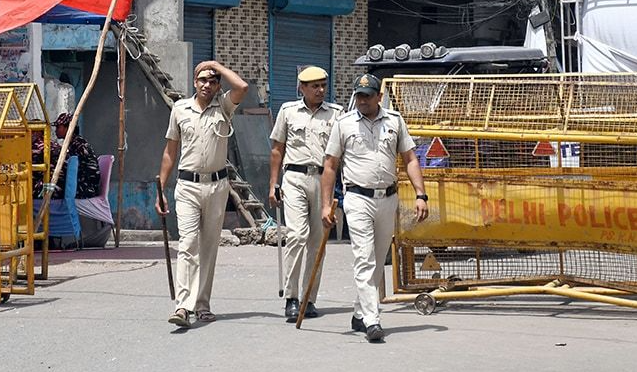
Additional Sessions Judge Praveen Singh convicted five out of the 11 accused in the case registered on a complaint by Ankit Sharma’s father. The court convicted Hussain of murder, rioting, assault and inciting hatred.
This picture is for illustration only.
A Delhi court on Tuesday convicted former Aam Aadmi Party councillor Tahir Hussain and four others in the murder case of Intelligence Bureau officer Ankit Sharma, who was killed during the 2020 northeast Delhi riots. The verdict was delivered by Additional Sessions Judge Praveen Singh, who was hearing the case against 11 accused persons in connection with the fatal attack.
The court found Hussain guilty under charges including promoting enmity, rioting, assault, criminal force and murder. The case stemmed from an FIR registered at Dayalpur police station on the complaint of Ankit Sharma’s father, Ravinder Kumar. The conviction is significant because the murder of a central government intelligence officer became one of the most widely discussed and emotionally charged cases from the violence that tore through parts of northeast Delhi in February 2020. Yeh verdict kaafi important hai because it closes one chapter in a case that has remained at the centre of public memory and legal scrutiny for years.
What the Court Found
The court’s decision means five of the 11 accused have now been found guilty in this case, with Tahir Hussain being the most prominent name among them. Hussain was charged with serious offences, including murder, and the court has accepted the prosecution’s case against him and the other convicted individuals. While the sentencing phase is a separate legal step, the conviction itself is already a major legal development. This story was also covered by NewsOnAir.
What makes this case especially important is the combination of charges. Promoting enmity and rioting point to the communal and violent context of the event, while assault, criminal force and murder point to the direct criminal act itself. In criminal law, such layered charges reflect not just one violent incident but a broader breakdown of public order.
The case was not a random standalone murder. It was embedded in the larger northeast Delhi riots, where neighbourhood violence, mob action and communal tension all escalated quickly. The court’s verdict indicates that, at least for this case, the evidence presented was strong enough to convince the judge that Hussain and others were culpable.
Background and Context
The northeast Delhi riots broke out in February 2020 and left 53 people dead, several others injured and property worth crores damaged. It was one of the darkest episodes of urban violence in recent Delhi history. Many families were left grieving, while the legal system was forced to deal with a large number of FIRs, accused persons and complex factual questions across multiple cases.
Ankit Sharma, an Intelligence Bureau officer, became one of the most prominent victims of the riots. His death drew particular attention because of his official position and because the circumstances of the case generated intense public debate. The complaint filed by his father, Ravinder Kumar, became the basis for the FIR at Dayalpur police station, which eventually led to the trial now ending in conviction.
Tahir Hussain’s political standing also became part of the public conversation. He was suspended by the Aam Aadmi Party after his name emerged in the case. That suspension did not resolve the criminal case, of course, but it showed how politically sensitive the matter became. In cases involving public representatives, the impact is often felt in both the courtroom and the public arena.
The Delhi court had framed charges against Hussain and 10 others in March 2023. That step had already signalled that the case had passed a significant legal threshold. Tuesday’s conviction now moves the matter from the trial phase into the consequences stage, which will likely include sentencing and potential appeals.
Timeline
February 2020: Northeast Delhi riots break out, leaving 53 dead and widespread damage.
During the riots: Intelligence Bureau officer Ankit Sharma is killed.
After the incident: An FIR is registered at Dayalpur police station on the complaint of Ankit’s father, Ravinder Kumar.
March 2023: A Delhi court frames charges against Tahir Hussain and 10 others.
Tuesday, 2026: Additional Sessions Judge Praveen Singh convicts Hussain and four others.
Next phase: Sentencing and further legal proceedings are expected.
Also Read: Sonam Wangchuk’s Health Worsens During Hunger Strike
Why This Matters
This matters because the case is one of the most high-profile convictions connected to the 2020 Delhi riots. A murder case involving a central intelligence officer naturally carries enormous public interest and legal significance. Yeh issue kaafi important hai because it speaks to accountability in moments of mass violence, and people want to know whether justice is eventually delivered after years of waiting.
It also matters because riot-related cases are often legally and emotionally complex. They involve multiple accused, conflicting narratives, witness accounts, forensic material and intense public scrutiny. When a court convicts in such a case, it can shape how the public views the broader accountability process around the riots.
There is also a larger civic lesson here. In episodes of communal violence, the immediate human tragedy is terrible enough. But the legal aftermath can determine whether the state’s response is seen as effective or delayed. In that sense, the conviction carries significance beyond just one man and one case.
India Angle
For Indian readers, this verdict is relevant because it sits at the intersection of law, politics and communal harmony. In Hinglish, seedhi baat yeh hai: jab riots jaise bade case mein court conviction aati hai, toh log dekhte hain ki system kitna serious hai aur justice kitne time mein milti hai. The case has been followed closely across the country because it touches on questions of accountability, public order and political responsibility.
The case also resonates because riots are not just news events; they are deeply human tragedies that affect neighbourhoods, families and trust in institutions. The Delhi violence of 2020 remains a painful memory for many citizens, and this conviction will likely reopen discussion about how such unrest is investigated and prosecuted.
For the legal system, it is another reminder that long trials are part of the process in major criminal cases, especially those linked to mass violence. While delays are frustrating, the eventual verdict can still carry weight if it is backed by a detailed judicial record. That is important for public confidence in India’s courts.
Analysis
My opinion is that the conviction will be read in two ways. First, as a legal closure point for a long-running and emotionally charged case. Second, as a signal that courts are willing to reach hard conclusions in riot-related prosecutions when the evidence supports it. In a case like this, the public is not only watching the verdict but also watching whether the legal process can deliver a clear and coherent outcome after years of delay.
I also think the broader significance lies in the fact that this was not an isolated crime case. It was part of a larger outbreak of communal violence, which means the verdict may shape how future riot cases are argued and remembered. The law has to separate individual responsibility from the chaos of mass unrest, and that is never easy. This conviction suggests the court found that line clear enough to punish specific accused persons.
At the same time, it is important to remember that conviction is one stage of the process. Sentencing, appeals and any further legal action could still follow. So while the verdict is a major milestone, the case is not necessarily over in a broader legal sense.
What Next
The next step will likely be the sentencing phase, where the court will decide the punishment for the convicted accused. That stage will matter a great deal because murder convictions can carry severe penalties, depending on the legal findings and applicable provisions. The convicted individuals may also explore legal remedies or appeals after the sentencing order.
There may also be renewed public discussion around the other cases linked to the 2020 riots. High-profile convictions tend to bring older legal questions back into focus, especially when the violence involved multiple FIRs and many accused. For the families of victims, this verdict may bring some measure of closure, even if the legal journey continues.
Politically, the case could continue to attract attention because Tahir Hussain was once an elected representative. His conviction will likely be discussed in the context of accountability in public office, especially when a person accused of serious offences is connected to political life. That conversation is likely to continue well beyond the courtroom.
Conclusion
The conviction of Tahir Hussain and four others in the Ankit Sharma murder case is a major development in the long-running legal aftermath of the 2020 northeast Delhi riots. The court’s decision reinforces the seriousness of the charges and brings the case to a crucial stage after years of investigation and trial. For the victim’s family, the verdict is a significant step in the pursuit of justice. For the public, it is another reminder of how devastating the riots were and how important it is for the legal system to respond decisively when mass violence turns deadly.
Written By A. Jack