The Delhi government is planning to gradually shift women’s free bus travel from pink paper tickets to the Pink Saheli Smart Card from July. The move aims to digitise journeys on DTC and Cluster buses, reduce misuse and improve subsidy tracking under the Centre’s “One Nation, One Card” framework.
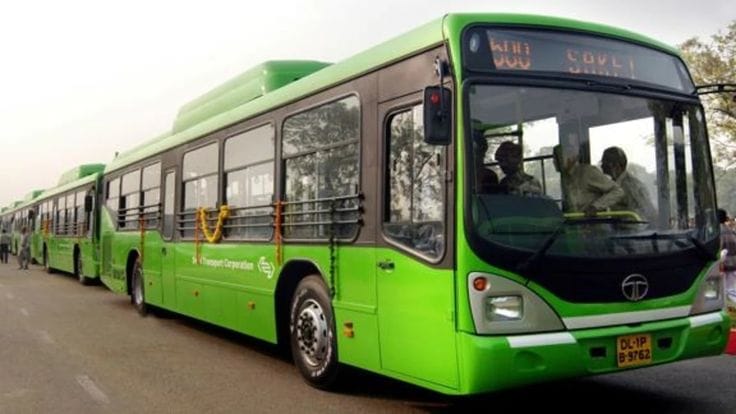
Women passengers in Delhi may soon need to tap the Pink Saheli Smart Card to avail free travel on DTC and Cluster buses from July.
Delhi’s free bus travel scheme for women is heading toward a major digital shift, and the change could affect lakhs of daily commuters across the capital. Under the proposed plan, women using DTC and Cluster buses may soon have to tap the Pink Saheli Smart Card instead of collecting the familiar pink paper ticket, with the rollout expected to begin gradually in July.
This is not just a small administrative update. It is part of a larger push to bring Delhi’s public transport subsidy system into a more transparent, data-driven format. For a city where over 10 lakh women travel daily on DTC and Cluster buses, even a small change in the boarding process can have a big operational impact.
What Is Changing
The proposed system will require women passengers who avail themselves of free travel to carry and tap the smart card while boarding buses so that every journey can be digitally recorded. At present, many women still rely on the old pink paper ticket, but the government now wants to phase that out over time. NDTV has covered the full story.
According to transport department data, nearly six lakh women have already registered for the Pink Saheli Smart Card since enrollments started in March through 58 centers across Delhi. However, only around 5 to 6 per cent of cardholders are currently using the tap system during bus journeys, which has slowed the shift to a fully digital process.
Officials believe the continued availability of paper tickets is one of the main reasons commuters have not moved quickly to the card-based system. In practical terms, when two systems run side by side, most users choose the easier, familiar one. So the government is now trying to make the digital option the standard route.
Why The Government Wants This
The Delhi government says the digital move is meant to reduce misuse, improve transparency in subsidy disbursal, and generate real-time ridership data for transport planning. That matters because free travel schemes are not only welfare measures; they are also large public spending programs that need tracking.
The smart card is also designed to work within the broader National Common Mobility Card, or NCMC, ecosystem under the Centre’s “One Nation, One Card” initiative. In simple language, that means the card could eventually be useful across more transport services, not just Delhi buses. This kind of integration is the direction public transport systems are moving in across India.
Officials are also cautious about timing. The government has avoided strict implementation during May and June because these are peak summer months and commuter loads are heavy. That is a sensible move because forcing a sudden change in the middle of intense summer travel could create confusion, long queues, and frustration at boarding points.
Who Can Get The Card
The Pink Saheli Smart Card is limited to women residents of Delhi. Applicants must submit a Delhi Aadhaar card and an Aadhaar-linked mobile number during registration. Any female aged 12 years and above is eligible to apply.
That age rule is significant because it extends the benefit beyond adults and includes school-going and college-going girls who use public buses daily. For many families, that makes the scheme especially useful. Delhi’s bus network is one of the most important low-cost transport systems in the city, and women passengers form a major share of ridership.
Current Usage Gap
The biggest issue right now is not registration but usage. Even though nearly six lakh women have enrolled, only a small share is actually tapping the card on buses. This suggests a gap between policy rollout and actual adoption.
That gap could be happening for several reasons. Some passengers may still find paper tickets more convenient. Others may not fully understand how the card works. There is also the possibility that conductors, passengers, or even route habits are slowing down adoption. Officials have said DTC plans a random survey among women passengers to understand why so many still use the old ticket system.
The survey will look at factors like card availability, travel by interstate passengers, and whether conductors are actively encouraging women to tap the card during journeys. That is important because a policy only works when the final user experience is simple and consistent.
Background And Context
The Pink Saheli Smart Card was launched by President Droupadi Murmu on March 2 this year as part of the Delhi government’s women welfare measures. Since then, it has been positioned as a modern replacement for the paper-ticket model that has been in use for years.
Delhi currently operates around 5,500 buses under DTC and Cluster services, and the free travel scheme is one of the city’s most heavily used public transportation initiatives. The Delhi government has also allocated Rs 450 crore in the 2026-27 Budget for the continuation of the women’s free travel scheme, including technological integration under the NCMC platform.
This shows that the state is not rolling back the scheme. Instead, it is trying to modernize it. That distinction matters because public debates often confuse digitization with restriction. In this case, the objective appears to be better system control, not removal of benefit.
Timeline
March 2, 2026: The Pink Saheli Smart Card is launched by President Droupadi Murmu.
March 2026 onward: Enrollment begins across 58 centers in Delhi.
By early May 2026: Nearly six lakh women register for the card, but only 5 to 6 per cent use it while travelling.
May-June 2026: The government delays strict enforcement because of summer travel pressure.
From July 2026: Gradual digitization of the free travel scheme is expected to begin.
This timeline shows a planned transition rather than a sudden policy shock.
Also Read: Woman Dies After Falling From 8th Floor of Residential Building
Why This Matters
This matters because the free bus scheme is not a small welfare program; it is a major daily-use public service for women in Delhi. Any change in how access is granted will affect a huge number of riders, from working women to students to domestic workers.
It also matters because digitizing subsidy schemes helps governments track public spending better. When every trip is recorded, it becomes easier to estimate real usage, calculate costs, and prevent leakage. Yeh issue kaafi important hai because transparency in welfare delivery is now a basic expectation, especially in large cities.
There is also a broader social point. When women feel safe and supported in using public transport, their mobility, work opportunities, and daily routines improve. A well-managed digital system can make that support stronger, but only if the transition is smooth and user-friendly.
Delhi Angle
For Delhi residents, the change has direct everyday relevance. The capital has one of the most active bus networks in the country, and many women depend on it to travel to offices, markets, coaching centers, and hospitals. A card-based tap system may sound simple, but for regular commuters it changes how they board, how fast they move through the bus, and how the journey is recorded.
There is also a local governance angle. Delhi often becomes a test case for public policy experiments because of its large population and visible civic systems. If this digital model works well, it could become a reference point for other cities. If it causes confusion, it may face public pushback. In that sense, Delhi is once again at the center of a practical policy trial.
Analysis
My view is that the government is trying to solve a classic public-service problem: a successful welfare scheme with weak tracking. The paper ticket system is easy, but it does not give good real-time data. The smart card system, by contrast, can help the government measure actual ridership and plan better budgets. Still, the challenge is adoption. If people are not convinced or not properly guided, the scheme may look good on paper but struggle in practice.
What Next
The next step is likely awareness campaigns inside buses, depots, and terminals over the coming weeks. These campaigns will aim to teach women passengers how to use the card and why the paper ticket system is being phased out.
If the government proceeds as planned, July could mark the start of a gradual but meaningful shift in Delhi’s women’s free bus travel system. DTC may also use its survey results to identify practical barriers and fine-tune the rollout. If awareness remains low, the transition could be slower than expected. If the card becomes easy to use and widely understood, the new system could become the default much faster.
Conclusion
Delhi’s Pink Saheli Smart Card is moving toward becoming the main access tool for free bus travel for women, and the change could begin from July. The government’s plan is to digitize the scheme, improve transparency, and link it with the broader NCMC mobility system.
The move is important because it affects lakhs of daily commuters and a major public subsidy program. But success will depend on whether women passengers are clearly informed, whether conductors support the shift, and whether the system remains simple to use. In the end, a smart transport policy should feel smart to the people using it every day.
Written By A. Jack