A 26‑year‑old woman was held in Northeast Delhi for an acid attack on a bride‑to‑be over a marriage dispute; the victim is fighting for life at GTB Hospital.
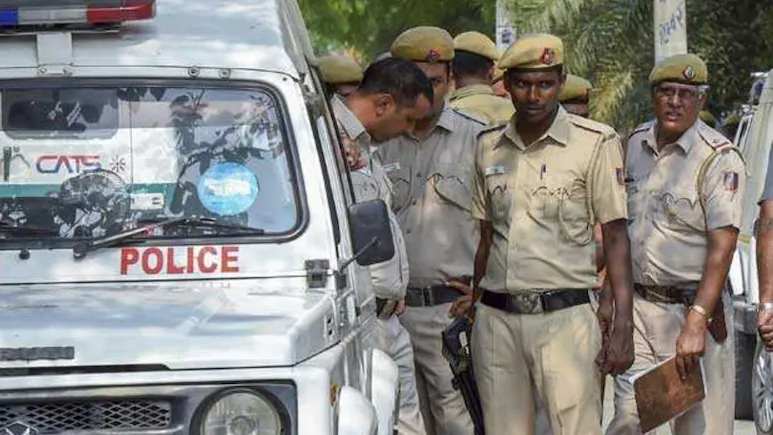
Delhi Police officers at the crime scene in Gokalpuri’s Indira Vihar area, where a 26‑year‑old woman allegedly threw acid on her boyfriend’s prospective bride in a jealousy‑fuelled attack.
Introduction
In a chilling incident of gender‑based violence, a 26‑year‑old Delhi woman has been arrested for allegedly throwing acid on her boyfriend’s prospective bride in the Gokalpuri area of northeast Delhi. The attack took place when the victim, a young woman whose marriage was fixed with the same man, was preparing for her wedding in the Indira Vihar locality, police said on Wednesday. After the attack, the victim was rushed to Guru Teg Bahadur (GTB) Hospital, where she is currently undergoing treatment, and the allegedly jealous woman has since been identified and apprehended by the Delhi Police.
The case has sparked outrage across the city, once again putting the spotlight on acid attacks, women’s safety, and the dark side of relationship‑driven “ownership” and obsession. Yeh incident sabhi ko ek baar phir yaad dilaata hai ki Delhi‑ke local mohallon mein bhi, personal conflicts can turn into life‑threatening crimes within minutes.
The Why and How of the Attack
According to police sources, the victim’s marriage had already been finalised, and the wedding was scheduled to take place in the near future when the attack happened. The accused, a 26‑year‑old woman, was reportedly in a relationship with the same man and strongly opposed the marriage, which was the core trigger of the incident. Driven by jealousy and anger, she allegedly approached the victim and threw acid on her bodily, leaving her with severe burns and injuries. NDTV has covered the full story.
The attack occurred in the cramped lanes of Indira Vihar in Gokalpuri, an area typical of Delhi’s dense, mixed‑socioeconomic pockets, where neighbours often mix personal lives with public space. After the victim’s family and neighbours rushed to the scene, they managed to get her to GTB Hospital as quickly as possible, but the first few minutes after an acid attack are critical, and the long‑term physical and psychological scars can be devastating.
The accused was later identified and arrested by the Gokalpuri police, who are now examining the exact sequence of events, including the time of the attack, any witnesses, and the possibility of prior threats or harassment. A case has been registered under relevant sections of the Bharatiya Nyaya Sanhita (BNS) related to attempt to murder, grievous hurt, and use of acid, depending on how the investigation unfolds. Police are also verifying the source of the acid used in the crime, including whether it was commercially purchased, ordered online, or obtained from a local supplier, which will help determine if broader supply‑chain controls need to be tightened.
Background and Timeline: From Fixing of the Marriage to the Attack
The victim’s marriage was reportedly fixed through family arrangements, with the wedding date decided and preparations underway. The man in question appears to have had an existing relationship with the accused, creating a tense emotional triangle. The accused’s opposition to the marriage likely built over time, with feelings of betrayal, insecurity, or possessiveness turning into a crime of intent.
Relevant Timeline (Delhi context – acid attacks & domestic violence):
2020–2025: Delhi witnesses several high‑profile acid attacks, often linked to rejected relationships, property disputes, and family feuds; the government and police have repeatedly tightened regulations on the sale and storage of acid. [web]
2022: Delhi CM and Union Ministry of Home Affairs push for stricter monitoring of acid sales, chemists, and e‑commerce platforms.
Early 2026: Local police intensify evening patrols and community‑outreach drives in crowded neighbourhoods like Gokalpuri, with a focus on domestic‑and‑relationship‑fueled violence.
Indicative date of crime (2026): The victim’s marriage is fixed, the accused finds out, builds resentment, and the acid attack takes place in the lead‑up to the wedding.
Wednesday, April 15, 2026: Delhi Police confirm the arrest of the 26‑year‑old woman and the filing of a formal case; investigation continues; victim’s condition monitored at GTB Hospital.
This context shows that the Gokalpuri acid attack is not an isolated incident but part of a wider pattern where personal relationships, ego clashes, and unregulated access to dangerous chemicals converge into a horrific crime. Also Read: Adani Energy Commissions 1,000 MW HVDC Power Link to Transform Mumbai’s Power Supply
Why This Matters: Impact on People, Society, and the Law
Acid attacks have a uniquely brutal impact. The victim faces not only excruciating physical pain but also the possibility of lifelong facial and bodily disfigurement, which can lead to psychological trauma, depression, and social isolation. In many cases, survivors withdraw from education, jobs, and relationships, which makes this kind of crime a long‑term attack on the human life trajectory, not just a one‑time incident.
For Delhi and similar Indian cities, the impact is broader.
The incident tarnishes the image of Delhi as a “safe city,” even decades after the 2012 gang rape case, which already triggered a national debate on women’s safety.
It raises questions about the effectiveness of existing laws on acid control, including whether local shops and online platforms are diligently following the rules on who can buy such chemicals and how they are stored.
Families living in crowded neighbourhoods may feel less secure, knowing that a neighbour’s unresolved love or jealousy can suddenly erupt into a life‑changing violence.
From a policy perspective, this case could push the Delhi government and the Union Home Ministry toward stricter monitoring of acid sales, faster medical and legal support for survivors, and more counselling for those in volatile relationships. The government’s “Zero Tolerance” campaigns against acid attacks and violence against women will be tested again in this case.
Local Angle: Delhi–NCR, Hinglish Audience, and Everyday Reality
For Delhi–NCR residents, especially those in densely populated areas like Gokalpuri, Indira Vihar, Seelampur, or Jahangirpuri, this incident hits close to home. These neighbourhoods have a mix of migrants from UP, Bihar, Rajasthan, and rural Haryana, where family arrangements still dominate marriage decisions, and relationships built on traditional expectations can turn explosive. The idea that a woman’s future is being decided by a fixed marriage, while someone else is emotionally attached to the same partner, is a storyline that many local families have lived through.
Yeh case, phir se, dikhata hai ki “ghar ke andar ke jhagde” bhi kitni khatarnak ho sakte hain. For readers in Uttar Pradesh, Delhi, and Bihar, the story is doubly relevant because many of them either live in Delhi as daily commuters or have relatives working in the city. The thought that a bride‑to‑be, excited for her wedding, suddenly has to fight for life because of someone else’s jealousy, is emotionally devastating.
From a Hinglish‑tone perspective, people in Delhi’s mohallas already talk openly about “julm,” “ghairat,” and “izzat,” and cases like this feed into those everyday conversations. The acid itself is seen as a “cheap weapon” that can inflict disproportionate damage, which is why the police and media often emphasise the cruelty and long‑term impact of such attacks.
Expert Analysis: Reader’s Lens and SEO Perspective
From a digital‑journalism standpoint, acid‑attack stories like this one are among the most emotionally charged and widely shared news pieces. The combination of violence, gender, jealousy, and everyday locations makes them highly shareable on social media, with strong headline pull: “Delhi Bride‑to‑Be Attacked With Acid,” “26‑Year‑Old Woman Arrested in Jealousy‑Fueled Attack,” and “Acid Thrown on Prospective Bride in Gokalpuri.”
Practically, the media can also highlight the importance of victim‑support systems, fast‑track courts, and community awareness so that the discussion does not just stay at “shock news” but moves into concrete solutions.
What Comes Next: Legal Proceedings, Recovery, and Policy Response
In the coming days and weeks, the police investigation will focus on several key questions. How did the accused obtain the acid? Was there prior harassment or stalking of the victim? Were there any warning signs noticed by neighbours or family? The answers will determine the exact charges, and possibly whether the case is treated as a “pre‑meditated attack” versus a crime of sudden rage, which can affect sentencing.
The victim’s recovery path will be long and painful. Acid burns often require multiple surgeries, skin grafts, and years of rehabilitation. Psychological counselling will be crucial to help her cope with the trauma and rebuild her confidence, especially if the attack has left visible scars. Support groups, NGOs working with acid‑attack survivors, and government welfare schemes will play a big role in her healing.
At the policy level, this case may push authorities to tighten controls on the sale and movement of acid, step up monitoring of local shops, and launch more community‑awareness drives in crowded neighbourhoods. The Delhi government has already taken steps to regulate acid sales, but enforcement is uneven, and cases like this underline the need for stricter vigilance.
Conclusion: A Grim Reminder of the Cost of Jealousy and Violence
The acid attack on the bride‑to‑be in Gokalpuri, allegedly carried out by a 26‑year‑old woman driven by jealousy over her boyfriend’s arranged marriage, is a harrowing reminder of how emotions can spiral into life‑destroying violence. The victim is now fighting for her life and recovery at GTB Hospital, while the accused sits in police custody knowing that the legal and social consequences of her act will be long‑lasting.
For Delhi and the wider NCR, this incident is a sobering signal that gender‑based violence is not just a “big‑city problem” but a shadow that follows every crowded lane, every family dispute, and every insecure relationship. Yeh case kaafi important hai kyunki yeh batata hai ki emotional control, legal awareness, aur social tolerance sab milke hi aise crimes ko rok sakte hain.
Written by A. Jack